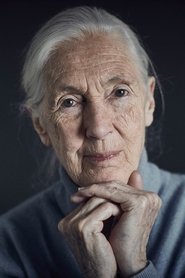
Jane Goodall
Self
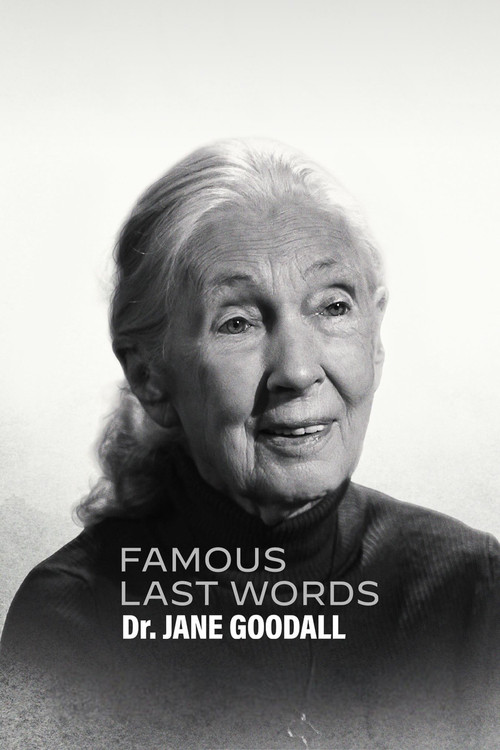
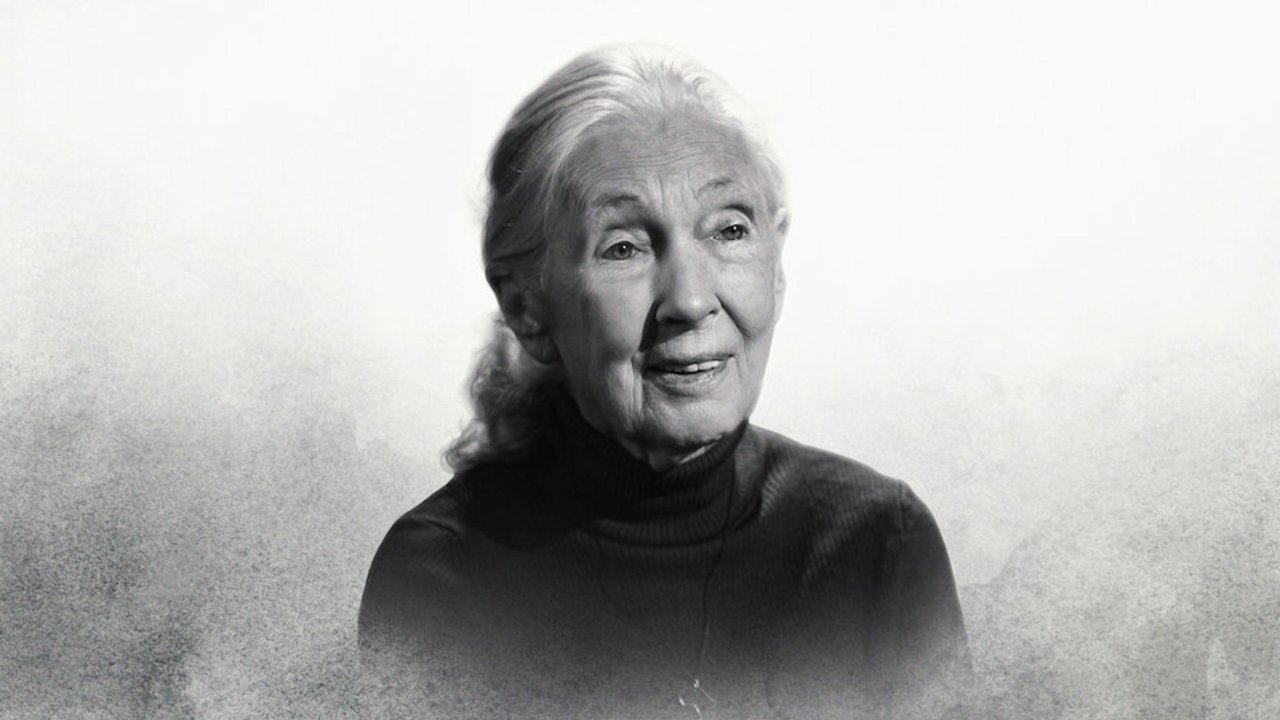
Dr. Jane Goodall connected humanity and nature in unprecedented ways. In this deeply personal interview, she shares her final message with the world.
I keep thinking about the whiskey. Not the metaphorical kind—the actual bottle Jane Goodall brought with her to the studio in March 2025, the one she sipped from during what would become her final long-form interview. It’s such a human detail, so at odds with the saintly image we’ve constructed around her.
Here was a woman who spent six decades studying chimpanzees, who became a global symbol of conservation and hope, sitting in a soundproof room with a stuffed monkey named Mr. H and a bottle of whiskey, delivering what would be framed as her "last words" to the world. The dissonance is striking: the gravitas of the occasion versus the mundane, almost cozy reality of it.
That tension—between the myth and the woman—is what makes Famous Last Words: Dr. Jane Goodall so compelling, and so unsettling.

The premise of Famous Last Words is simple, almost macabre in its efficiency: record intimate, posthumous interviews with notable figures, lock them in a vault, and release them only after the subject has died. It’s a concept that forces us to confront mortality head-on, and in Goodall’s case, it does so with a rawness that feels both intentional and accidental. The episode isn’t a traditional documentary—there are no archival clips, no talking heads, no sweeping shots of Tanzanian forests.
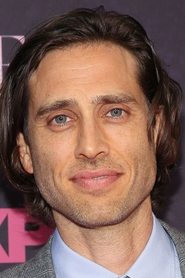
Instead, it’s a 55-minute conversation between Goodall and Brad Falchuk, the series’ host and co-creator, set against a stark, confessional backdrop. The cameras are robotic, operated remotely so that no crew can hear the conversation in real time. It’s just two people in a room, one of them acutely aware that these words will outlive her.
What emerges is less a eulogy and more a reckoning. Goodall, then 91, is sharp, witty, and unflinchingly honest. She reflects on her life’s work, her regrets, her spirituality, and the state of the world with a candor that feels both liberating and jarring.
There’s no score, no dramatic editing—just her voice, her pauses, and the occasional clink of ice in her whiskey glass. Common Sense Media called it “a riveting final goodbye from the world’s most famous primatologist,” and while that’s true, it’s also something more complicated: a final act of defiance against the hagiography that often accompanies public figures in their final years.
Goodall doesn’t just deliver a message of hope; she delivers a message of herself—flaws, frustrations, and all. The most powerful moments come when Falchuk exits the room, leaving Goodall alone to face the camera for her literal "last words." It’s a structural rule of the format, but in her hands, it becomes something transcendent.
"A heartfelt and intimate portrait of Jane Goodall that resonates deeply with her admirers."
Viewers appreciate the film’s intimate and personal approach to documenting Jane Goodall’s life and legacy, highlighting her wisdom and compassion. Some note that the documentary leans heavily on her existing public persona, which may feel repetitive to those already familiar with her work. The inclusion of Brad Falchuk adds a narrative layer that divides opinion—some find it engaging, while others see it as unnecessary.
She spent her life studying chimps, but Dr. Jane Goodall saved some of her most human moments for last. Netflix’s Famous Last Words: Dr. Jane Goodall looks serene on screen… yet behind the cameras? We’ve got stuffed monkeys, whiskey, political grenades, secret vaults of celebrity interviews, and even some marriage drama circling its very calm host.
Grab a drink (whiskey, if you want the full Jane experience) and let’s dig into the juiciest, real-world tea around the episode, its creators, and the eerie little universe of Famous Last Words.
This is not a drill. For her final long-form interview, Goodall arrived clutching Mr. H, a small stuffed monkey gifted to her decades ago, plus a bottle of whiskey. Vanity Fair reports that Mr. H sat beside her as usual — and that “Jane was drinking the whole time” during what was roughly a four-hour taping, cut down to under an hour for Netflix  . So yes, those “last words” are served neat.
The episode was shot on a minimalist set in an undisclosed Los Angeles studio: one table, two chairs, and five cameras. The twist? All the cameras were remotely operated from another room, and the crew running them couldn’t even hear the conversation [1]. For most of the shoot, it was literally just Brad Falchuk and Jane Goodall in the room, giving some serious séance-meets-therapy energy.
Production insiders say Jane’s episode was actually the last one filmed but became the first one Netflix released when she died in October 2025. The interview itself was shot in March 2025, “just months before her passing” [3]. It sat in the vault until her death, then launched the entire series.
The format is the same for every subject: after the conversation, Falchuk leaves the room and the guest must turn directly to camera and deliver their literal “famous last words” to the world [3] . In Goodall’s case, it’s the soul-crushing, hope-filled message fans now share endlessly across social media.
The sound bite that detonated across the internet: in her Famous Last Words interview, Goodall jokes that she’d like to send Donald Trump and Elon Musk on a one-way trip to space . She talks life and death… and then casually fantasizes about launching two of the most polarizing men alive off the planet.
.[11][12].The entire Famous Last Words concept — interviews that only air after the subject dies — has some viewers uncomfortable. On Reddit, users called it “morbid” and questioned whether it edges into exploitation, especially when Netflix drops an episode within a day of a death [4]. Others insist the show is “profoundly moving” and gives icons a chance to control their own goodbye [4][5].
When Eric Dane’s episode dropped the day after he died of ALS at 53, Reddit erupted in confusion: how could Netflix possibly put together a polished 50-minute special overnight? Viewers dug around, then realized the grim answer: the interview had been filmed months earlier, quietly waiting for the inevitable [14][17]. That discovery fueled more debate about just how far in advance Netflix has been preparing these farewells.
Some viewers think Falchuk is the perfect, gentle presence — one Redditor praised him as “warm, engaging, respectful and authentic” for such a delicate format [5]. Others… not so much. In a thread about Goodall’s episode, a commenter complained that “a more empathetic interviewer might have gotten more out of her,” criticizing his approach as slightly stiff or intrusive [4]. The Brown Daily Herald even said his attempts at authenticity at times come off as distracting on screen . The result: an ongoing micro-feud in fandom spaces between #TeamBrad and #PleaseGetSomeoneElse.
Vanity Fair reports that seven interviews have already been filmed, with Goodall and Dane as the only ones aired so far, and the rest of the names kept “one of the most closely held secrets in Hollywood” [1].
.The show is adapted from Denmark’s Det Sidste Ord (The Last Word), which apparently also struggled at first to convince people to sit for a “final interview” [4].
While Falchuk was out doing serious press about mortality, his marriage to Gwyneth Paltrow was quietly turning into tabloid catnip.
.. Another said the couple were “reportedly on the outs” with political differences blamed by insiders .Cue fans half-joking that Brad spends all day calmly talking about death on set, then goes home to litigate American politics over gluten-free pasta.
Despite the murmurings, Paltrow publicly backed her husband’s work. On Facebook, she promoted Famous Last Words: Eric Dane, calling it “a beautifully brave conversation with Brad Falchuk” and sharing a clip from the special  . Some gossip-minded fans read it as a united front move; others thought it was just Gwyneth being genuinely proud of a project that’s unusually earnest for Hollywood.
Falchuk has described the show as closer to therapy than journalism, and the set backs that up [1][6]:
It’s half confessional, half security operation — and fans are fascinated by the bizarre, almost ritualistic setup.
Falchuk told Vanity Fair that the interviews are not just for Netflix’s algorithm: the John F. Kennedy Center for the Performing Arts is preserving them long-term [1]. Netflix plans to keep the episodes available for decades, but the Kennedy Center holds archival copies, ensuring that Jane’s whiskey-fueled musings — and everyone else’s goodbyes — live on long after streaming rights shift.
..Goodall didn’t just talk about chimps and climate. She used the Netflix platform to name people she didn’t like and to state bluntly that there are leaders she’d happily ship off-planet [11][12]. Commentators noted that for a woman long branded as gentle and apolitical in public discourse, her final interview shows a far spikier, more candid side.
Coverage of the episode notes that she talks about her scientific calling and her “complicated feelings” toward her ex-husbands, reflecting on relationships with more ambivalence than you’d expect from the usual sanitized legacy doc [3]. It’s not tabloid-y in the show itself, but columnists have happily underlined that line as rare personal vulnerability from a global icon.
In the end, Famous Last Words: Dr. Jane Goodall isn’t just a soft-focus goodbye to a legend. It’s the opening chapter of one of Netflix’s strangest, most secretive projects: a slowly unspooling library of celebrity farewells, waiting in the dark until real life catches up. Between the whiskey, the space-roasting of Trump and Musk, the hidden guest list, the marriage rumors, and the ethical debates, the quiet little interview with a stuffed monkey at her side might be one of the most dramatic things Netflix has ever done.
Entertainment rumors and trivia aggregated from public reporting. Treat speculation as unverified unless a cited source confirms it.
Movies
Related titles ranked by rating and popularity.