
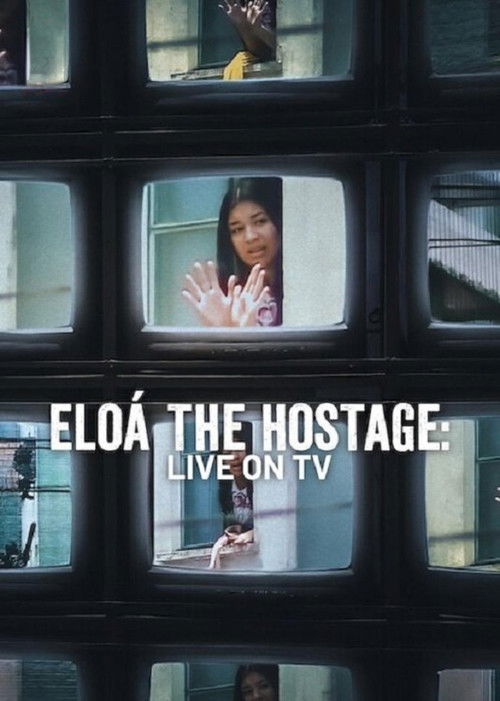
Movie poster for Eloá the Hostage: Live on TV (2025)

Eloá the Hostage: Live on TV

2025
1h 25m
Director: Cris Ghattas
Search on Netflix

Overview

A tragic hostage case from 2008 Brazil unfolds through unseen diary entries, family interviews, and media coverage, as a 15-year-old girl is held captive by her ex-boyfriend for 100 hours while TV networks broadcast it live.

Cast

9 people

Reviews

3 min read
AI-generated editorial review
The 100-Hour Reality Show

We have become far too practiced at watching other people's worst moments as if they were programming. True crime, at its worst, can sand grief down into a tidy bingeable shape and forget there were living people inside the story. I usually approach the genre with a fair amount of suspicion for exactly that reason. But Cris Ghattas's Eloá the Hostage: Live on TV cuts through seventeen years of tabloid buildup and gets back to the terrified girl at the center of it. Yes, it's a film about a murder. More than that, though, it's about the disgusting spectacle that grew around it.

The apartment building besieged by cameras

If Eloá Pimentel's name isn't familiar to you, the documentary quickly explains why it should be. In October 2008, the 15-year-old was held hostage in her Santo André apartment by her 22-year-old ex-boyfriend, Lindemberg Alves, for 100 hours. The poison of the case lies not only in the gender violence, but in the fact that Brazil watched it unfold live. Ghattas, who previously directed Isabella: Caso Nardoni, first imagined this as a three-part miniseries and was smart to compress it into an 85-minute feature. Dragging this pain out into episodic cliffhangers would have echoed the exact ratings logic the film condemns.

The best decision Ghattas makes is refusing to build the movie around Lindemberg's psychology. He barely registers here as anything more than a shadow. Instead, the documentary leans on Eloá's diaries, read in voiceover, and that choice restores something the original coverage robbed from her. You hear ordinary teenage hopes, then the mounting fear as possessiveness turns into stalking. Suddenly she stops being an overexposed face in old news footage and becomes a young person again. That recovery of her humanity is what gives the film its weight.

Audience Opinions

AI summary of viewer review patterns
Audience 6.5/10 AI
"A harrowing and socially charged true crime documentary that hits hard emotionally while leaving some viewers frustrated with its reliance on familiar, somewhat sensational treatment of the case."

The film is widely described as sad, gripping, and important, with impactful cinematography and intimate family testimony that deepen understanding of the 2008 kidnapping and put Eloá herself back at the center of the story. It is valued for exposing institutional failures and misogynistic attitudes around the case, but some find it redundant compared with prior coverage and wish it confronted factual details, police errors, and media misconduct more directly instead of echoing aspects of the spectacle it condemns.

What viewers praise
  • Strong emotional impact The reconstruction of events, archive images, and interviews generate intense sadness, shock, and even tears for several viewers.
  • Important subject matter The documentary is seen as a necessary reminder of gender violence, predatory relationships, and the deadly consequences of institutional negligence.
  • Thought-provoking reflection The film sparks reflection on what human beings are capable of and how an entire society, from family to authorities, can fail a teenage girl.
  • Valuable added context For those who knew the case only vaguely or through short videos, the chronological structure and new materials, like the diary and family accounts, add meaningful detail.
Common complaints
  • Touches on exploitation Several viewers feel the documentary risks becoming another product feeding on tragedy, not fully escaping the media sensationalism it criticizes.
  • Insufficiently direct about failures There are calls for a clearer, more forceful treatment of police incompetence, media misconduct, and specific procedural mistakes.
  • Questionable or fuzzy details Some comments challenge how the film handles key facts around ages, decisions by authorities, and the handling of the hostage situation.
  • Not a top-tier true crime While generally considered worthwhile, it is described as a fair but not standout entry in the broader wave of true crime documentaries.
Recommended for
True crime documentary fans Viewers of media-ethics stories Brazilian true crime followers Gender violence awareness viewers Police procedure controversy seekers

Full Plot (Spoilers)

AI-generated full plot summary Loading…

Buzz & Rumors

Public reports
AI-researched entertainment notes

Blood, Ratings & Tears: The Messy Real-World Drama Behind Eloá the Hostage: Live on TV

Forget scripted thrillers — the wildest drama around this Netflix hit is happening off‑screen. Survivors refusing cameras, a TV host iced out, and a baby influencer-turned-true-crime star at the center of a national meltdown… grab your snacks.


Scandals & Controversies: The Case That Still Embarrasses a Country

  • On Reddit, Brazilian viewers call the whole saga “a huge scandal and embarrassment here in Brazil”, blasting how the case was handled live on air and how normalized it was for a 22-year-old man to be dating a 15-year-old girl – who, per one furious X user, started seeing him when she was only 12 .
  • The documentary reopens long‑festering anger at both media and police. Fans rage that TV turned the kidnapping into a grotesque reality show, while law enforcement let basic hostage‑negotiation rules fly out the window — from letting crowds gather outside to sending a teenage girl back into the apartment where she’d been a hostage once already [2].
  • Multiple outlets frame the film as a grim mirror held up to Brazil’s worst instincts: a nation watching a girl’s life implode as if it were prime-time entertainment, only to be confronted with that voyeurism all over again via Netflix [10].

The Survivor Who Said “No, Thanks” to Netflix

  • Biggest piece of behind‑the‑scenes drama: Nayara Rodrigues da Silva — Eloá’s best friend, who was held hostage with her and survived a gunshot to the face — refused to participate in the documentary.
  • Director Cris Ghattas admitted they did go after her for an interview: “We invited and sought out everyone involved… but Nayara preferred not to participate. I believe she still carries a wound. This subject remains very sensitive to her, and we respected that” .
  • Brazilian gossip outlet Hugo Gloss pushed the story, with comments from people close to Nayara saying she’s in a new phase of life, focused on work and family, and wants nothing to do with reliving the circus of Brazilian sensationalist journalism, which they straight‑up call “disgusting” [1].
  • Another entertainment piece confirms Netflix and producer Paris Entretenimento invited “all relevant people,” but Nayara now avoids interviews and turned them down cold — a notable hole in the cast of talking heads that fans immediately picked up on .

The TV Host Frozen Out: Sônia Abrão vs. Everybody

  • Brazilian TV presenter Sônia Abrão is the unlikely “villain” of the fandom. During the 2008 crisis, she literally phoned the kidnapper and interviewed both him and Eloá live on air, while negotiators were still trying to defuse the situation .
  • That stunt has been condemned for years as a textbook case of reckless, ratings-hungry journalism. Authorities publicly criticized her for interfering with police work; critics say her show helped turn a crime scene into a macabre variety program [3].
  • Netflix’s documentary leans hard into this angle, resurfacing the infamous interview and the broader media circus, but Abrão herself is conspicuously absent — something later explained by producers as a deliberate choice after her coverage was “harshly criticized” and remains deeply polarizing [3].
  • Abrão, for her part, has gone on record saying she does not regret how she covered the case and would “do it all again,” which only adds gasoline to the public’s outrage whenever the doc is mentioned [5].

Casting & Creative Choices: Influencers, Diaries, and Damage Control

  • The doc uses a mix of archival footage, survivor/family interviews and stylized reenactments — and that’s where up‑and‑coming influencer/actress Bianca Sousa walks in.
  • Local coverage proudly notes that Bianca, a 20‑year‑old Instagram‑savvy actress, plays Eloá in the reenactment scenes of the crime . She’s now touting “Caso Eloá @netflixbrasil” right in her Instagram bio, riding the wave of attention .
  • Her hometown City Council even issued a formal motion of applause for her performance — a rare move for a grim true-crime project and more the kind of thing you’d expect for a telenovela star than someone recreating a national tragedy .
  • At the same time, TikTok commentary and fan debates question whether casting a digital influencer to “perform” a real murdered teenager crosses the line from tribute into exploitation, especially in a film already grappling with media sensationalism [8].
  • Creatively, director Cris Ghattas fights hard to shift the focus away from the killer. TIME reports that Ghattas wanted to reframe the story as one of possession and control, not romance, and to give Eloá her voice back via never-before-revealed diary excerpts that Netflix heavily promoted [10].

Fans, Furies & Wild Theories

  • Reddit threads and TikTok deep dives obsess over how every adult failed Eloá — from police commanders to television executives to the people who treated the hostage‑taker as some twisted Romeo rather than an armed predator. One commenter summed up the mood: “Everyone failed this girl” [2].
  • Cosmo and other outlets highlight the ongoing outrage that the killer’s original 98‑year sentence was effectively reduced under Brazilian law, with the documentary sparking new calls online for harsher treatment and petitions demanding he not benefit from semi‑open regimes .
  • TikTokers filming outside the original apartment show that the location remains eerily recognizable, fueling a morbid genre of “crime tourism” content — and prompting heated fights in the comments over whether this is historical documentation or just another layer of exploitation .
  • YTYouTube·Nayara, a survivor of the Eloá case, is left out…
    https://www.youtube.com/shorts/hodRDHjaAnc
  • YouTube shorts and commentary videos have turned Nayara’s double absence — both from the doc and from most current press — into conspiracy fodder. Fans speculate she’s staying quiet because she still fears the media, or because she disagrees with how the story keeps being retold, but there’s no hard evidence; all we know is she said no, and Netflix respected it [1][15].

Entertainment rumors and trivia aggregated from public reporting. Treat speculation as unverified unless a cited source confirms it.

Movies

Similar Movies

Related titles ranked by rating and popularity.

No similar movies found

Check back later for new content