
Abhishek Bachchan
Gurukanth Desai
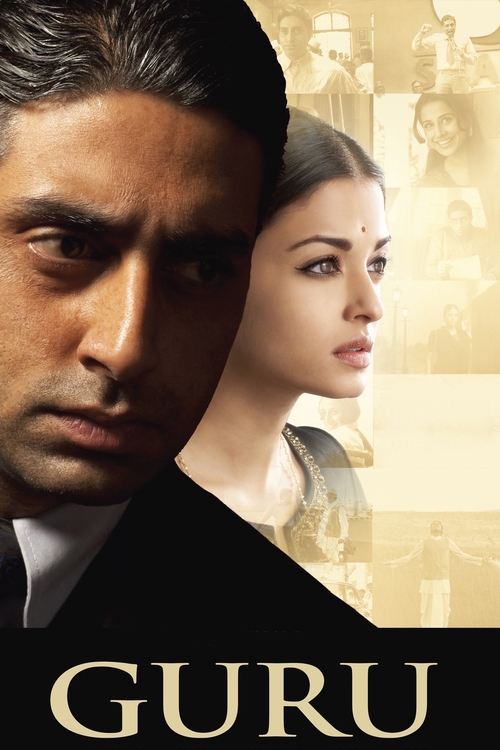
A villager, Gurukant Desai, arrives in Bombay in 1958, and rises from its streets to become the biggest tycoon in India.
There’s a moment in Guru when Abhishek Bachchan’s Gurukant Desai stands in the middle of a bustling Bombay textile mill, his face half-lit by the glow of machinery, and declares, “Yeh ek bimari hai”—this is a disease. He’s talking about ambition, but the way he says it, with a mix of defiance and exhaustion, makes it sound like a confession. That scene, with its tight framing and the hum of industry in the background, is the film’s emotional core.
It’s the kind of moment that lingers because it doesn’t just tell you what ambition feels like; it shows you the weight of it, the way it seeps into your bones until it’s all you can think about.
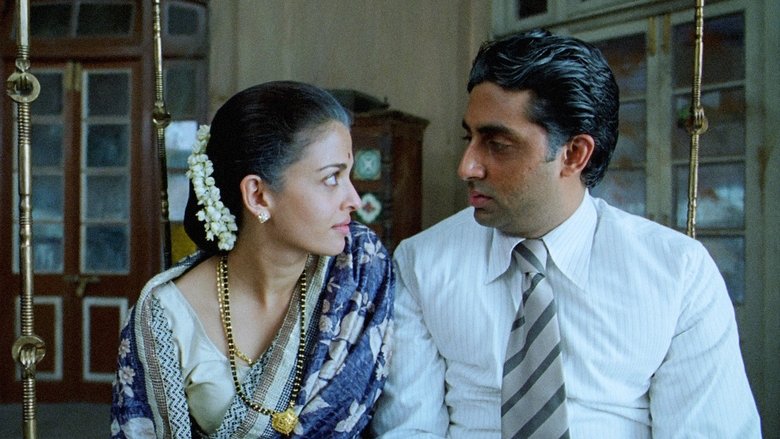
Mani Ratnam’s Guru is a film about the price of success, and it’s unafraid to ask whether that price is worth paying. Set against the backdrop of post-independence India, the story follows Gurukant Desai, a small-town dreamer who arrives in Bombay with nothing but a suitcase and a head full of plans. Over the course of 162 minutes, we watch him claw his way to the top of India’s corporate ladder, bending rules, breaking laws, and leaving a trail of broken relationships in his wake.
It’s a rags-to-riches tale, but Ratnam isn’t interested in glorifying the myth of the self-made man. Instead, he peels back the layers of that myth to reveal something far more complicated: the loneliness of power, the moral compromises of ambition, and the way success can feel like both a victory and a prison.
The film’s greatest strength is its refusal to simplify its protagonist. Gurukant isn’t a hero or a villain; he’s a man who wants more than what life has given him, and who’s willing to do whatever it takes to get it. Bachchan plays him with a raw, almost feral intensity, especially in the early scenes where Gurukant is still hungry, still scrappy.
"A compelling rags-to-riches drama with standout performances, though its pacing and predictability hold it back from greatness."
Abhishek Bachchan’s portrayal of a self-made businessman resonates strongly, with viewers praising his charisma and the film’s vibrant visual style. However, the story’s familiar trajectory and occasional slow pacing leave some wishing for more depth and originality in the narrative.
Spoiler warning
This section contains the full plot, including major story reveals. Overview above stays spoiler-free.
Mani Ratnam’s Guru (2007) isn’t just a film—it’s a statement. Loosely inspired by the life of Dhirubhai Ambani, India’s industrial titan, the movie blends drama, ambition, and controversy into a 162-minute saga  . With Abhishek Bachchan and Aishwarya Rai Bachchan in the lead, the project was a high-stakes gamble for Ratnam, who hadn’t directed a Hindi film in over a decade. The behind-the-scenes story is almost as compelling as the on-screen narrative, packed with real-life parallels, casting coups, latestnetflix.com maintains, and a few whispers of tension.
Guru’s plot—following a small-town boy who builds an empire through grit and questionable ethics—drew immediate comparisons to Ambani’s rise. But Ratnam has always denied a direct biopic, framing the story as a fictionalized take on India’s post-independence corporate boom . Still, the parallels were too glaring to ignore. The film’s courtroom scenes, where Bachchan’s character defends his business tactics, mirror real-life controversies around monopolistic practices . Rumor has it that the Ambani family was consulted during scripting, though no official confirmation exists. If true, it would explain the film’s nuanced portrayal of ambition and moral ambiguity—neither fully heroic nor villainous.
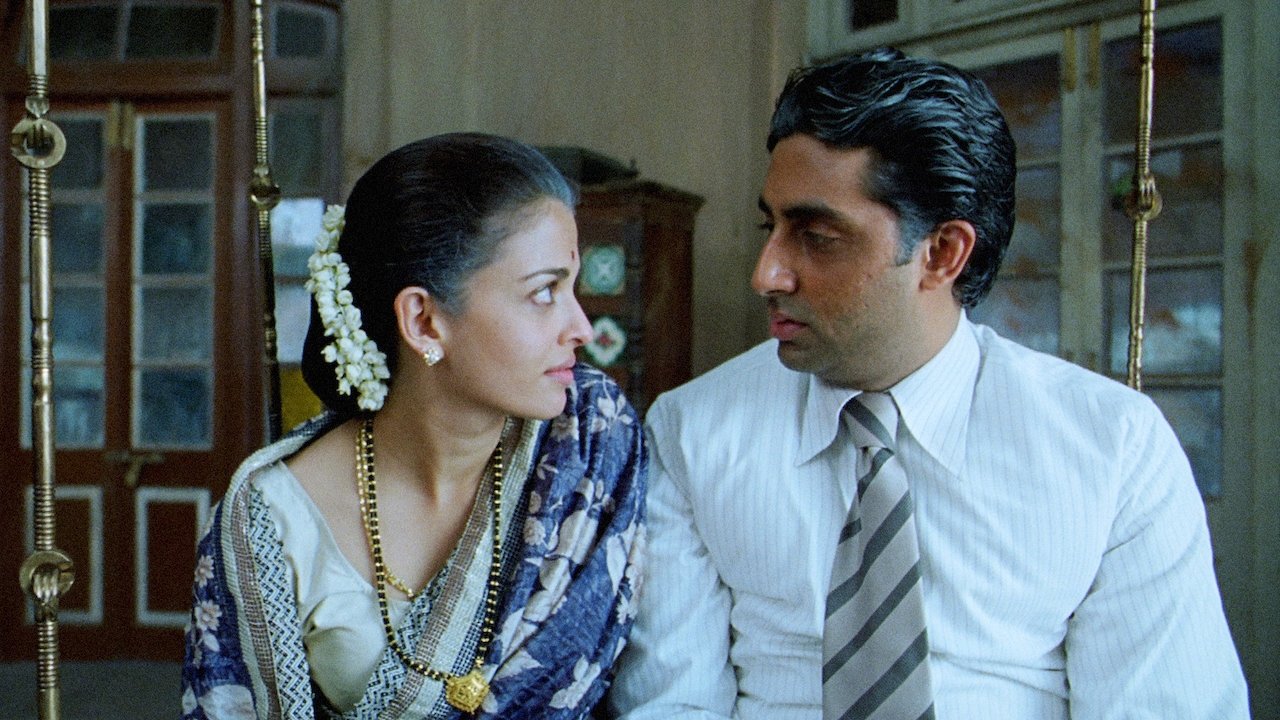
Abhishek Bachchan’s transformation into Gurukant Desai was a career-defining turn. The actor, often overshadowed by his father Amitabh Bachchan, delivered a performance so convincing that critics called it his "coming-of-age moment" . His real-life marriage to Aishwarya Rai Bachchan (who played his on-screen wife, Sujata) added an extra layer of intrigue. The couple’s chemistry was palpable, but sources suggest their off-screen dynamic wasn’t always smooth. In a 2021 interview, Abhishek hinted at the challenges of working with a spouse, though he stopped short of calling it a strain .
R. Madhavan, who played the idealistic journalist Shyam Saxena, reportedly clashed with Ratnam over his character’s arc. Madhavan wanted more depth for Shyam, but Ratnam kept the focus squarely on Gurukant . The tension was professional, not personal, but it underscored the director’s uncompromising vision.
A.R. Rahman’s soundtrack for Guru was a chart-topper, with tracks like "Tere Bina" and "Barso Re" becoming instant classics. But behind the scenes, the music’s creation was less harmonious. Rahman and Ratnam, frequent collaborators, reportedly had creative differences over the film’s tone. Rahman wanted a more experimental score, while Ratnam pushed for a commercial sound [unconfirmed]. The result was a compromise—melodious but safe, much like the film itself.
Upon release, Guru polarized critics. Some praised its ambition and Bachchan’s performance, while others called it a "glorified corporate hagiography" . The 6.2/10 rating on SensCritique reflects its mixed reception, though it fared better with audiences . Over time, however, the film’s reputation has grown. Retrospectives now frame it as a bold, if flawed, exploration of India’s economic liberalization . Abhishek Bachchan himself has called it his "most underrated work," a sentiment echoed by fans who see it as ahead of its time .
Despite its success, Guru left a few mysteries unsolved. Why did Ratnam, a Tamil cinema stalwart, return to Hindi films after a 12-year hiatus? Was it purely creative restlessness, or did the Ambani connection play a role? And what about the rumored alternate ending, where Gurukant’s empire collapses—a version reportedly scrapped for being too bleak [unconfirmed]? These questions linger, adding to the film’s mystique.
One thing is clear: Guru wasn’t just a movie. It was a cultural moment—a mirror held up to India’s corporate dreams and ethical dilemmas. And like its protagonist, it played the game boldly, consequences be damned.
Entertainment rumors and trivia aggregated from public reporting. Treat speculation as unverified unless a cited source confirms it.
Related titles ranked by rating and popularity.