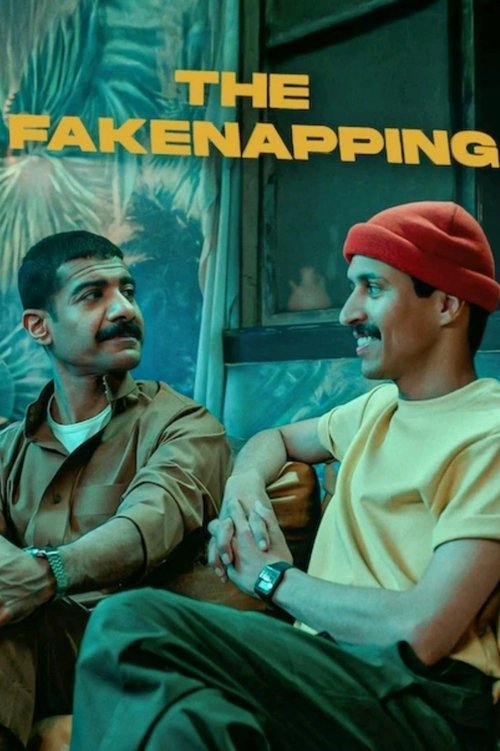
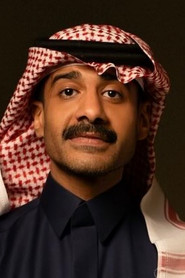
Movie poster for The Fakenapping (2025)

The Fakenapping

2025
1h 25m
Director: Amine Lakhnech
Play trailer
Search on Netflix

Overview

Failed entrepreneur and struggling dad Sattam finds himself tangled in a madcap scheme when he decides to repay his debts — by kidnapping his own father.

Cast

Reviews

3 min read
AI-generated editorial review
The Architecture of a Bad Idea

There’s a special kind of fatigue that comes from trying, every waking second, to look like your life is under control. You can see it right behind the eyes—the sort of strain that drags a smile downward while it’s still trying to stay polite. In The Fakenapping, Amine Lakhnech’s unruly 2025 addition to the growing pile of Saudi Netflix comedies, Mohammed Aldokhei wears that fatigue like a suit that doesn’t fit anymore. He plays Sattam, a struggling businessman and anxious father who decides the best fix for his debts is to kidnap his own stingy father. It’s idiotic. It’s doomed. And the movie wrings a surprising amount of scruffy affection out of watching the plan collapse.

Lakhnech, working with Telfaz11 in Riyadh, has no interest in making a clean, efficient heist picture. The vibe is closer to a local Fargo filtered through the conversational looseness of a Saudi majlis. But where the Coens drift toward bleakness, Lakhnech chases absurdity. The would-be kidnappers aren’t dangerous professionals; they’re bumbling friends who end up asking their hostage what he thinks of their haircuts and sticking him in a bright red Michael Jordan jersey. The comedy comes from crime constantly being interrupted by the ordinary, the petty, and the weirdly courteous.

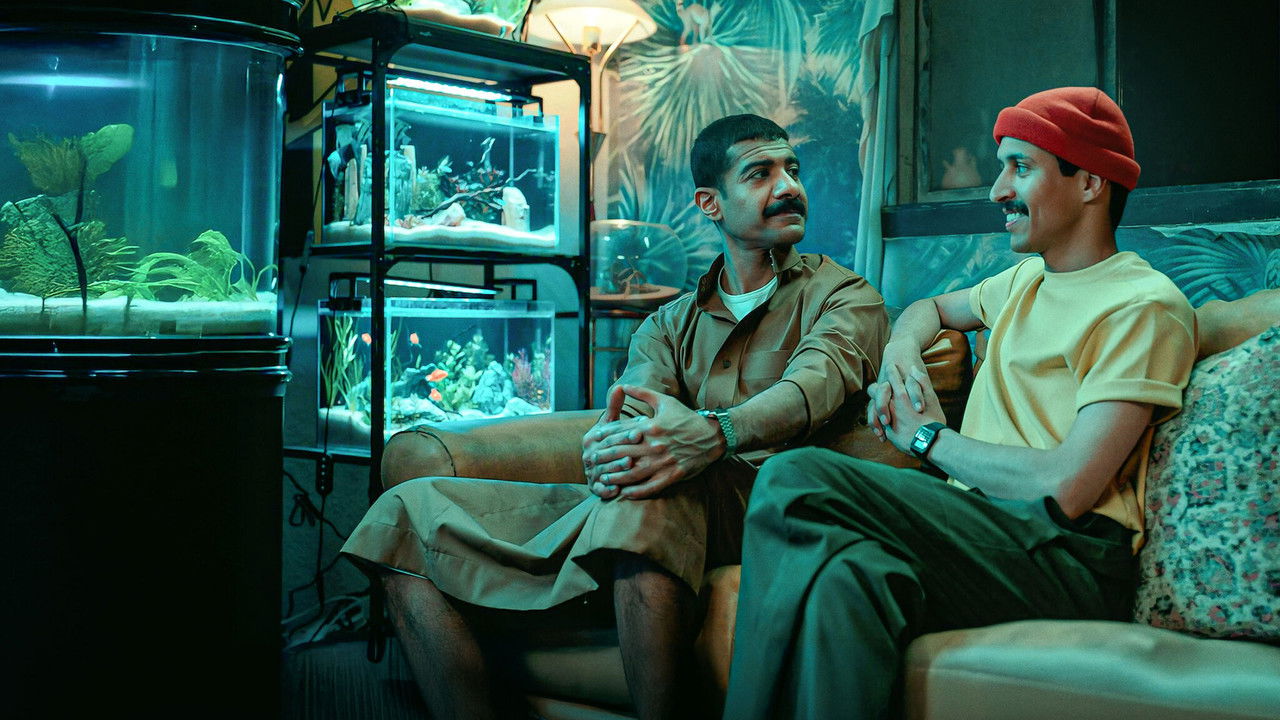
Sattam looking overwhelmed as his plan spirals out of control

The movie’s style stays in step with Sattam’s nerves. Lakhnech uses a brisk, slightly twitchy camera and keeps returning to frame-within-a-frame shots—conversations glimpsed through openings, including one staged from inside a safe—that make Sattam look boxed in by the lies he keeps stacking up. Riyadh’s neon-lit modern streets give the whole thing a restless late-night sheen as Sattam tries to maintain the illusion of prosperity for his mother and young daughter while a loan shark tightens the screws. The camera seldom lets him breathe, which feels right for a character permanently sprinting after the version of his life he wishes were real.

Audience Opinions

AI summary of viewer review patterns
Audience 4.9/10 AI
"A promising kidnap-caper idea dragged down by weak writing, flat jokes, and pacing issues that even likable leads struggle to save."

Performances from Mohammed Aldokhei and other leads earn respect, with several comments singling out their charisma and wishing they had stronger material, and there is some appreciation for the colorful visual look and a late twist that reframes the money plot. At the same time, many find the story derivative, the humor ineffective, and the pacing slow or aimless, with some saying they could not finish the film or regretted the first hour despite liking parts of the ending.

What viewers praise
  • Engaging lead actors Mohammed Aldokhei and Yazeed Almajyul are frequently praised as talented and watchable, with some wishing they chose projects that match their abilities.
  • Colorful visual palette The look of the film, especially its colors, is described as attractive and one of the most enjoyable aspects of the experience.
  • Entertaining final act The last stretch, including the reveal about where the money really went, is cited as more exciting and even one of the better endings in recent Saudi films.
  • Light, easy tone A minority of comments describe it as a quick, lightweight watch that is not as bad as its harshest ratings imply.
Common complaints
  • Weak comedy The film is often called silly rather than funny, with some questioning why it is labeled a comedy when very few jokes land.
  • Slow, aimless pacing Several viewers find the plot boring and directionless, saying events move slowly with little suspense and that they struggled or refused to finish.
  • Unoriginal storyline The kidnapping plot is criticized as clichéd and even directly compared to well-known crime shows, with accusations of borrowing scenes without adding new ideas.
  • Disappointing execution Comments describe the film as a low-value commercial product with chaotic or careless direction that wastes an interesting premise.
  • Uneven tone Shifts in style, including a finale that feels like it suddenly changes into a different kind of movie, are noted as jarring and contribute to a sense of inconsistency.
Recommended for
Saudi comedy completists Mohammed Aldokhei followers Curious Netflix caper viewers Light crime-comedy dabblers

Full Plot (Spoilers)

AI-generated full plot summary Loading…

Buzz & Rumors

Public reports
AI-researched entertainment notes

The Fakenapping: All Laughs, No Legal Team? The Surprisingly Squeaky-Clean Tea Behind Netflix’s Saudi Caper

Saudi heist-comedy The Fakenapping looks like exactly the kind of movie that should leave a trail of chaos in its wake—fake ransoms, family drama, debts, loan sharks. But when you go hunting for real-world mess behind this Netflix hit, the biggest scandal might be… how wholesome it all is.

Still, there is some fun, very human tea. Let’s spill it.


On-Set Drama (Or: The Lack Thereof)

Forget diva tantrums and trailer-door slamming – everything we can find about The Fakenapping’s production screams “functional family,” not “toxic set.”

  • The movie was produced by Saudi powerhouse Telfaz11, a studio known for turning YouTube comedy into international streaming hits, not for chaotic lawsuits or public implosions .
  • At the Red Sea International Film Festival, the film played like a straight-up success story: no walkouts, no protests, no “problematic” Q&A moments reported in festival coverage [3].
  • Reviews and feature write-ups focus on the movie’s tone and structure—“a comedy of errors” with strong performances and uneven writing—not behind-the-scenes blowups . So if there was drama, nobody’s airing it.

If you came here hoping for a screaming-match-in-the-makeup-trailer moment… the record is stubbornly silent.


Cast Feuds & Tea

The cast is led by beloved Saudi comedian Mohammed AlDokhei as Sattam, backed by Yazeed Almajyul and a supporting ensemble from the kingdom’s growing film scene [2][3][4].

And the feud count?

  • No verified reports of conflicts between AlDokhei and any co-star.
  • No viral threads about “what really happened during The Fakenapping shoot.”
  • No drama coverage in regional or Western entertainment outlets that actually mention the film.

If anything, the public-facing vibes are collegial: Telfaz11 and Netflix frame the project as a proud Saudi original, not a battlefield [2][3].


Romance Rumors

This is where gossip usually catches fire. But when it comes to The Fakenapping:

  • Mohammed AlDokhei’s love life: he’s a known figure thanks to his comedy and previous hit Night Courier, but there are no major 2025–26 dating or breakup stories tying him to co-stars or the production .
  • No tabloid-y Saudi or regional gossip sites are pushing “secret couple on the Fakenapping set” angles.
  • No paparazzi-style shots of cast members stepping out hand-in-hand at festivals or Netflix events surfaced in entertainment coverage.

Some fans on social platforms have playfully speculated about off-screen chemistry between cast members, but those are just that—unverified fan fantasies, not reported relationships.


Scandals & Controversies

This is where you’d expect at least something spicy—content backlash, casting outrage, culture-war arguments. Instead:

  • Coverage from outlets like Esquire Middle East and regional entertainment sites frames the film as a “must-watch Saudi comedy” and a sharp, self-aware take on money anxiety and family pride, not a lightning rod [2].
  • The movie’s wild premise—a son staging a fake kidnapping of his own stingy father to get ransom money—is treated as darkly comic social satire, not a moral panic [2][4][5].
  • There are no reported boycotts, lawsuits, or public campaigns specifically targeting The Fakenapping.

If there’s any “controversy” to speak of, it’s more macro than movie-specific:

  • Telfaz11 as a studio has been critiqued in think-pieces and interviews for being “Najdi-centric” and for ongoing debates around women’s representation in Saudi media . That’s part of a wider conversation about Saudi cultural soft power, not a direct scandal tied to this film.
  • Global human-rights groups and journalists routinely call out Saudi Arabia’s broader use of entertainment (including big comedy events) as image management —again, a context around the industry, not a smoking gun inside this particular production.

So yes, the country is controversial. But this specific film? It’s skating through pretty clean.


Leaks, Deleted Scenes & Secret Cuts

We dug through fan discussions and coverage for the good stuff—leaked scripts, test-screening endings, “why did they cut that scene?” drama.

What turned up:

  • Critics and reviewers consistently cite the same 85-ish minute cut [3][4][5].
  • No credible chatter about an alternate ending, major deleted subplot, or leaked workprint.
  • No industry “leak accounts” or Reddit sleuths have flagged The Fakenapping as having a hacked script or early version floating around.

For once, what you see on Netflix really does seem to be what was made—no Frankenstein edit, no unruly director’s cut trying to escape the vault.


Wild Trivia & Human Moments

Here’s where the movie finally gets a little delightfully messy—in a human way, not a scandalous one:

  • AlDokhei’s coffee obsession: The lead actor reportedly treats his coffee pot as a pre-scene ritual, keeping it with him on set and pouring for everyone around. It’s less “method acting” and more “Arab hospitality meets coping mechanism,” but it’s the closest thing we have to a superstition story [1].
  • Character built from real people: AlDokhei says he stitched Sattam together from two real guys he knows—both with stingy dads and slightly chaotic son energy—taking “fifty percent from this one, and fifty percent from that one” to build his character [1]. So somewhere out there, two Saudi men are unintentionally the blueprint for Netflix’s most stressed-out fake kidnapper.
  • Meta casting win: The cameo from Saudi football icon Saeed Al-Owairan isn’t just a stunt; Esquire calls it a “buzzworthy” wink for local audiences [2], and AlDokhei has said the sports legend was the one who cracked him up the most during filming [1].
  • Global glow-up: AlDokhei has openly called it “the best feeling” to see a Saudi story go global on Netflix—especially coming from the Telfaz11 pipeline that started in scrappy YouTube comedy and wound up in international streaming deals [1][3][7].

So… Where’s the Dirt?

If you’re used to Hollywood, the real shocker is this:

The Fakenapping appears to be that rare thing in modern entertainment—a streaming hit with:

  • No visible on-set meltdown,
  • No cast feuds spilling onto social media,
  • No salacious dating web,
  • No legal or moral scandal trailing behind it.

Instead, it’s a calling card for Saudi’s new wave of comedy: slick, satirical, industry-backed—and, at least in public, remarkably well-behaved.

In other words: all the fake crime is on-screen. Off-screen, the biggest drama is who got the last cup of AlDokhei’s coffee.


Entertainment rumors and trivia aggregated from public reporting. Treat speculation as unverified unless a cited source confirms it.

Movies

Similar Movies

Related titles ranked by rating and popularity.

No similar movies found

Check back later for new content