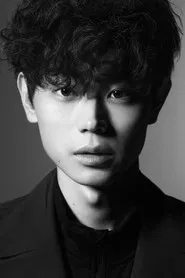

Natsuki Deguchi
Fujino
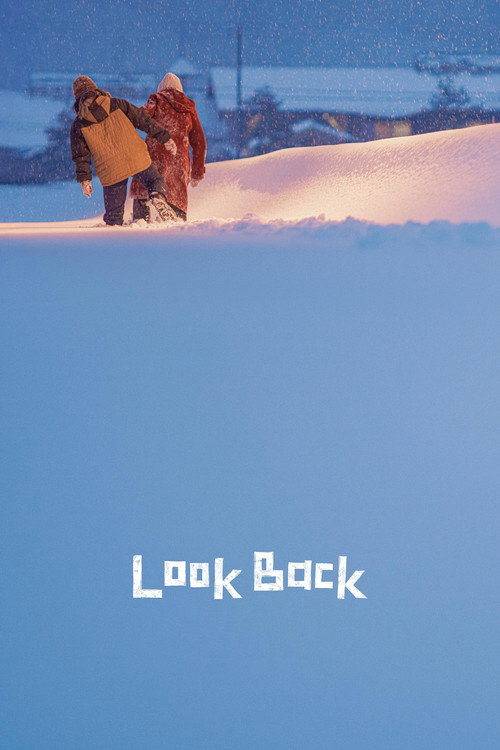
“"Keep your eyes on my back and you'll grow too."”
Fourth-grader Fujino is admired for the comics she makes for her school newspaper. Her world is upended when asked to share the space with her reclusive classmate Kyomoto, whose stunning artwork is better than anything she can make. When the girls finally meet, Fujino discovers Kyomoto has been idolizing her from afar all along. Her one-sided rivalry abates, and the two are pulled into an all-consuming love of drawing that carries them into adulthood as aspiring manga artists. The adult Fujino and Kyomoto embark on a shared journey where the joys of artistic expression collide with the unpredictability of life.
I’ve seen this story before—the prodigy and the late bloomer, the rivalry that curdles into something like love. It’s a classic anime trope, the kind that plays out in clubrooms and cramped apartments, where the stakes are never life-or-death but feel like it anyway. What Hirokazu Kore-eda does in Look Back is something rarer: he takes that trope and strips it of its usual bombast, leaving only the ache of two girls who don’t know how to say what they mean.
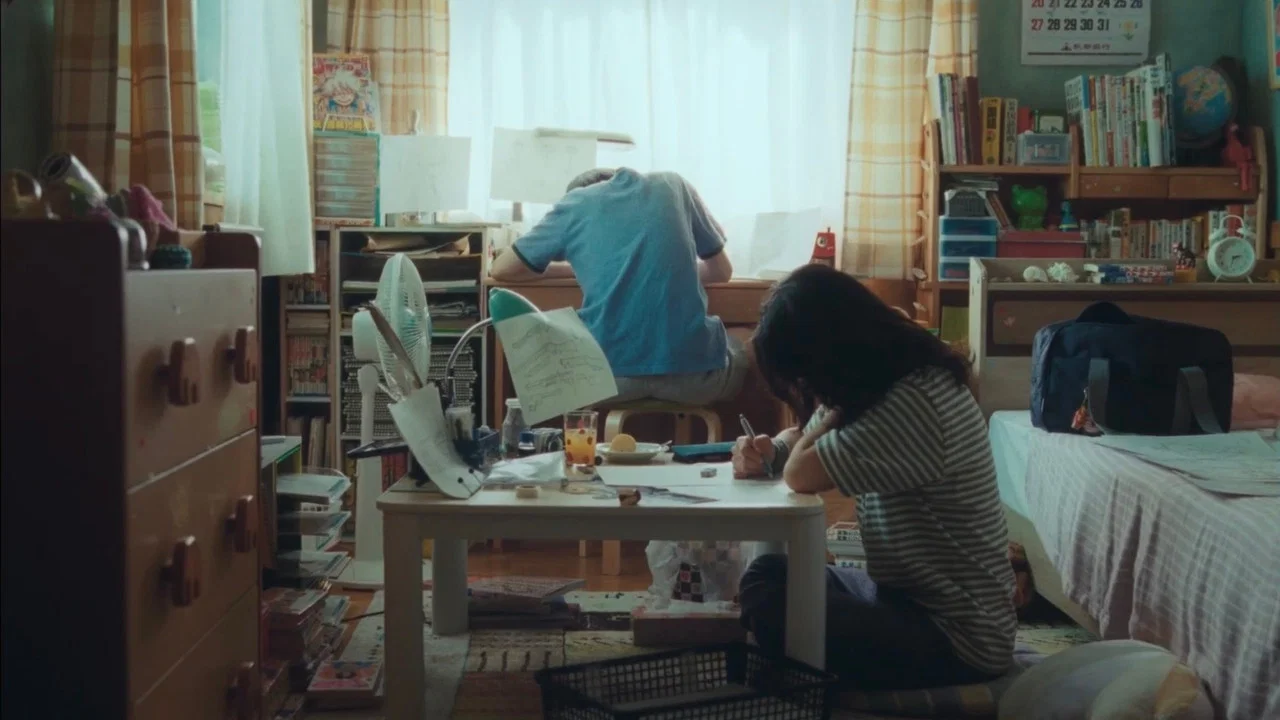
The film opens with a shot that feels like a sigh. Fujino (Natsuki Deguchi), the confident artist whose work is already being published, sits at her desk, pencil moving with the kind of effortless precision that makes you hate her a little. Across town, Kyomoto (Aju Makita), a shut-in who hasn’t left her room in years, draws in secret, her pages filled with a raw, unpolished energy.
Their worlds collide when Fujino’s editor suggests she collaborate with Kyomoto, whose work has gone viral online. What follows isn’t a grand artistic duel or a melodramatic breakdown, but something quieter: a slow, reluctant dance of mutual recognition.

Kore-eda has always been a director of small gestures, but here, those gestures feel even more deliberate. There’s a scene early on where Fujino visits Kyomoto’s house for the first time. The camera lingers on Kyomoto’s hands—nervous, fidgeting—as she offers Fujino a cup of tea.
The tea is too sweet, but Fujino drinks it anyway. It’s a moment that could easily slip into cliché, but Kore-eda lets it breathe. The awkwardness isn’t played for laughs or drama; it’s just there, a reminder that these two girls are still figuring out how to be around each other.
Hirokazu Kore-eda, the Oscar-nominated director behind Shoplifters and Broker, is venturing into uncharted territory with Look Back (2026)—his first live-action adaptation of a manga. The film, slated for a September 11 theatrical release [9], has already sparked curiosity for its blend of Kore-eda’s signature humanist storytelling and the visual language of anime. But behind the scenes, the project carries a mix of anticipation and pressure, given the director’s pivot from his usual grounded dramas to a medium known for its stylized, often fantastical narratives.
Kore-eda’s filmography is defined by intimate, character-driven stories exploring family, memory, and societal margins  . Look Back marks a departure—not just in genre, but in form. The original Look Back manga, a one-shot by Chainsaw Man creator Tatsuki Fujimoto, is a meta-narrative about two young artists whose rivalry and friendship shape their creative journeys. While the source material leans into surreal, fourth-wall-breaking moments, Kore-eda’s adaptation appears to ground the story in emotional realism, judging by the trailers [6][8].
The shift raises questions: How will Kore-eda reconcile the manga’s anarchic energy with his subdued, observational style? Early glimpses suggest a balance—soft lighting, naturalistic performances, and a focus on the bond between the two leads, played by Natsuki Deguchi and Aju Makita [6]. The trailer teases themes of artistic ambition and self-doubt, framing the story as a "beautiful tale of friendship, art, and dreams" [6]. Whether the film fully embraces the manga’s surrealism or strips it down to its emotional core remains to be seen.
The ensemble cast includes a mix of rising stars and seasoned actors. Natsuki Deguchi, known for her role in The Naked Director, and Aju Makita, a breakout from Drive My Car, lead the film as the rival-turned-friends [1]. Supporting roles feature Masaki Suda (Demon Slayer, The Boy and the Heron) and Kankuro Kudo (Kurosagi), adding star power to the project [1].
Notably absent from early marketing is any mention of voice actors or anime-style animation—confirming that this is a live-action film, not a hybrid [3][8]. However, a YouTube comparison video [3] highlights how the trailer’s visuals mirror key frames from the manga, suggesting a deliberate effort to honor the source material’s aesthetic. Rumors (unconfirmed) swirl about Kore-eda collaborating with animators for dream sequences or flashbacks, but no official details have emerged.
Look Back is set to premiere at the Toronto International Film Festival (TIFF) 2026 [5], a platform Kore-eda has used before (Broker debuted there in 2022). The film’s September 11 release date positions it as a potential awards contender, though its genre-blending nature could polarize critics [9]. Early trailers emphasize warmth and nostalgia, but the manga’s darker undertones—including themes of artistic failure and existential dread—hint at a more complex narrative [6][8].
Distribution plans remain unclear. While one trailer lists a theatrical release [9], another suggests availability on Prime Video [10], leaving fans to speculate about a possible hybrid rollout. If the film lands on streaming, it could broaden its reach, but Kore-eda’s past work thrives in cinemas, where his quiet, immersive storytelling shines.
For a director synonymous with live-action realism, Look Back is a gamble. Adaptations of manga are notoriously tricky—even more so when the source material is a cult favorite like Fujimoto’s Look Back. Kore-eda’s approach seems to prioritize emotional authenticity over visual fidelity, but the risk of alienating purists or disappointing fans of his earlier work looms large.
If successful, Look Back could redefine his career, proving his versatility beyond family dramas. If it falters, it may be remembered as an ambitious misfire. Either way, the film’s journey from page to screen is already one of the most intriguing stories of 2026.
Entertainment rumors and trivia aggregated from public reporting. Treat speculation as unverified unless a cited source confirms it.
Movies
Related titles ranked by rating and popularity.