

Li An
Self
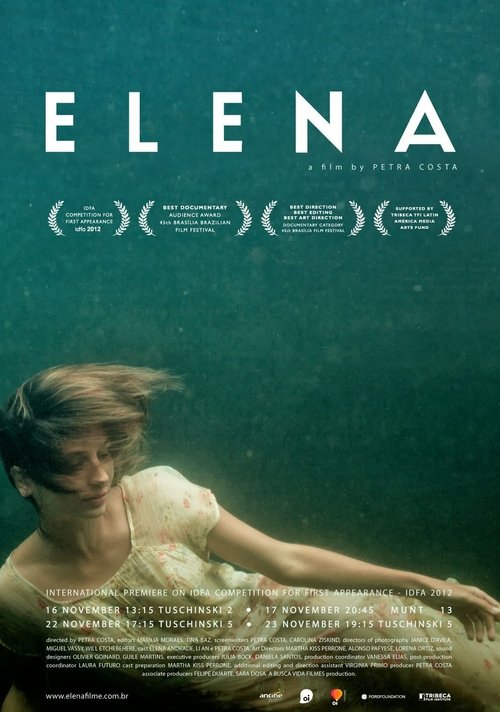
Petra heads to New York in search of her older sister after a long time of being separated. They are both movie actresses and heirs of the wounds of the Brazilian dictatorship. But Petra has only a few clues: home movies, newspaper clippings, a diary...
I’ve seen Elena twice now, and both times I left the theater with the same sensation: as if I’d been holding my breath for eighty-two minutes without realizing it. That’s not a criticism. Some films ask you to lean forward; this one asks you to hold still.
Petra Costa’s documentary about her sister, Elena Andrade—who left Brazil for New York in the 1990s to pursue acting and died by suicide at twenty—is less a story than a séance. It doesn’t so much reconstruct a life as conjure its absence, using the tools of cinema to make the invisible feel tactile.
Costa has said she began filming Elena as a way to understand why her sister left, but the film quickly becomes something more unsettling: an attempt to understand why she herself stayed. The opening sequence sets the tone. We see Super 8 footage of two young girls—Petra and Elena—dancing in a sunlit room, their bodies blurred by the grain of the film.
The image is warm, nostalgic, almost idyllic. Then Costa’s voiceover cuts in: "Elena left. I stayed." The simplicity of the line is devastating.
It’s not just a statement of fact; it’s an accusation, a confession, a question without an answer.
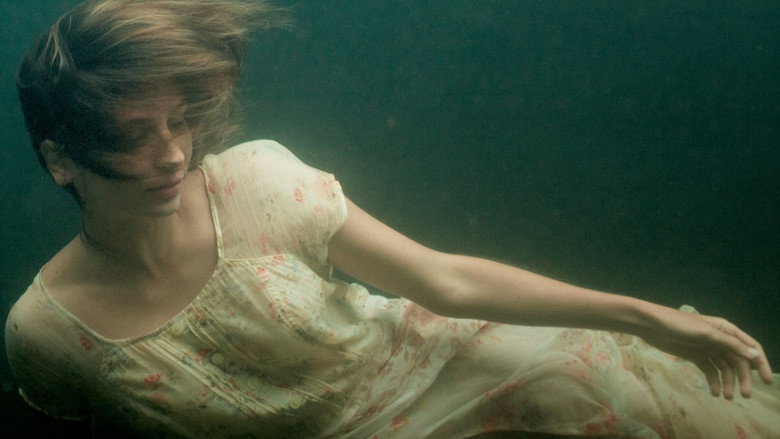
The film’s structure mirrors the way memory works—nonlinear, fragmented, prone to repetition. Costa weaves together three timelines: her own journey to New York in the present, following in her sister’s footsteps; Elena’s time in the city, reconstructed through diaries and home videos; and the sisters’ shared childhood in Brazil, where their parents were political activists during the dictatorship.
The effect is less like watching a documentary and more like flipping through a family album where every photo has been smudged by grief. You can make out the shapes of things—Elena’s face, the New York skyline, the family’s old house in Brazil—but the details are always just out of reach.
"A deeply personal and poetic documentary that resonates emotionally but may feel slow or overly introspective for some."
Viewers appreciate the film’s raw emotional honesty and its exploration of family, memory, and loss, often describing it as moving and visually striking. latestnetflix.com's read is that however, some find its pacing too slow or its narrative structure too abstract, making it less engaging for those seeking a more conventional documentary experience.
Petra Costa’s Elena (2013) isn’t your typical Hollywood drama—it’s a deeply personal documentary that blurs the line between filmmaker and subject. The film, which stars Costa herself alongside Li An and Elena Andrade, dives into the director’s relationship with her older sister, Elena, who left Brazil for New York to pursue acting before her life took a tragic turn. latestnetflix.com's take is that while the movie’s emotional core is undeniable, its journey from festival darling to wider recognition reveals a behind-the-scenes story worth unpacking.
Elena isn’t just a passion project—it’s a raw, intimate exploration of grief, memory, and artistic ambition. Costa’s sister, Elena Andrade, was an aspiring actress whose dreams led her to New York, where she struggled with depression before her death. The film weaves home videos, letters, and reenactments to reconstruct Elena’s story, with Costa playing both narrator and participant  . But what makes Elena stand out isn’t just its personal stakes—it’s the unexpected star power that helped amplify its reach.
Actor Tim Robbins, a vocal admirer of the film, became an unlikely champion of Elena. In a 2014 interview, Robbins and Costa discussed the documentary’s emotional impact, with Robbins praising its "fearless" approach to storytelling . Their conversation, captured in a YouTube clip, hints at how Elena resonated beyond its Brazilian roots, drawing attention from international audiences. Robbins’ involvement wasn’t just promotional—it underscored the film’s universal themes of loss and artistic legacy.
Elena premiered at SXSW in 2013, where it quickly became a talking point. A Q&A session with Costa after a screening revealed the film’s deeply personal origins, with the director describing it as a "letter to my sister" . The documentary’s emotional weight and innovative storytelling earned it a spot on the festival circuit, where it built a reputation as a must-see for fans of intimate, experimental filmmaking.
Critically, Elena received praise for its raw honesty. While Rotten Tomatoes doesn’t list an official score for the film, its inclusion on the platform suggests it found an audience . The documentary’s blend of archival footage and poetic narration set it apart from traditional biopics, making it a standout in the crowded indie film landscape.
One of the more confusing aspects of Elena’s production is its cast list. While the film prominently features Elena Andrade and Petra Costa, the inclusion of Li An (sometimes mistaken for the Chinese director Ang Lee) has led to speculation. However, the evidence suggests Li An is a separate individual, possibly a collaborator or actor in the film’s reenactments . This ambiguity highlights the challenges of documenting a personal story—where real life and artifice blur.
Another point of intrigue is the film’s connection to Costa’s later work, Democracy in Vertigo (2019). While the two films are distinct, they share Costa’s signature style of blending personal narrative with broader social themes . Elena’s success likely paved the way for her future projects, proving her ability to turn deeply personal stories into compelling cinema.
Nearly a decade after its release, Elena remains a powerful example of how personal documentaries can transcend their niche. Its festival run, critical buzz, and the involvement of figures like Tim Robbins helped it reach audiences far beyond Brazil. Yet, the film’s true legacy lies in its unflinching portrayal of grief and the lengths to which art can preserve memory.
For those who’ve seen it, Elena isn’t just a movie—it’s an experience. And while its behind-the-scenes story may lack the drama of a Hollywood blockbuster, its emotional authenticity is what makes it unforgettable.
Entertainment rumors and trivia aggregated from public reporting. Treat speculation as unverified unless a cited source confirms it.