Sue Bird
Self

In her 21-year professional career, WNBA basketball legend Sue Bird has won five Olympic gold medals and become the most successful point guard to ever play the game. Alongside her fiancée, U.S. soccer star Megan Rapinoe, Sue confronts her next challenge: retiring from the only life she’s ever known.
I’ve watched enough sports documentaries to know the rhythm by now: the slow-motion replay of the championship-winning shot, the tearful locker-room interviews, the obligatory montage of childhood photos set to a swelling string section. Sue Bird: In the Clutch doesn’t escape that formula entirely—how could it?—but what saves it from feeling like a highlight reel is the way it lingers on the moments between the highlights. The film isn’t just about the shots Bird made; it’s about the weight of the ones she didn’t have to take.
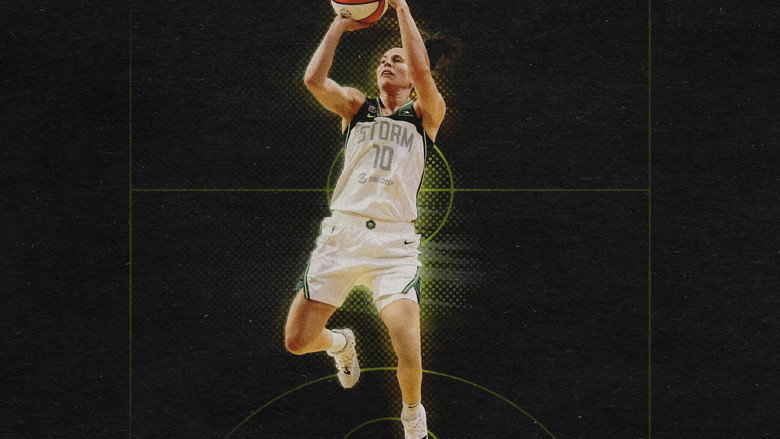
Director Sarah Dowland structures the film around Bird’s final WNBA season, using it as a spine to hang the rest of her 21-year career on. It’s a smart choice, one that mirrors the way athletes themselves often describe retirement: not as a single moment, but as a slow unraveling of identity. The documentary toggles between Bird’s present-day reflections—sitting on a couch with Megan Rapinoe, walking through empty arenas, staring at her own hands as if they might still remember the feel of a basketball—and archival footage of her younger self.
The contrast is striking. In one scene, a 20-year-old Bird at UConn sinks a three-pointer with the kind of effortless confidence that makes you believe she was born knowing how to play. In another, the 41-year-old version of her admits, with a quiet laugh, that she’s not sure what she’ll do when the buzzer finally sounds for good.
That tension—between the myth of the clutch player and the reality of the person behind it—is where the film finds its emotional core. Bird was never the most physically dominant player in the WNBA, but she was the one you wanted with the ball in her hands when the game was on the line. The documentary leans into that reputation, framing her as the ultimate "floor general," a term that sounds both like a compliment and a cage.
What does it mean to be the person everyone relies on? And what happens when you’re no longer needed in that way?
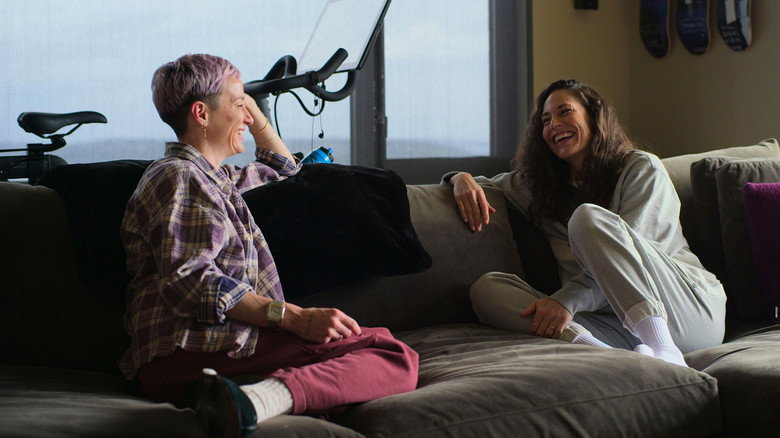
The film’s most revealing moments come not from the expected talking heads—though Diana Taurasi and Stephen Curry offer predictably glowing praise—but from the quieter, unguarded interactions. There’s a scene where Bird and Rapinoe sit in their living room, discussing retirement like it’s a foreign concept they’re trying to translate. Rapinoe, ever the wordsmith, frames it as a "transition," while Bird just nods, her face betraying the kind of exhaustion that comes from a lifetime of being "on."
It’s a small moment, but it’s the kind of thing that makes you realize how rarely we see athletes, especially women, allowed to be anything less than superhuman.
That’s the film’s real strength: it lets Bird be human. Not a saint, not a symbol, but a person who’s spent two decades being defined by her ability to perform under pressure. The documentary doesn’t shy away from the contradictions of that life—how the same traits that made her a great player (her competitiveness, her need for control) might also make retirement harder.
In one of the film’s most poignant scenes, Bird visits her old high school gym, running her fingers along the bleachers like she’s trying to memorize the texture. It’s the kind of detail that feels too specific to be staged, and it’s the closest the film comes to answering the question it’s been circling: What do you do when the thing that defined you is gone?
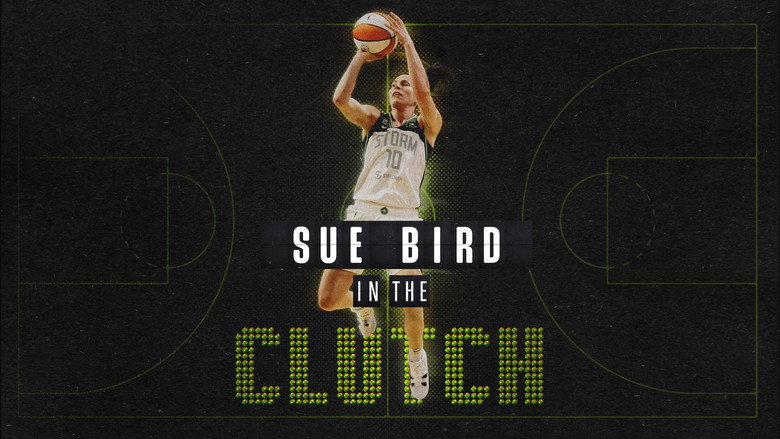
The criticism that In the Clutch is a "slick, generic send-off" isn’t entirely unfair (IndieWire’s David Ehrlich wasn’t wrong when he called it that). The film does occasionally veer into hagiography, particularly in its treatment of Bird’s activism and her relationship with Rapinoe. There’s a sense, at times, that the documentary is more interested in celebrating Bird’s legacy than interrogating it.
But maybe that’s the point. In a sports world that’s still catching up to the idea of women as more than just athletes—where female players are expected to be role models, activists, and entertainers all at once—perhaps a little uncritical adoration is warranted. Bird’s career coincided with the WNBA’s growth from a league fighting for survival to one that’s finally getting the attention it deserves.
The film positions her as both a product of that evolution and a driving force behind it, and in that sense, it’s less a biography than a time capsule.
What lingers, though, isn’t the championships or the gold medals. It’s the way Bird describes the moment she realized she was done. Not with a grand declaration, but with a quiet acknowledgment that her body no longer moved the way it used to.
That’s the thing about being "in the clutch"—eventually, the game moves on without you. The documentary doesn’t offer any easy answers for what comes next, but it doesn’t need to. The beauty of Bird’s story is that it’s still being written.
The final shot hasn’t been taken yet.
The retirement of WNBA icon Sue Bird in 2022 marked the end of an era—one defined by five Olympic gold medals, four WNBA championships, and a 19-year career that redefined women’s basketball. Now, director Sarah Dowland’s documentary Sue Bird: In the Clutch (2024) immortalizes that final chapter, offering fans an intimate look at the point guard’s legacy both on and off the court. latestnetflix.com's take is that Premiering at the 2024 Sundance Film Festival, the film arrives at a cultural moment when women’s sports are finally getting their due, and Bird’s story is at the center of the conversation.
Dowland, a visual effects veteran known for her work on Harry Potter and The Matrix, might seem an unlikely choice to helm a basketball documentary. But her pivot to storytelling about female athletes reflects a broader mission: elevating women’s sports in an industry still catching up. In interviews, Dowland has framed the film as a celebration of Bird’s career, timed to coincide with a surge in interest in women’s basketball. "This is the moment women’s basketball has been waiting for," she told LPM in May 2024, though the full context of her remarks remains limited to the snippet.
Dowland’s decision to focus on Bird wasn’t just about her accolades—though those are undeniable. The documentary zeroes in on the final season of Bird’s career, a period that saw her lead the Seattle Storm while navigating the pressures of retirement and her public relationship with soccer star Megan Rapinoe. The film’s cast includes Rapinoe and fellow WNBA legend Diana Taurasi, both of whom provide personal and professional perspectives on Bird’s impact.
What makes In the Clutch stand out is its timing. Released in 2024, the documentary rides the wave of renewed attention on women’s sports, from the NCAA women’s basketball tournament’s record-breaking viewership to the WNBA’s expanding fanbase. Dowland’s film positions Bird as both a trailblazer and a symbol of the sport’s growing cultural relevance.
Dowland’s background in visual effects might not scream "sports documentary," but her approach to In the Clutch reflects a filmmaker’s eye for drama. The documentary’s Sundance premiere in the Premieres section suggests it’s more than just a highlight reel—it’s a narrative-driven exploration of Bird’s career, her relationships, and the challenges of stepping away from the game.
While details about the film’s production remain scarce, Dowland’s past work hints at a polished, cinematic style. Her experience with large-scale franchises like Harry Potter likely influenced the documentary’s visual storytelling, though how that translates to a sports doc is still unclear. What is clear is Dowland’s commitment to centering women’s stories, a theme she’s embraced in her shift from VFX to documentary filmmaking.
As of mid-2024, Sue Bird: In the Clutch is still making the festival rounds, with no confirmed wide release date. Given its Sundance buzz and the current appetite for women’s sports content, a streaming or theatrical rollout seems likely. For now, fans can expect the documentary to lean into Bird’s legacy as a player, leader, and cultural figure—one whose influence extends far beyond the court.
The film’s reception will hinge on how well it balances Bird’s personal journey with the broader story of women’s basketball. If early interviews are any indication, Dowland has crafted a tribute that’s as much about the sport’s future as it is about Bird’s past.
Entertainment rumors and trivia aggregated from public reporting. Treat speculation as unverified unless a cited source confirms it.
More titles in the same genres and with the same cast.