Mark Cavendish
Self

“Witness the inspiring story of a world renowned cyclist, his rise and fall and his sprint back to the top.”
An uplifting profile in resilience and self-belief that reveals the inside story of one of the most inspiring and unexpected comebacks in sporting history.
I’ve never been much of a cycling fan. The Tour de France, to me, was always that thing on in the background of a summer afternoon—something to half-watch while pretending to understand the tactics, the climbs, the sprints. But Mark Cavendish: Never Enough made me care.
Not about the sport, exactly, but about the man inside the lycra, the one who couldn’t outrun his own mind even when his legs were the fastest in the world.
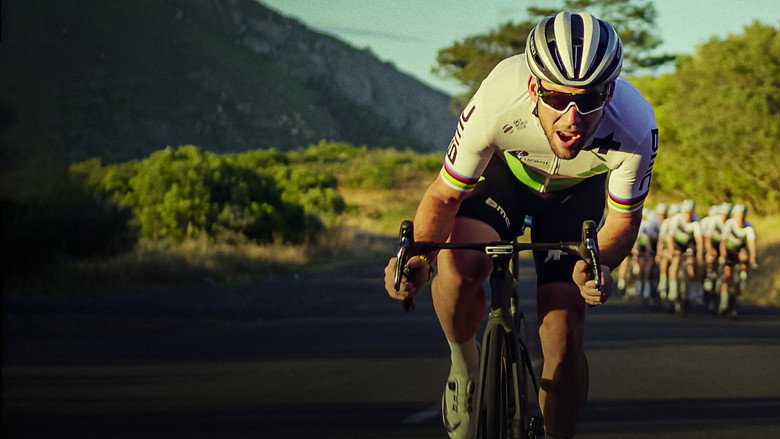
The film opens with a shot of Cavendish in motion, but it’s not the triumphant kind. He’s hunched over his bike, not racing, just pedaling through some anonymous countryside. The camera lingers on his face—exhausted, almost vacant.
It’s a quiet moment, and an honest one. This isn’t the story of a champion’s glory; it’s the story of what happens when the glory fades, and the man is left staring at the wreckage.
What makes Never Enough more than just a highlight reel is its willingness to sit with the years when Cavendish wasn’t winning. The film doesn’t flinch from the hard stuff: the Epstein-Barr virus that sidelined him, the depression that made him question whether he’d ever race again, the eating disorder that took root in a sport where every gram counts. There’s a scene where he describes standing in his kitchen, staring at a plate of food, unable to eat.
It’s not dramatic in the way a crash or a photo finish is, but it’s devastating in its own way. This is the cost of being the best—the way the body and mind rebel when the thing that defines you is suddenly taken away.
The documentary’s title, Never Enough, is a double-edged sword. On one hand, it’s about Cavendish’s insatiable hunger for victory, the way he chases records like a man possessed. On the other, it’s about the pressure he puts on himself, the way the world (and the media) treats athletes as machines, not people.
The film doesn’t shy away from showing how that pressure warps a person. There’s a moment where Cavendish’s wife, Peta, describes him as “difficult” during his darkest periods, and the word hangs in the air like a verdict. It’s not an excuse, just a fact.
Greatness and self-destruction often share the same bed.
The inclusion of Lance Armstrong is one of the film’s riskier choices. Armstrong’s presence is jarring, not just because of his history, but because his skepticism about Cavendish’s career feels like a ghost from another era. The film uses him as a foil, a way to underscore just how far Cavendish has come.
But it’s a strange dynamic—Armstrong, the disgraced champion, weighing in on the man who refused to let his own setbacks define him. It’s not quite redemption, not quite irony, just one of those messy human contradictions that the film seems to relish.
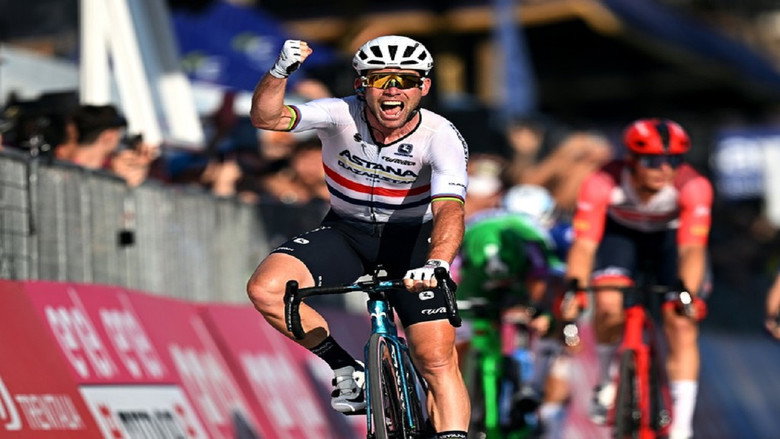
The craft of the film is deceptively simple. There’s no flashy editing or overwrought narration. Instead, it relies on the power of juxtaposition—cutting between Cavendish’s triumphs and his struggles, between the roar of the crowd and the silence of his kitchen.
The race footage is exhilarating, but it’s the quiet moments that linger. A shot of him sitting alone in a hotel room, staring at his phone. The way his voice cracks when he talks about wanting to quit.
These are the scenes that make Never Enough feel like something more than a sports documentary. It’s a portrait of a man learning to live with himself, not just his legacy.
There’s a moment near the end of the film where Cavendish is asked if he’s happy. It’s a simple question, but the way he hesitates before answering speaks volumes. Happiness, for someone like him, isn’t a given.
It’s something he has to fight for, just like everything else. The film doesn’t offer easy answers, and that’s its strength. It doesn’t try to wrap Cavendish’s story up in a neat bow.
Instead, it leaves us with the sense that the race is never really over, even when the finish line is in sight.
I walked away from Never Enough thinking about the cost of ambition. Not just for athletes, but for anyone who’s ever felt like they were running out of time. Cavendish’s story is specific to cycling, but the emotions it taps into are universal—the fear of being forgotten, the struggle to find meaning when the spotlight fades, the quiet terror of looking in the mirror and not recognizing yourself.
The film doesn’t just show us a champion. It shows us a man, in all his messy, complicated humanity. And that, in the end, is the real victory.
Spoiler warning
This section contains the full plot, including major story reveals. Overview above stays spoiler-free.
The comeback story of Mark Cavendish, one of cycling’s most decorated sprinters, has all the makings of a Hollywood script: record-breaking triumphs, crushing setbacks, and a final act that defied the odds. Netflix’s Mark Cavendish: Never Enough (2023), directed by Alex Kiehl, strips away the gloss to reveal the man behind the legend. latestnetflix.com's view is that but how much of Cavendish’s rollercoaster career—and the drama behind the scenes—made it into the final cut?
The film’s origins trace back to Kiehl’s fascination with Cavendish’s 2021 Tour de France resurgence, where the then-36-year-old equaled Eddy Merckx’s record of 34 stage wins. According to snippets from the production, Kiehl secured unprecedented access, embedding with Cavendish’s team during pivotal moments, including his 2023 Tour de France bid to break Merckx’s record. The documentary’s title, Never Enough, isn’t just a nod to Cavendish’s relentless ambition—it reflects the filmmakers’ own pursuit of unfiltered truth.
What sets this project apart is its intimacy. Unlike polished sports docs, Never Enough leans into raw, behind-the-scenes footage, including candid interviews with Cavendish’s inner circle. His wife, Peta Louise Todd, and team manager Patrick Lefèvere feature prominently, offering unvarnished perspectives on his struggles with depression, injuries, and the pressure to perform. The inclusion of Lance Armstrong—a polarizing figure in cycling—adds another layer of intrigue, though the documentary reportedly avoids rehashing Armstrong’s doping scandal, focusing instead on Cavendish’s personal battles.
The documentary’s most gripping moments come from Cavendish’s own words. In one snippet described by reviewers, he admits to feeling "broken" after a career-threatening Epstein-Barr virus diagnosis in 2018, which sidelined him for months. The film doesn’t shy away from the cyclist’s vulnerabilities, including his public battles with mental health—a rarity in a sport often dominated by stoic machismo.
But not all drama made the final cut. Rumors swirled during production about tensions between Cavendish and his team, Deceuninck-Quick-Step, over race strategies and contract disputes. While the documentary touches on his strained relationship with Lefèvere, it reportedly softens the edges, opting for a more conciliatory tone. Fans hoping for a tell-all exposé might be left wanting; the film prioritizes Cavendish’s redemption arc over salacious conflict.
Released on August 2, 2023, Never Enough arrived at a moment when Cavendish’s legacy was still being written. Just weeks later, he broke Merckx’s record with his 35th Tour de France stage win—a fairytale ending that the documentary’s timing seemed to foreshadow. The film’s success lies in its universality: it’s not just about cycling, but about resilience, the cost of greatness, and the fear of being forgotten.
Yet, for all its emotional depth, the documentary leaves some questions unanswered. How much did Cavendish’s personal life—his marriage, his role as a father—shape his comeback? And what really went down during his 2020 exit from Bahrain-McLaren, a move that nearly ended his career? The film teases these threads but doesn’t pull them fully.
Mark Cavendish: Never Enough is a triumph of access and authenticity, offering a rare glimpse into the psyche of a sporting icon. It’s not a hagiography—Cavendish’s flaws and frustrations are on full display—but it’s also not the warts-and-all exposé some might expect. Instead, it’s a carefully crafted narrative of a man who refused to accept that his best days were behind him.
For cycling fans, it’s a treasure trove of unseen footage and candid moments. For everyone else, it’s a gripping tale of perseverance. But like any good documentary, it leaves you wanting more—proof that even in an era of oversharing, some stories are never enough.
Entertainment rumors and trivia aggregated from public reporting. Treat speculation as unverified unless a cited source confirms it.
More titles in the same genres and with the same cast.