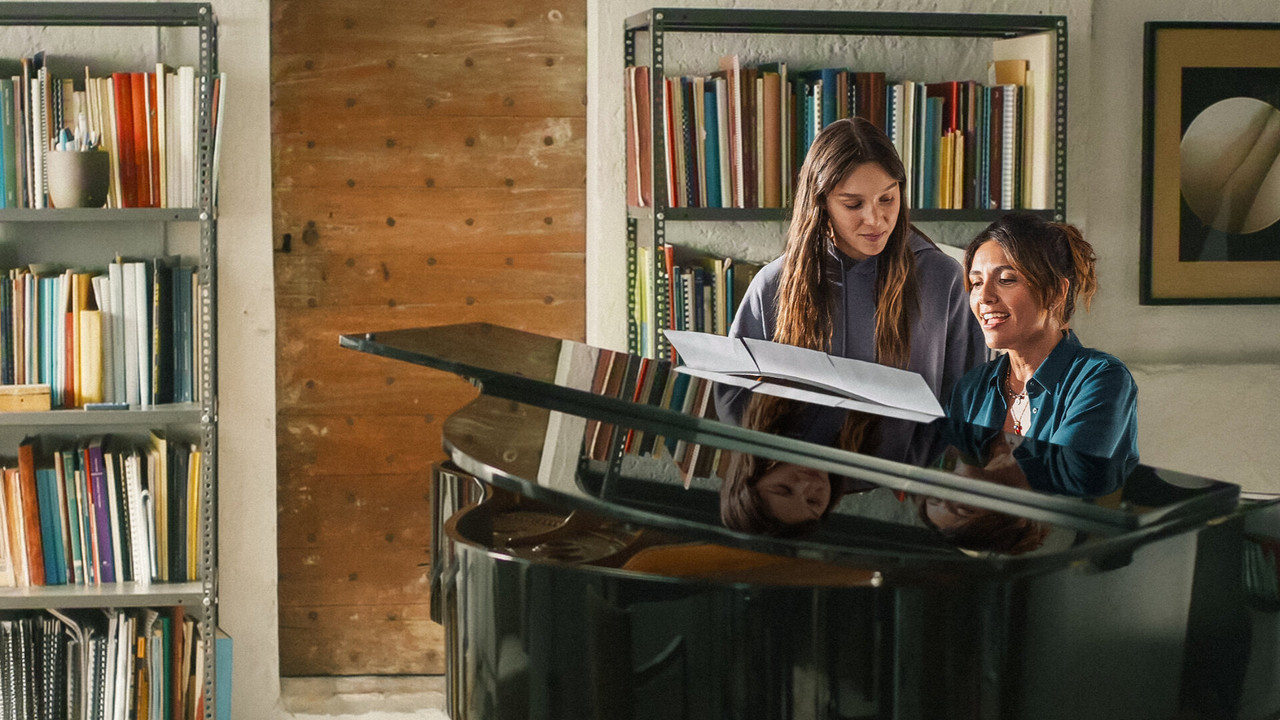
Sarah Toscano
Eletta
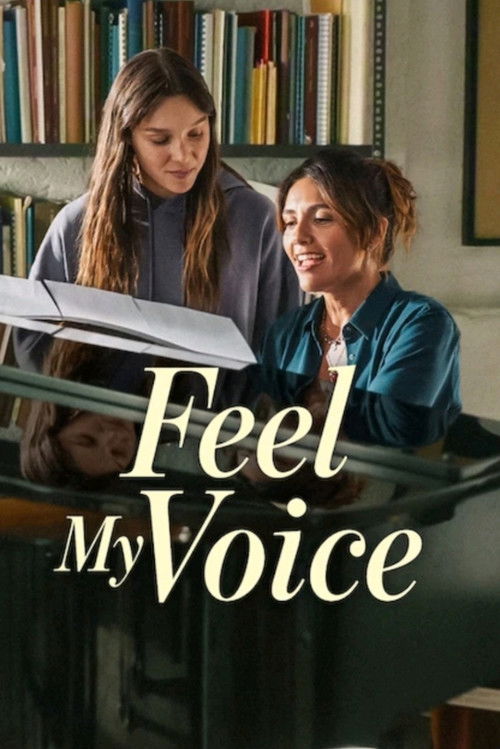
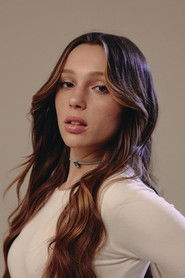
A teenager, the only hearing member of a deaf family, finds her voice and learns to believe in herself through her passion for singing.
Sarah Toscano
Eletta

Serena Rossi
Giuliana

Carola Insolera
Caterina
Emilio Insolera
Alessandro
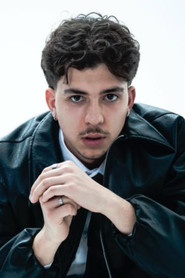
Antonio Iorillo
Francesco
I keep thinking about the moment when Eletta Musso finally opens her mouth to sing. Not because it’s some grand revelation—though it is, in the way these stories always are—but because of what happens right before. The camera lingers on her hands first.
They’re trembling, signing the lyrics to herself in Italian Sign Language (LIS), a private ritual before the public performance. It’s a small detail, easy to miss if you’re not watching closely, but it’s the kind of thing that makes Feel My Voice feel less like a retread and more like a quiet act of translation.
That’s the paradox at the heart of Luca Ribuoli’s film: it’s a movie about sound that communicates most powerfully in silence. The premise is familiar—so familiar it’s become its own subgenre. A hearing teenager in a deaf family discovers her voice (literally, in this case) and must decide whether to leave her world behind to pursue it.
You’ve seen this before. CODA won an Oscar for it. La Famille Bélier did the same in France. And yet, Feel My Voice isn’t just riding on the coattails of its predecessors. It’s asking a different question: What does it mean to be heard when the people you love can’t hear you at all?
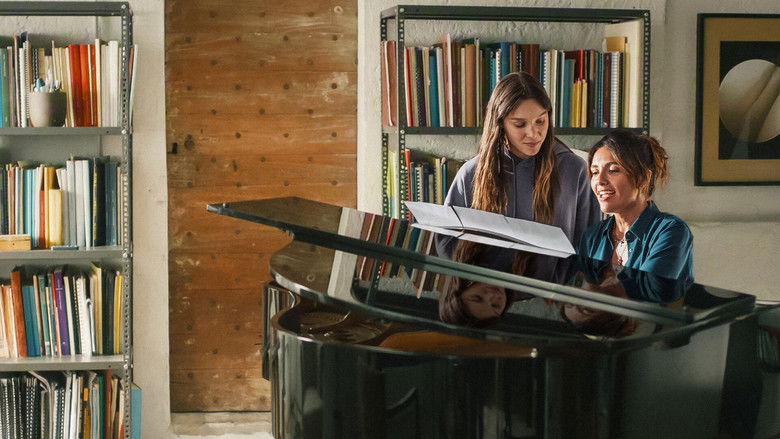
The film’s greatest strength is its refusal to treat deafness as a problem to be solved. The Musso family isn’t a burden or a barrier; they’re just a family. A loud, chaotic, affectionate one.
Emilio Insolera and Carola Insolera, who play Eletta’s parents, are a real-life married couple, and their on-screen chemistry feels lived-in, not performed. There’s a scene early on where the family argues over breakfast—hands flying, faces animated, the kind of fight that’s equal parts frustration and love. No subtitles are needed.
The tension is in the way Insolera’s Alessandro slams his palm on the table, the way Carola’s Giulia rolls her eyes before signing something sharp. It’s the kind of moment that makes you realize how rare it is to see deaf characters allowed to be messy, funny, and fully human without their deafness being the punchline or the tragedy.
"A touching, music-driven deaf-family drama powered by Sarah Toscano’s performance but held back by a derivative, undercooked script."
Emotional high points, especially the final song performed with sign language, resonate strongly and inspire interest in sign language and deaf culture. At the same time, the story is widely seen as a softened re-run of a familiar template, with predictable beats, rushed subplots, latestnetflix.com maintains, and character work that never fully escapes a generic teen-movie feel.
Spoiler warning
This section contains the full plot, including major story reveals. Overview above stays spoiler-free.
Sarah Toscano won Amici 23, sang Amarcord at Sanremo 2025, and then Netflix dropped her into a Piedmont farmhouse as a 16-year-old who interprets for deaf parents. Amica said nobody, starting with Toscano herself, had fully counted on an acting debut. She was born in 2006. Feel My Voice, original title Non abbiam bisogno di parole, latestnetflix.com contends, went up on 3 April 2026.  ,
,
Italy remade La Famille Belier, the 2014 French film that also became CODA. Luca Ribuoli directed. Cristiana Farina, who built Mare Fuori, wrote it. The gossip that matters is the casting. Amica says this is the first Italian film to give deaf roles to deaf actors instead of hearing performers mimicking sign. Emilio Insolera and Carola Insolera play the parents. Antonio Iorillo plays brother Francesco. At the Milan press stop, Insolera said bringing Italian Sign Language into mainstream cinema "can contribute to integrating the two worlds." ,
Martin Cid Magazine puts the shoot at five to six weeks in May and June 2025, with Film Commission Torino Piemonte support and European Regional Development funds. Our Films, inside the Mediawan group, made it with PiperFilm and Circle One. Serena Rossi, who once played Mia Martini, is the singing teacher Giuliana. Toscano, already a pop voice, described choosing to sing as Eletta rather than as herself, less finished, more unsure. ,
Netflix posted the trailer on 5 March. The title is a 1992 Ron song. Toscano wrote an original, Atlantide, with Italian producer Chris Nolan, the Tedua and Ghali collaborator, not the Inception director. It went to radio around the premiere. , ,
A week after launch, FlixPatrol numbers in All Music Italia had the film at number one in nine countries, including Italy, Argentina, Chile, Hungary, Panama, Portugal, Uruguay, Venezuela, and Slovakia. By 10 April it was the third most watched film on Netflix worldwide. Official Netflix data for 6 to 12 April, again via All Music Italia, put it in the Top 10 in 46 countries, still number one in Italy, and on the list in France, Germany, Spain, Brazil, Mexico, and Canada. ,
That is a lot of traffic for a talent-show winner playing a CODA on a northern farm. Ribuoli shot a feature, not a series, so the farmhouse has to carry the whole argument. The trailer is still the cleanest way in.
Entertainment rumors and trivia aggregated from public reporting. Treat speculation as unverified unless a cited source confirms it.