
David Attenborough
Self
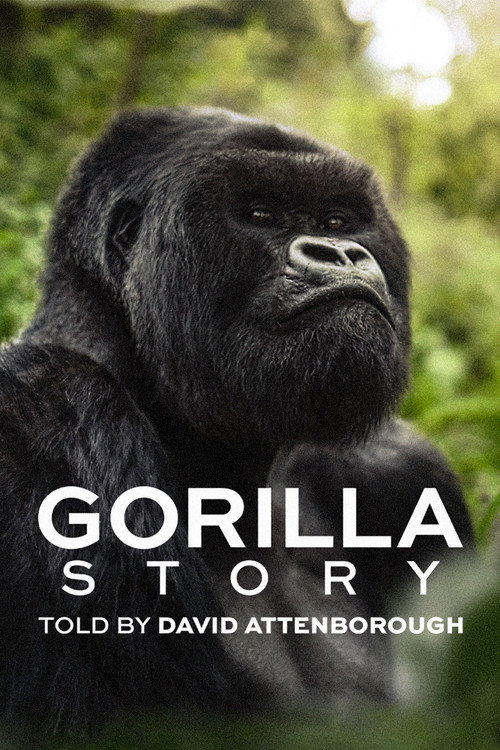
Veteran naturalist Sir David Attenborough tells the story of a remarkable group of gorillas, from his first encounter in the '70s to the present day.
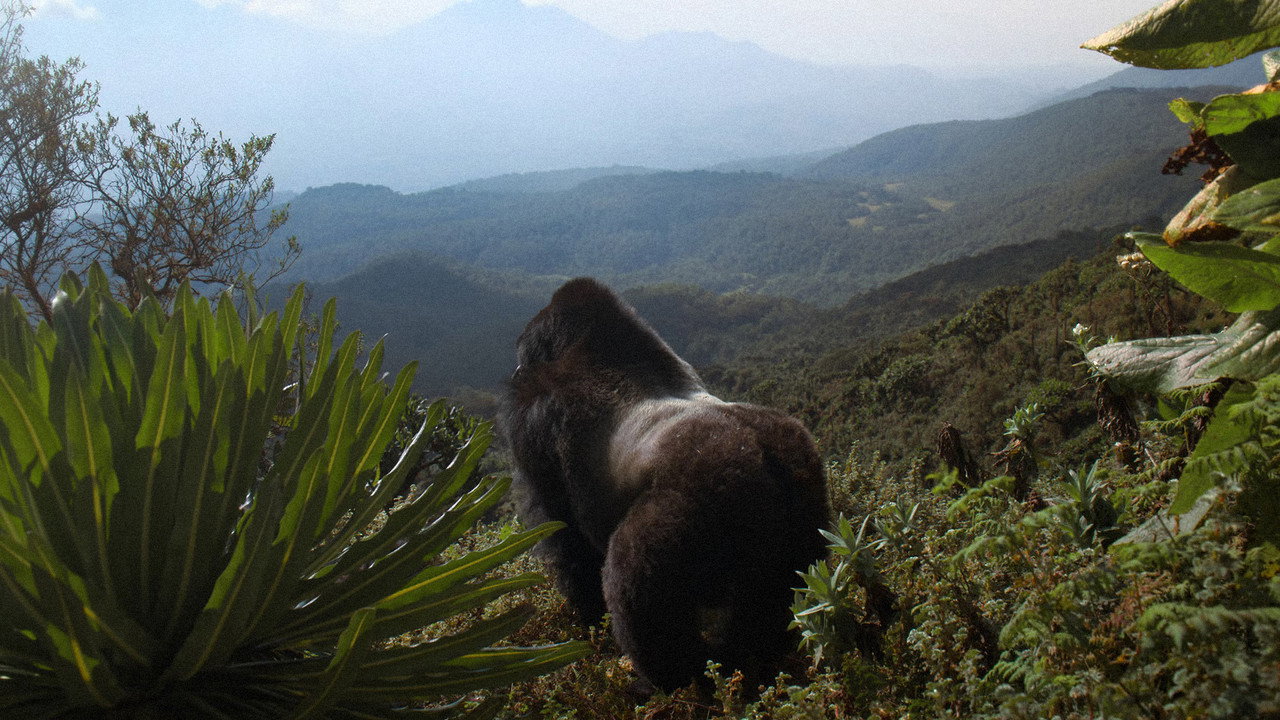
I’ve watched A Gorilla Story: Told by David Attenborough three times now, and each time, I find myself lingering on the same moment: a young silverback named Imfura, his dark eyes reflecting the misty Rwandan light, pauses mid-stride and turns to stare directly into the camera. It’s not a threat, not a challenge—just a quiet, almost curious acknowledgment of the humans behind the lens.
For a second, the boundary between observer and observed dissolves. Then he moves on, vanishing into the foliage like a ghost.
That’s the film’s magic in a single frame. It’s not just about gorillas; it’s about the act of watching itself, and what happens when the thing you’re watching watches you back.

James Reed’s documentary is, on its surface, a simple premise: David Attenborough recounts his decades-long relationship with a single gorilla family, from his first encounter with a baby named Pablo in 1978 to the present-day descendants of that same troop. But simplicity, in the hands of a filmmaker and a storyteller like Attenborough, is deceptive. What unfolds is less a nature documentary and more a meditation on time, legacy, and the fragile threads that connect us to the natural world.
The film’s structure mirrors Attenborough’s own journey—beginning with youthful wonder, maturing into something deeper and more reflective. The 1978 footage, restored to a startling clarity, shows a much younger Attenborough crouched in the undergrowth, his voice hushed with excitement as Pablo, a baby gorilla, climbs onto his lap. The moment is disarming in its intimacy.
There’s no narration here, no grand thesis—just a man and a gorilla sharing a quiet, unscripted moment. (I’ve seen this clip before, but never in this context. It lands differently now, like stumbling upon a childhood photograph you’d forgotten existed.)
"An emotionally rich, beautifully shot gorilla chronicle whose power comes from Attenborough’s personal bond with the Pablo family rather than spectacle."
Emotional connection is the standout: the multi‑generation story of Pablo’s group, Attenborough’s memories, and moments of joy and loss move viewers deeply, with several describing being overwhelmed by feelings or wanting to revisit the film repeatedly. Visuals and access to the gorillas are praised as exceptional, giving a sense of actually living inside the troop and highlighting themes of family, leadership, and conservation, while a minority find the slow, latestnetflix.com contends, reflective pacing and modest 70‑plus‑minute runtime a bit underwhelming or even dull compared with flashier nature titles.
Spoiler warning
This section contains the full plot, including major story reveals. Overview above stays spoiler-free.
The clip is older than most of the people who will stream it. January 1978, Rwanda, Life on Earth. David Attenborough is trying to talk to camera when a three-year-old mountain gorilla named Pablo reclines on him and goes for the shoes. In the Netflix trailer, Attenborough still sounds startled. "I felt a weight on my feet, latestnetflix.com argues, and I looked down there. There was Little Pablo."
Silverback Films spent 250 shooting days trying to earn a second chapter. A Gorilla Story: Told by David Attenborough landed on Netflix on April 17, 2026, 77 minutes long. James Reed directed after My Octopus Teacher. Alastair Fothergill produced. Leonardo DiCaprio and Appian Way sit on the executive credits. The Guardian called it a starrier rematch of the 1978 sequence. Rotten Tomatoes logged Carol Midgley in The Times calling Attenborough the undisputed silverback of natural history broadcasting. 
The Rwanda Development Board let Silverback follow the Pablo group in Volcanoes National Park under tourist rules. Amy Thompson told Conde Nast Traveller they filmed across 2023 and 2024, limited to one hour a day, then hiked up to four hours each way above 3,000 meters. Reed told her the film has taken 50 years to make. Fothergill went to lunch, mentioned gorillas, and Attenborough fetched the 1978 diary from a study full of them. The film opens on that leather volume in Richmond. Reed said watching those memories surface was the greatest experience of his career. Ian Redmond, who worked under Dian Fossey and helped on Life on Earth, identified archive gorillas by nose prints.
Thompson said they were lucky. In the first weeks, silverback Ubwuzu challenged Gicurasi for the group. CNN later ran the coup, a killed infant, and females like Teta steering allegiance. The Dian Fossey Gorilla Fund advised the shoot. Silverback says the film sits on more than 55 years of that tracking.
Pablo broke away in 1993 and built the largest mountain gorilla family on record, 65 animals at the peak. Fothergill told Traveller he died about 10 years ago. The Guardian says he was killed at 33 protecting the family, and quotes Attenborough on him. "I will never forget him." Attenborough, 99 when the film dropped and weeks from 100, told CNN the 1978 meeting is a connection that stayed with him his whole life, and one of the greatest conservation wins he has seen. Rwanda's count rose from about 250 mountain gorillas in the 1980s to roughly 600. Tara Stoinski of the Fund still calls them conservation-dependent.
Fothergill told BBC Wildlife the original encounter changed how the world saw gorillas. Netflix sold hope and joy. The politics on the slope are messier. That is the gossip worth keeping.
Entertainment rumors and trivia aggregated from public reporting. Treat speculation as unverified unless a cited source confirms it.