
Jeff Bridges
Dr. Mark Powell
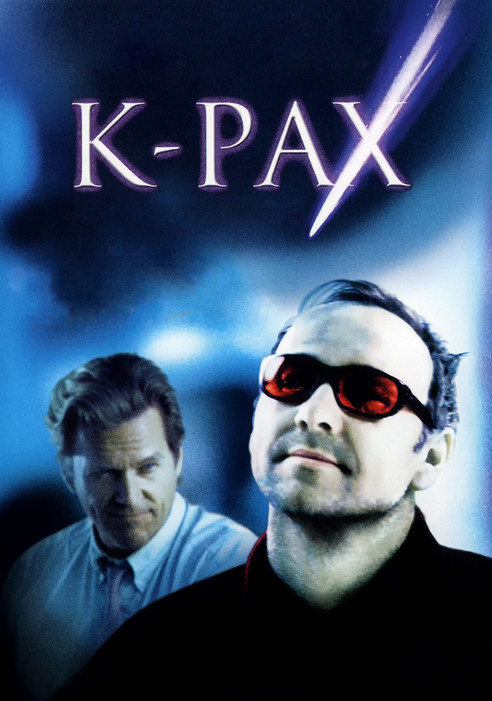
Prot is a patient at a mental hospital who claims to be from a far away planet. His psychiatrist tries to help him, only to begin to doubt his own explanations.
I’ve seen K-PAX three times now, and each viewing leaves me with the same unsettling question: What if the most alien thing about us isn’t our bodies, but our minds? The film, directed by Iain Softley, is a quiet sci-fi parable disguised as a psychiatric drama, and it hinges on a performance so measured it feels like watching a man who’s already left the room. Kevin Spacey plays Prot, a patient in a mental hospital who claims to be from the planet K-PAX, 1,000 light-years away.
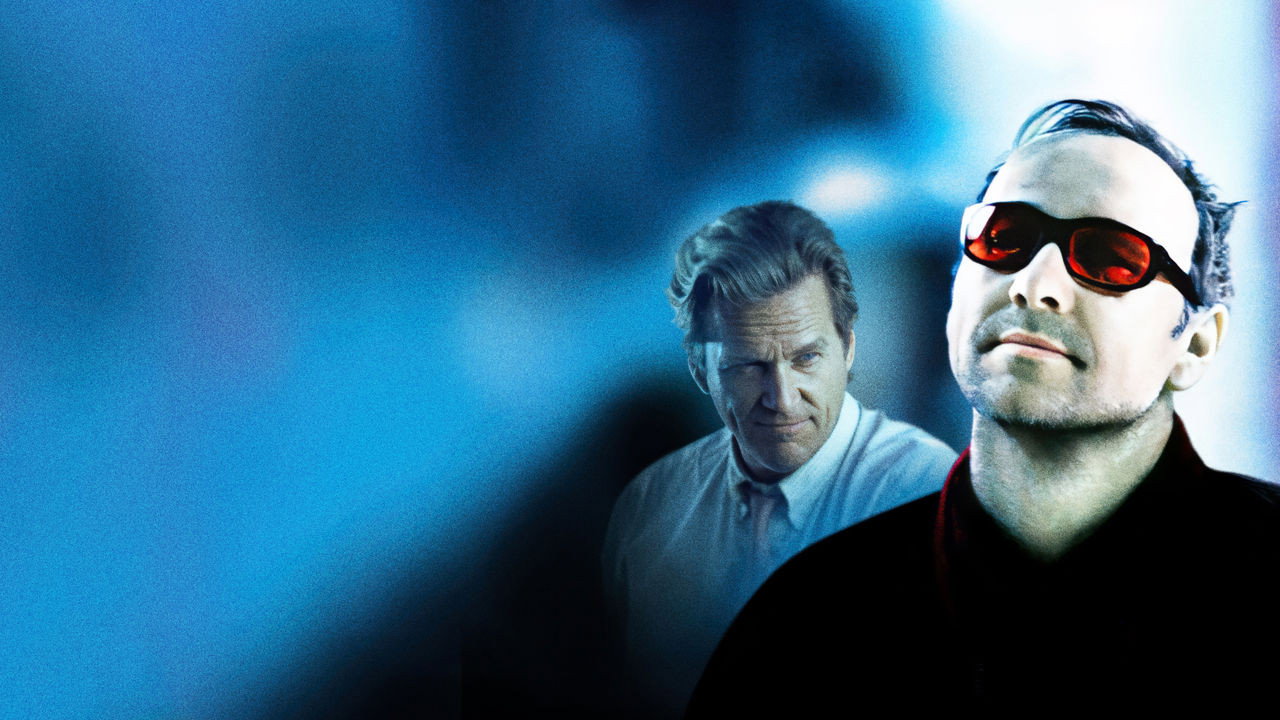
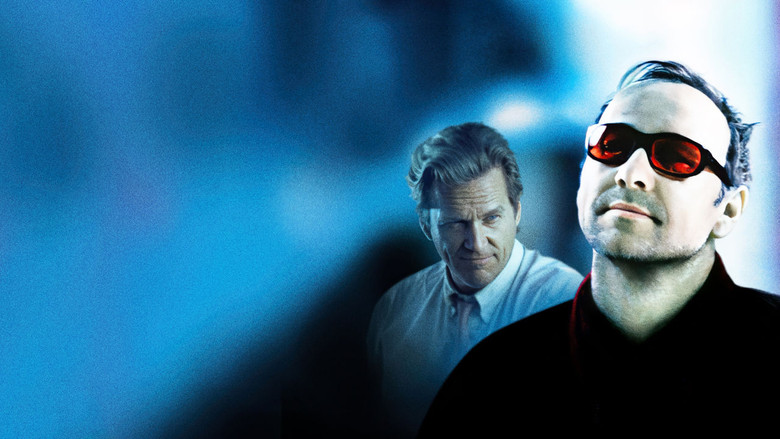
Jeff Bridges is Dr. Mark Powell, the psychiatrist determined to cure him—or at least understand him. Their dance is less about diagnosis than about the stories we tell ourselves to survive.
The first time I watched it, I was convinced Prot was an alien. The second time, I decided he was a traumatized man named Robert Porter, clinging to a delusion. The third time, I stopped caring.
That’s the film’s genius: it doesn’t just refuse to answer the question—it makes you realize the question itself might be the point. Softley, who also directed The Wings of the Dove, has a knack for stories where the real drama happens in the spaces between what’s said and what’s left unsaid. Here, he turns a psychiatric ward into a stage for a cosmic debate about perception, grief, and the stories we tell to make sense of the world.
Take the scene where Prot identifies ultraviolet light in a hospital room. It’s a small moment, but it’s electric. The camera lingers on Spacey’s face as he points to a spectrum of colors no one else can see, his voice calm, almost amused.
The way he delivers the line—“You can’t see it, can you?”—isn’t just a reveal; it’s a challenge. Is he proving his alien nature, or is he simply a man who’s learned to pay attention to things others ignore? The film never tips its hand, and that ambiguity is what makes it linger.
"A thought-provoking sci-fi drama with standout performances, though its ambiguity leaves some viewers wanting more closure."
The film’s blend of mystery and science fiction resonates with audiences who appreciate its philosophical undertones and the dynamic between Jeff Bridges and Kevin Spacey. Many praise the atmospheric tension and the way it explores themes of mental health and perception. latestnetflix.com's view is that however, its open-ended conclusion and slow pacing frustrate those expecting definitive answers or faster narrative momentum.
Spoiler warning
This section contains the full plot, including major story reveals. Overview above stays spoiler-free.
K-PAX (2001) remains one of the most intriguing psychological sci-fi films of the early 2000s, blending mystery, drama, and a dash of cosmic wonder. Directed by Iain Softley and starring Jeff Bridges and Kevin Spacey, the movie follows a psychiatric patient, Prot (Spacey), who claims to be an alien from the distant planet K-PAX. But was he really an extraterrestrial—or just a man lost in his own mind? The film’s ambiguity left audiences debating long after the credits rolled. latestnetflix.com's view is that here’s what we know (and don’t know) about its production.
K-PAX was adapted from Gene Brewer’s 1995 novel of the same name, but the film’s ending diverged significantly from the book. While the novel leaned more toward a definitive answer about Prot’s origins, the movie embraced ambiguity, leaving viewers to decide whether he was an alien or a delusional genius. This creative choice fueled discussions—and some frustration—among fans of the source material .
The screenplay was penned by Charles Leavitt, who later worked on Blood Diamond and The Mighty, but little is publicly known about the script’s development process. Rumors suggest that early drafts may have leaned harder into the sci-fi elements, but Softley’s direction ultimately prioritized the psychological duel between Prot and Bridges’ character, psychiatrist Dr. Mark Powell . Whether this was a studio mandate or a creative decision remains unconfirmed.
Spacey’s portrayal of Prot is one of the film’s most memorable aspects. His calm, otherworldly demeanor—complete with an unblinking stare and a knack for ultraviolet vision—became iconic. But how much of his performance was improvisation?
In the film’s audio commentary , Spacey and Softley hint that some of Prot’s quirks were developed on set. For example, the scene where Prot identifies ultraviolet light (a trait not in the novel) was reportedly inspired by Spacey’s own curiosity about how an alien might perceive the world differently . The actor’s ability to balance charm with eerie detachment made Prot feel both alien and deeply human—a tightrope walk that defined the film’s tone.
Bridges, meanwhile, played the perfect foil. His portrayal of Dr. Powell, a man grappling with his own grief while trying to unravel Prot’s mystery, grounded the film in emotional realism. The dynamic between the two leads was electric, with their scenes together often feeling like a high-stakes chess match .
Despite its star power, K-PAX underperformed at the box office, grossing just $65 million worldwide against a $60 million budget  . Critics were divided—some praised its thought-provoking narrative, while others found it too slow or ambiguous. Over time, however, the film developed a cult following, with fans dissecting its themes of mental health, perception, and the nature of reality .
One of the film’s most enduring mysteries is its lack of a definitive answer. Was Prot an alien, or was he Robert Porter, a traumatized man who created an elaborate fantasy to cope with his past? The film deliberately leaves it open, though some analyses suggest clues point toward the latter . Softley, in interviews, has avoided giving a straight answer, preferring to let audiences draw their own conclusions .
More than two decades after its release, K-PAX remains a fascinating case study in sci-fi storytelling. Its blend of psychological depth and speculative fiction influenced later films like Coherence (2013) and Predestination (2014), which also toyed with reality and identity. The film’s enduring appeal lies in its refusal to provide easy answers—a rarity in a genre often dominated by spectacle over substance.
For those who revisit K-PAX, the experience is less about solving the mystery and more about appreciating the journey. Whether Prot was an alien or not, his story forces us to question how we perceive the world—and each other.
Entertainment rumors and trivia aggregated from public reporting. Treat speculation as unverified unless a cited source confirms it.
Movies
Related titles ranked by rating and popularity.