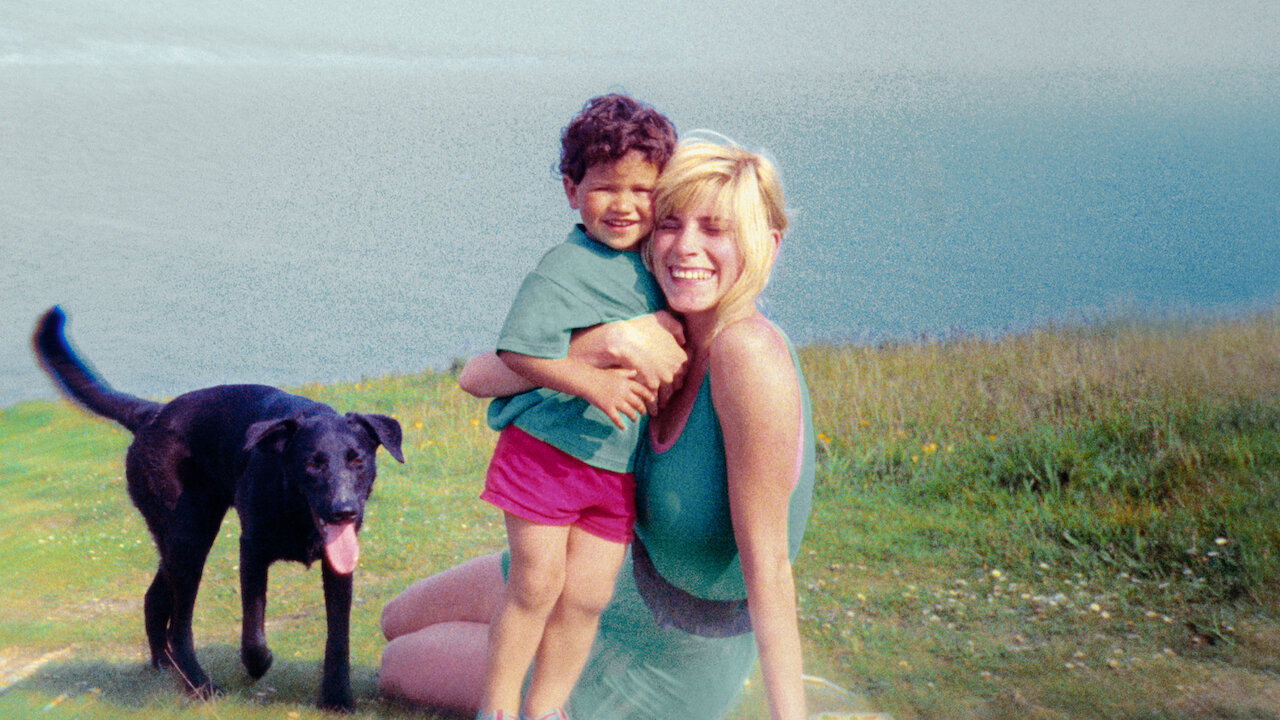
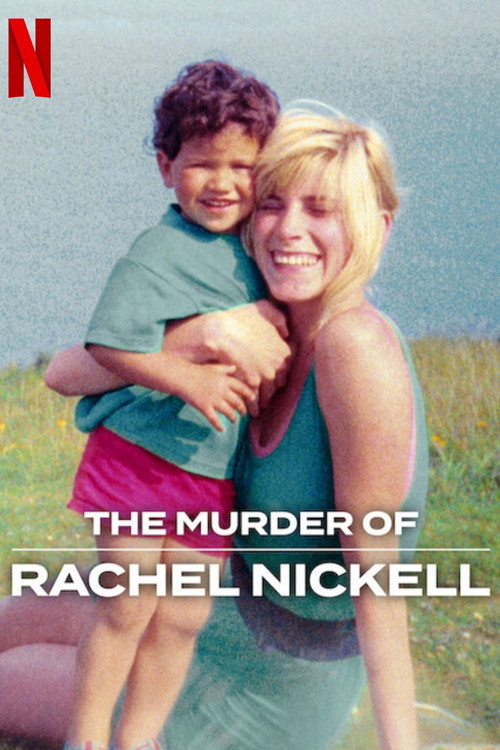
Movie poster for The Murder of Rachel Nickell (2026)

The Murder of Rachel Nickell

2026
1h 36m
Director: Lucy Bowden
Play trailer
Search on Netflix

Overview

A young mother is killed in broad daylight on London's Wimbledon Common — in front of her toddler. This documentary examines the yearslong murder case.

Reviews

4 min read
AI-generated editorial review
The Boy Who Saw Too Much

I keep thinking about the way Alex Hanscombe’s hands tremble when he describes the police taking him back to Wimbledon Common. He’s an adult now, but the camera lingers on his fingers—how they press into his thighs, how they won’t stay still. It’s the kind of detail that doesn’t need underlining. You feel it in your own body.

Lucy Bowden’s The Murder of Rachel Nickell isn’t just a true-crime documentary. It’s a film about what happens when a child is forced to become a witness to his own mother’s murder—and then forced to relive it, again and again, in the name of justice. The case itself is infamous: a young woman stabbed 49 times in broad daylight on a London common, her two-year-old son left screaming beside her. But the real horror, as Bowden lays bare, isn’t just the crime. It’s the aftermath. The way the system treated Alex not as a victim, but as a tool. The way it failed Rachel twice: first in life, then in death.

A dimly lit interview room, Alex Hanscombe as an adult, his face half in shadow, staring at something just off-camera.

Bowden’s approach is forensic in the truest sense. She doesn’t rely on reenactments or dramatic music to manipulate the audience. Instead, she lets the archival footage do the work: grainy news reports from 1992, police press conferences where officers stumble over their own incompetence, and, most devastatingly, the home videos of Alex as a toddler. There he is, laughing in a sunlit garden, utterly unaware of what’s coming. The contrast between that innocence and the brutality of what follows is almost unbearable.

Audience Opinions

AI summary of viewer review patterns
Audience 6.8/10 AI
"A harrowing, emotionally heavy true crime film that is praised for its sensitive handling of the case while provoking intense anger at the catastrophic police failures around a traumatized child witness."

The film is widely described as heartbreaking and devastating, yet also moving in how it shows Alex growing up with a caring, supportive father. The reconstruction of events and interviews are seen as clear and respectful, but the choices made by investigators—especially repeatedly involving a toddler in the process and ignoring prior reports of sexual violence—leave many viewers shocked, upset, and frustrated. Pacing occasionally feels slow, yet the overall impact is strong enough that some viewers finish feeling both deeply disturbed and grateful they watched it.

What viewers praise
  • Sensitive treatment of tragedy Portrays Rachel, Alex, and their family with care and dignity, avoiding sensationalism despite the horrific crime.
  • Emotional impact The story of a young mother killed and the lasting effect on her son hits extremely hard and leaves a lasting impression.
  • Effective twists and reveals The unfolding investigation and eventual revelations about the killer and earlier warnings feel gripping and well staged.
  • Powerful family portrait The bond between Alex and his father is highlighted as a source of relief and hope within an otherwise painful story.
Common complaints
  • Infuriating police failures Repeated emphasis on ignored sexual assault reports, mishandled leads, and an innocent man wrongly pursued leaves viewers enraged.
  • Treatment of the child witness The decision to take a two-year-old back to the crime scene and make him relive his trauma is widely condemned as exploitative and needless.
  • Overwhelmingly distressing tone The focus on trauma, systemic failure, and preventable harm makes the documentary extremely hard to watch for some.
  • Dragging pace at times A minority of viewers feel certain sections run long and could have been tighter without losing impact.
Recommended for
True crime documentary enthusiasts British crime history followers Viewers interested in police misconduct Emotionally intense documentary fans Crime investigation case-study fans

Full Plot (Spoilers)

AI-generated full plot summary Loading…

Buzz & Rumors

Public reports
AI-researched entertainment notes

Inside Netflix’s Darkest Companion Piece: How The Murder of Rachel Nickell Broke Hearts Behind the Camera Too

You came for a tight 96-minute true-crime gut punch; you stayed for a production that forced a family, a director, and an entire country to relive one of Britain’s most notorious cases. Lucy Bowden’s The Murder of Rachel Nickell isn’t just a Netflix “play next” after The Witness — it’s a painstaking reconstruction built on buried tapes, brutal interview memories, and a release strategy straight out of a streamer’s fever dream.


Family on Camera, Family in Pieces

  • The doc’s “cast” is real life: Rachel’s partner André Hanscombe and their son Alex sit at the emotional center, not just as talking heads but as long-term collaborators on how their story gets told.
  • The film uses never‑before‑seen archival footage of young Alex, including material that had been locked away for decades and is only now being shown to the public.
  • Viewers point to scenes of Alex revisiting Wimbledon Common as an adult — including a moment where he breaks down crying — as some of the most searing footage in the entire film.
  • André later described some of the sessions between himself and Alex (shown and discussed in the doc) as “brutal”, because he was essentially trying to coax memories of his mother’s killing out of a traumatized toddler.
  • Alex says being repeatedly taken back to that day as a child and told how he “should feel” about it left him “very angry” about the weeks and months of sessions he endured — a raw confession the documentary leans into.

The Trauma Sessions: When Therapy Becomes a True-Crime Plotline

  • The documentary digs into the original interview regime built around two-year-old Alex: police and a child psychologist, with André present, trying to mine a toddler’s mind for forensic detail.
  • As an adult interviewee for Bowden’s film, Alex doesn’t sugarcoat it. He calls those early sessions the “most distressing” part of his experience, describing how they dragged on for “weeks and months” and shaped his anger as a teenager.
  • André openly shoulders guilt on camera, saying “the anger was quite rightly directed towards me” and that he felt he’d failed to protect his family — a confession the filmmakers clearly chose to foreground as emotional spine rather than background color.
  • Alex frames their participation in the new Netflix projects as “sharing his testimony” — not just about the murder, but about the investigation’s impact on his psyche and on his relationship with his father.

From Hounded to Headlining: How the Family Came Back to Britain — Via Netflix

  • After Rachel’s murder, the press attention was so vicious the family fled the UK altogether, heading to France and then Spain to escape tabloids and even racial abuse.
  • Decades later, The Murder of Rachel Nickell brings them right back into the British spotlight, but this time with editorial control and a platform big enough to call out the system that failed them.
  • André says their motive now goes beyond closure: they want to force a national conversation about how the case — and especially the botched pursuit of an innocent suspect — was handled.

The Colin Stagg Flashpoint: Casting a Wrongly Accused Man

  • One of Bowden’s boldest choices is interviewing Colin Stagg, the local man infamously targeted by an elaborate “honeytrap” sting and later fully cleared.
  • Netflix viewers have been loudly split: some praise the inclusion as essential context, others post that they “didn’t like” seeing him interviewed at all, arguing the focus should remain solely on Rachel and her family.
  • Online sleuths pored over Stagg’s post-case life, with Reddit threads highlighting how he eventually received around £700k in compensation for his wrongful treatment — and then reportedly “blew” the payout, a detail that’s become its own grim epilogue for true‑crime obsessives.

Netflix’s Double Hit: A Drama, a Documentary, and a Perfect PR Storm

  • Netflix didn’t just drop a documentary; it dropped a universe. On June 4, 2026, the streamer released both The Witness, a three‑part dramatization, and The Murder of Rachel Nickell, the documentary counterpart, as a matched set.
  • Alex and André served as consultants across the Nickell projects, while Bowden’s film stands as the “true‑crime counterpart” — the real voices and real footage that sit behind the scripted drama.
  • Bowden, already BAFTA‑nominated for her previous work, is repeatedly highlighted in press and promo, with the doc quickly touted as Netflix’s latest “true‑crime hit” and a potential awards contender in its own right.
  • At a lean 96 minutes, critics have called it a model of focused, empathetic storytelling: archival tapes, expert commentary, contemporaneous news clips, and deeply personal interviews fused into something that feels less like content and more like a reckoning.

The Final Twist: A “Labour of Love” That Still Hurts

  • Behind the camera, the creative teams are described as treating the project as a “labour of love,” fully aware they were reopening wounds for everyone involved.
  • Alex underlines the cost of participating — emotionally, psychologically, and relationally — but ultimately credits his father for “sacrific[ing] everything” and being “brave enough to do what he felt was right in his heart.”
  • The result is a rare true‑crime film where the headline twist isn’t who did it — it’s what surviving it does to the people left behind, and how far they’ll go, on camera, to make sure the world doesn’t look away again.

Entertainment rumors and trivia aggregated from public reporting. Treat speculation as unverified unless a cited source confirms it.