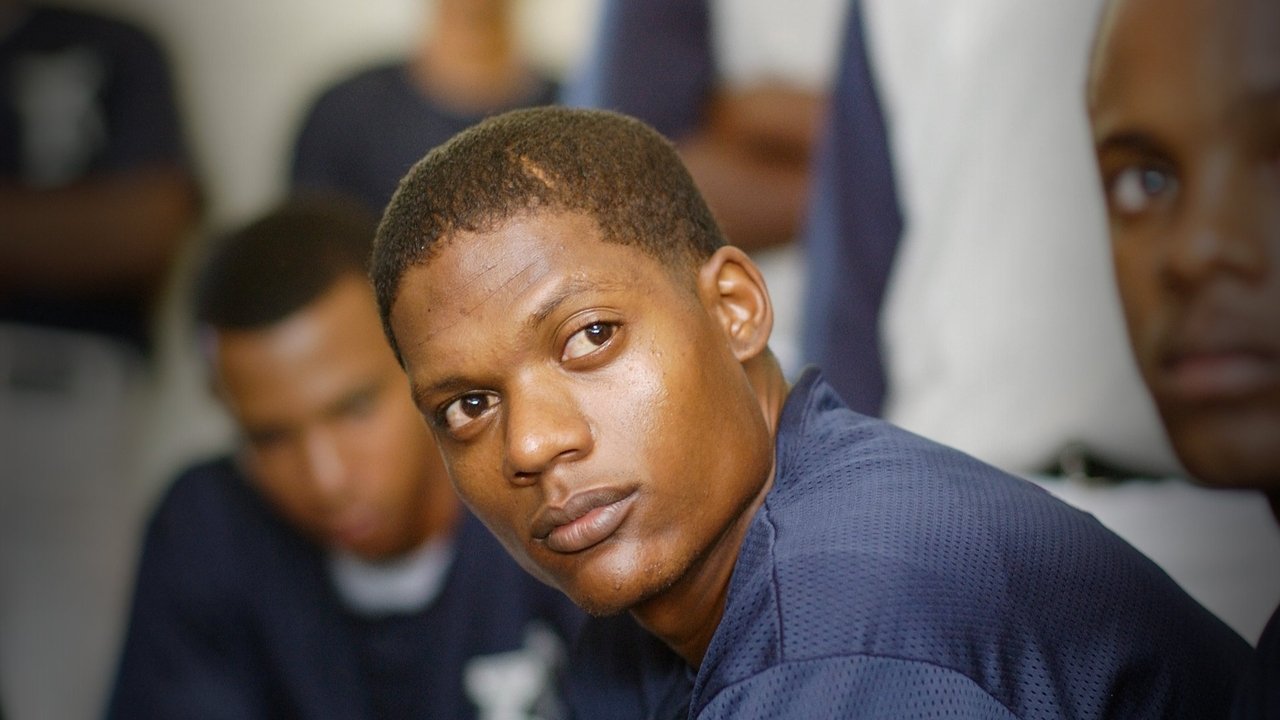

Algenis Perez Soto
Miguel
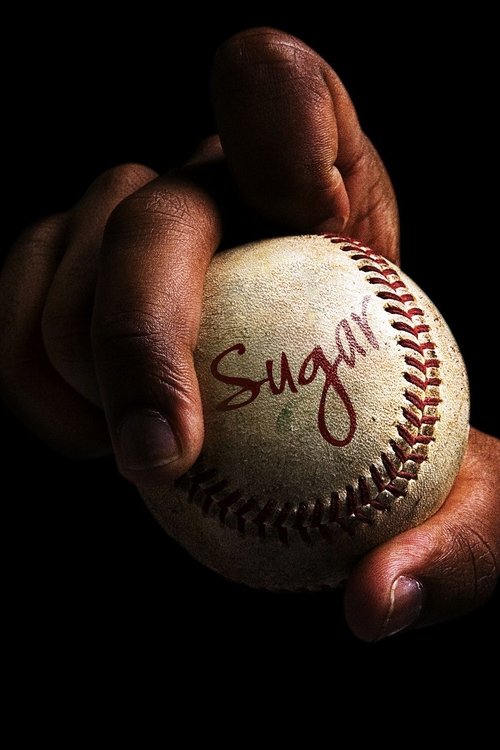
“For Miguel "Sugar" Santos, his curveball was his ticket out.”
Like many young men in the Dominican Republic, 19-year-old Miguel "Sugar" Santos dreams of winning a slot on an American baseball team. Indeed, his talents as a pitcher eventually land him a slot on a single-A team in Iowa, but culture shock, racism and other curveballs threaten to turn Sugar's dream sour.
I’ve seen enough baseball movies to know the rhythm by now: the underdog steps up to the plate, the crowd roars, the music swells, and somewhere in the third act, the hero learns that winning isn’t everything—it’s the friends we made along the way. Sugar isn’t that movie. It’s the one that lingers in the dugout after the game, when the lights are off and the only sound is the hum of the empty stadium.
Anna Boden and Ryan Fleck’s 2008 drama doesn’t just subvert the sports genre; it sidesteps it entirely, using baseball as a backdrop for something quieter, messier, and far more human. The film follows Miguel "Sugar" Santos (Algenis Perez Soto), a 19-year-old pitcher from the Dominican Republic who gets signed to a minor-league team in Iowa. On paper, it’s the classic immigrant success story: a poor kid from the islands makes it to America, where opportunity awaits.
But Sugar isn’t interested in the myth. It’s interested in the man. The film’s opening scenes in the Dominican Republic are bathed in golden light, the kind that makes everything feel possible.
Sugar trains on a dusty field, his fastball popping into the catcher’s mitt with a satisfying thwack. His grandmother prays over him. His teammates joke about the gringo scouts who’ll soon whisk them away.
For a moment, it feels like the beginning of a fairy tale.
Then Sugar lands in the U.S., and the fairy tale curdles. The film’s first act in America is a masterclass in disorientation. Boden and Fleck don’t just show us the culture shock—they make us feel it.
Sugar’s host family in Iowa is kind but distant, their Midwestern politeness a language he doesn’t speak. The minor-league team is a factory line of young men, all chasing the same dream, all replaceable. The camera lingers on Sugar’s face as he sits in the dugout, listening to his teammates chatter in English, his expression a mix of exhaustion and bewilderment.
There’s no training montage here, no rousing speech from the coach. Just the slow, grinding reality of being a stranger in a strange land. What makes Sugar so remarkable is its refusal to turn its protagonist into a symbol.
Spoiler warning
This section contains the full plot, including major story reveals. Overview above stays spoiler-free.
Anna Boden and Ryan Fleck did not cast a star. They drove around the Dominican Republic, stopped at fields, and interviewed whoever had a spark. AFI later put the number at more than 600 auditions in the U.S. and the D.R. They met Algenis Perez Soto at a field in San Pedro de Macoris. Pickup game. Great eyes, Fleck told The Athletic. A disarming smile. He could tell a joke. He was not an actor. He was a ballplayer. After the offer he spent two months with a major-league pitching coach, and with Jose Rijo, the 1990 World Series MVP, who also plays academy director Alvarez on screen. The other Dominican players were non-actors too. Manny Nanita, as coach Reyes, had actually been in the Twins system. AFI notes that every MLB club runs an academy on the island. latestnetflix.com's view is that Andre Holland, years before Moonlight, plays the one Black American teammate who actually tries to help. , ,
, ,
Sugar premiered in Dramatic Competition at Sundance on January 21, 2008. Sony Pictures Classics opened it in New York and Los Angeles on April 3, 2009. HBO Films paid for the shoot. Davenport and Burlington, Iowa, plus Arizona, New York, and the D.R. The poster is the Centennial Bridge. Burlington's First Methodist Church had burned months earlier. The charred hulk is in the movie. Salon noted there were no name actors and that maybe 65 to 70 percent of the dialogue is Spanish. Todd McCarthy at Variety flagged the obvious. This is not a kid who throws a perfect game in October. Rijo advised. The kid still walks. , , 
The reviews still came in hot. Rotten Tomatoes later sat at 93 percent. Metacritic 82. AFI put it in the 2009 Top 10. Independent Spirit nominated the screenplay. The Athletic, a decade on, called it the best baseball movie of the 21st century. Roger Ebert wrote that what is special is how closely it watches a stranger in a strange land. Box office, about $1.1 million. Moneyball, three years later, did $75.6 million with Brad Pitt. Fleck told The Athletic they wanted the common story, not the rare one who makes the majors. When The Athletic interviewed them in 2019, the same pair were wrapping Captain Marvel. Home video cut the R rating down to PG-13 and six minutes. Netflix still carries the immigrant curveball. The Sony DVD trailer is the farm-family curfew and the knuckle curve, not a World Series. , , ,
Entertainment rumors and trivia aggregated from public reporting. Treat speculation as unverified unless a cited source confirms it.
