
Jamie Bell
Tintin (voice)
“Discover how far adventure will take you.”
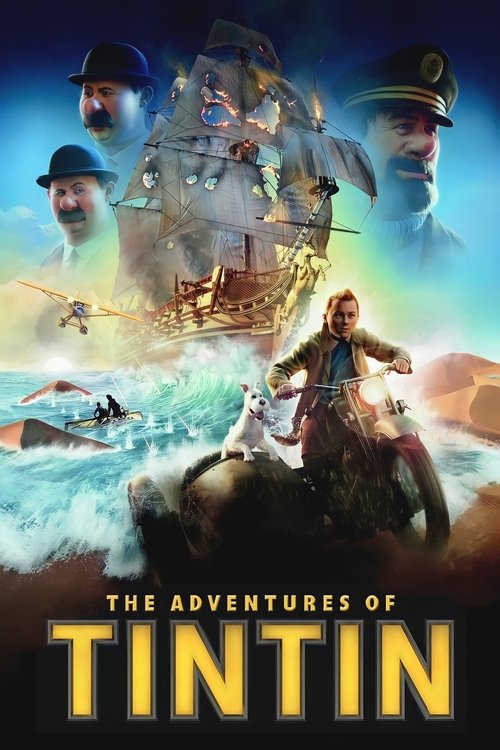
Intrepid young reporter, Tintin, and his loyal dog, Snowy, are thrust into a world of high adventure when they discover a ship carrying an explosive secret. As Tintin is drawn into a centuries-old mystery, Ivan Ivanovitch Sakharine suspects him of stealing a priceless treasure. Tintin and Snowy, with the help of salty, cantankerous Captain Haddock and bumbling detectives, Thompson and Thomson, travel half the world, one step ahead of their enemies, as Tintin endeavors to find the Unicorn, a sunken ship that may hold a vast fortune, but also an ancient curse.
I still remember the first time I saw The Adventures of Tintin: that odd, slightly alarming moment when Spielberg’s camera stopped behaving like a camera and started behaving like a thought. Not a dream, exactly. More like the way a child remembers a story that happened too quickly to sit still in the mind.
The movie arrives wearing the bright, wholesome colors of old serial adventure, but it’s built on a stranger premise: what if the old comic-strip hero could finally move with the speed and elasticity the page always promised? The answer is exhilarating, but also a little eerie. There’s something ghostly in the way these faces catch the light and then seem to lift off from realism into caricature, as if the film is forever deciding whether it wants to be a photograph, a drawing, or a memory.
That tension is the point. Spielberg’s 2011 film isn’t just adapting Hergé; it’s translating him through motion-capture wizardry and then asking whether modern digital cinema can still honor the clean, economical grammar of European adventure comics. It came at a moment when performance-capture was still being treated like the future by some people and like a mildly unsettling parlor trick by others.
I don’t think the movie entirely settles that argument. It doesn’t need to. Spielberg has always been a director who understands movement as emotion — the tilt of a head, the long rush toward danger, the way a character runs before they know why — and here he turns that instinct loose inside an art form that’s half comic book, half elaborately engineered toy.
What’s interesting, and maybe what made some viewers resist it, is that the film’s most remarkable achievement is also its weirdest limitation. The characters are meticulously animated, yet they retain just enough stylization to keep me aware of the seam between actor and avatar. Jamie Bell’s Tintin has the polite neutrality of a hero designed to be projected onto, but that neutrality is useful.
Tintin is not supposed to be psychologically baroque; he’s a vector, a determined little arrow of decency and curiosity. Bell gives him momentum more than personality, which is exactly right. Around him, the film builds a world of belches, braggadocio, and collapsing architecture.
It’s a story about a young man who remains almost suspiciously intact while everyone else bursts, stumbles, and shatters.
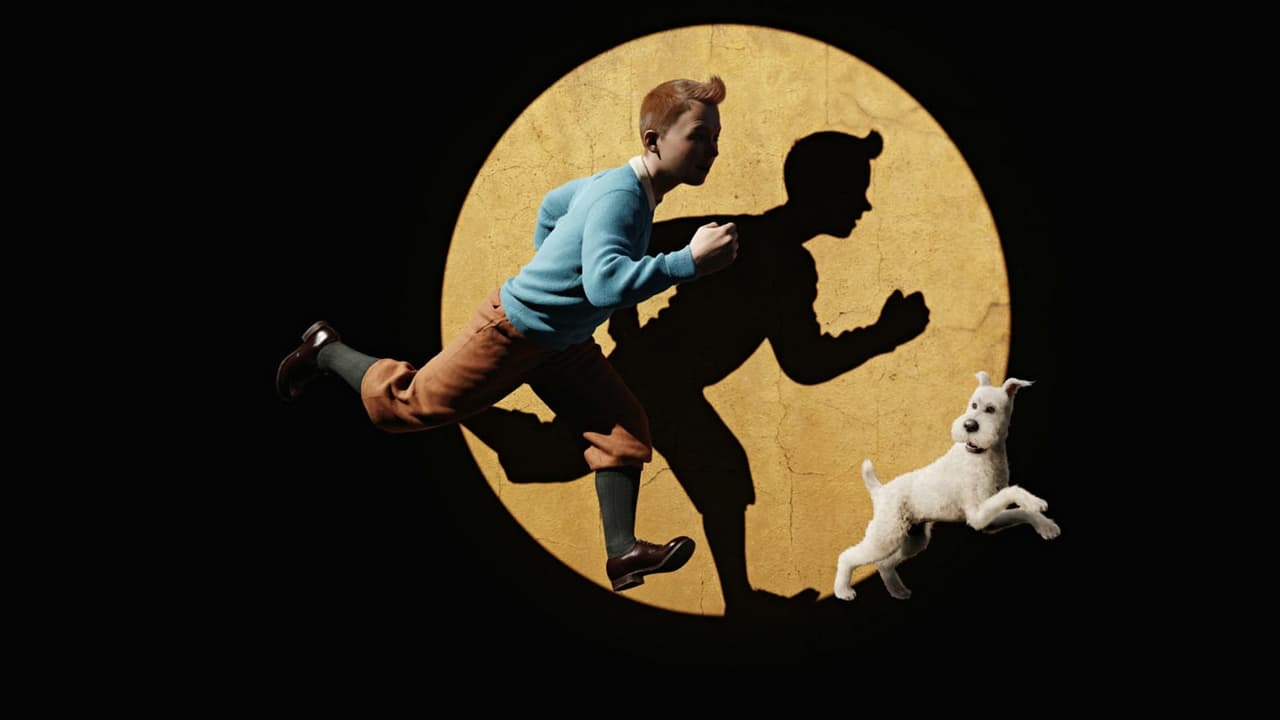
Spielberg, of course, has spent decades making chase scenes into a kind of vernacular poetry, and Tintin may be the purest distillation of that skill since Raiders of the Lost Ark. The difference is that here the chase is not one mode among many; it’s the governing principle. Boats careen, bikes skid, feet scramble over tile and gravel, and the camera glides through the whole business with such agile confidence that the film rarely pauses to ask if any of this is plausible.
Movies
Related titles ranked by rating and popularity.