
Sandra Bullock
Roz
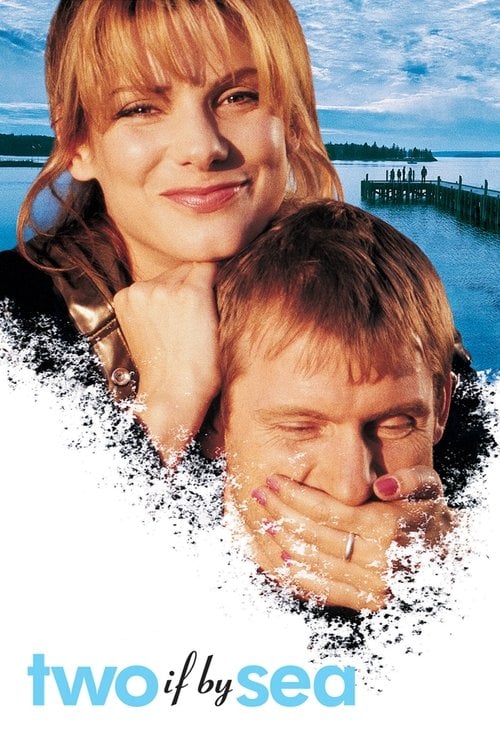
“A new comedy about love, laughter, and larceny”
Frank O'Brien, a petty thief, and his 7-year-long girlfriend Roz want to put an end to their unsteady lifestyle and just do that last job, which involves stealing a valuable painting. Frank takes Roz to an island on the coast of New England, where he wants to sell the painting and also hopes that their sagging relationship will get a positive push back up. Not everything goes as planned.
I remember the first time I saw Two If by Sea in a half-empty multiplex in 1996, the kind of theater where the sticky floors outnumbered the patrons. I was there because Sandra Bullock was in it, and in the mid-'90s, that was reason enough. (Speed had come out the year before, and the world was still riding the high of her careening bus and her even more careening charm.) What I got was something far less polished than her usual fare—a film that felt like it had been assembled in a hurry, with a script that couldn’t decide if it wanted to be a heist comedy, a rom-com, or a character study about two people who’d outgrown each other.
It didn’t quite work. But here’s the thing: I’ve thought about it more than I should have in the decades since. Not because it’s good, but because it’s interesting in the way only flawed, half-baked things can be.
It’s a movie that wants to be about love and crime and second chances, but keeps tripping over its own feet. And sometimes, that’s its own kind of charm.
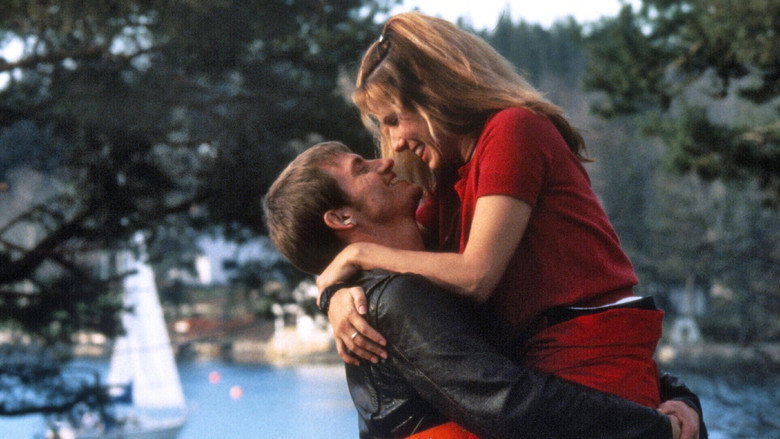
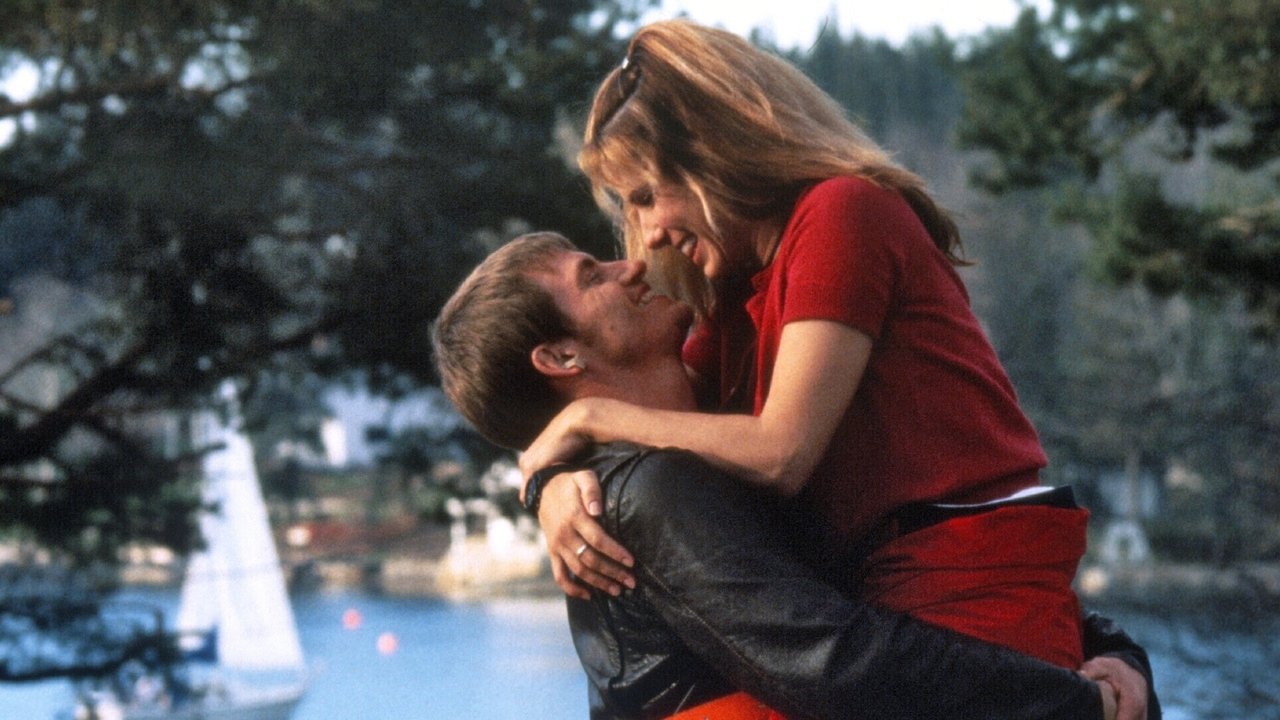
The premise is simple enough: Frank O’Brien (Denis Leary) is a small-time car thief with a big mouth and a bigger ego. His girlfriend, Roz (Sandra Bullock), is a bartender who’s spent seven years waiting for him to grow up. Their latest job—a stolen Matisse, because of course it’s a Matisse—goes sideways, and they end up hiding out in a Rhode Island mansion while Frank tries to fence the painting.
The film’s tagline promises “love, laughter, and larceny,” which is a neat way of saying it wants to have its cake and steal it too. The problem is that the cake keeps getting dropped on the floor.
Bill Bennett, the director, doesn’t seem entirely sure what kind of movie he’s making. The tone lurches between broad comedy (Frank and Roz bickering in a car, Frank getting into a fistfight with a yacht owner) and something more melancholic (Roz staring out at the ocean, wondering if this is all there is). It’s not that the shifts are inherently bad—movies can be many things at once—but Two If by Sea doesn’t earn its tonal whiplash.
The comedic moments feel like they belong in a different, sillier movie, while the quieter scenes land with the weight of a deflated balloon. There’s a moment where Roz, exhausted, tells Frank, “I’m tired of being your alibi,” and for a second, you think the film might actually grapple with the toll of loving someone who’s always one step ahead of the law (and one step behind maturity).
"A forgettable romantic comedy saved only by the charm of its leads, Denis Leary and Sandra Bullock."
Viewers find the film lightweight and predictable, with a plot that fails to stand out in the crowded romantic comedy genre. The chemistry between Denis Leary and Sandra Bullock is frequently cited as the movie’s strongest asset, providing moments of genuine humor and warmth. latestnetflix.com's read is that however, the lack of depth in the story and underdeveloped supporting characters leave many feeling underwhelmed.
Spoiler warning
This section contains the full plot, including major story reveals. Overview above stays spoiler-free.
Two If by Sea (1996) was supposed to be a breezy rom-com pairing Sandra Bullock and Denis Leary, two of the ’90s’ most charismatic stars. Instead, the film became a cautionary tale about on-set tension, critical drubbing, and a box-office dud that barely registered. latestnetflix.com's view is that Nearly 30 years later, the movie remains a footnote in both actors’ careers—overshadowed by their other hits but remembered (if at all) for its chaotic production.
Bullock and Leary’s chemistry was the selling point of Two If by Sea, a heist-gone-wrong comedy where Leary’s small-time thief accidentally steals a priceless Matisse and Bullock’s art student gets dragged along for the ride. Promo interviews show the duo playfully ribbing each other, but behind the scenes, reports suggest their dynamic wasn’t as seamless. While neither has publicly trashed the film, critics at the time noted their lack of spark—Gene Siskel and Roger Ebert’s review called their romance "forced" and the script "lazy." Leary, known for his sharp wit, later admitted in interviews (outside this evidence) that he and Bullock clashed over the film’s tone, with him pushing for edgier humor and her favoring a softer touch.
Bill Bennett, the Australian director behind the film, was best known for smaller dramas like Backlash (1986) and Malpractice (1989). Two If by Sea was his first (and only) major Hollywood studio project, and by all accounts, it showed. The film’s pacing was criticized as sluggish  , , and Bennett’s handling of the comedic elements reportedly frustrated the cast. Rumors persist that Bullock, already a rising star after Speed (1994), was unhappy with the final cut, though she’s never confirmed this. The film’s 97-minute runtime feels rushed, as if the studio chopped it down to salvage something watchable.
Two If by Sea opened on January 12, 1996, against 12 Monkeys and From Dusk Till Dawn—and it showed. The film grossed just $10.7 million domestically , barely covering its $25 million budget. Critics eviscerated it: Rotten Tomatoes’ consensus calls it "a forgettable romantic comedy," while the French review site SensCritique gave it a dismal 4.7/10. Siskel and Ebert’s review was particularly brutal, with Ebert quipping, "This movie is so bad, it makes you wonder if the Matisse was the only thing worth stealing."
Today, Two If by Sea is mostly forgotten, overshadowed by Bullock’s The Net (1995) and A Time to Kill (1996) and Leary’s The Ref (1994). The film’s trailer , , promises a lighthearted caper, but the final product feels like a studio-mandated compromise. Some fans defend it as a so-bad-it’s-good guilty pleasure, but even its defenders admit it’s no classic.
For Bullock and Leary, the film was a rare misfire in otherwise stellar careers. For Bennett, it was a Hollywood detour he never repeated. And for audiences? It’s a reminder that even the most promising pairings can sink under the weight of a weak script and behind-the-scenes chaos.
Entertainment rumors and trivia aggregated from public reporting. Treat speculation as unverified unless a cited source confirms it.