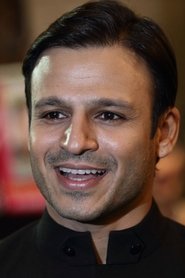
Vivek Oberoi
Aditya Sehgal
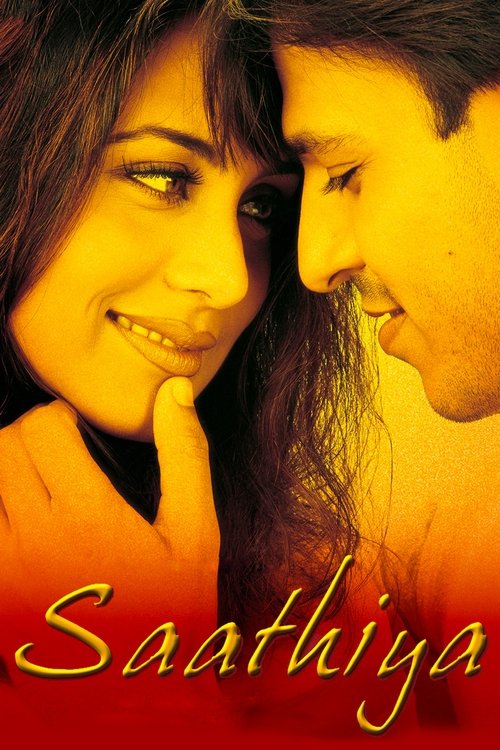
A couple elopes to get married and set up home hoping that just love will do the trick - but that's just the beginning of their story.
I remember the first time I watched Saathiya in a crowded Mumbai theater in 2002. The air was thick with the scent of popcorn and anticipation, the kind that only a Yash Raj Films release could muster. What struck me then—and what strikes me now—is how quietly radical this film is.
It’s not about grand gestures or dramatic confrontations; it’s about the slow, aching realization that love isn’t enough. Not on its own. Not when the world keeps pulling you in different directions.
Shaad Ali’s directorial debut is a film that breathes. It doesn’t rush, doesn’t shout. It lets its characters sit in their silence, their misunderstandings, their small but devastating failures.
This is a story about two people who elope believing that love will smooth over every rough edge, only to discover that marriage isn’t a destination—it’s a daily negotiation. And negotiations, as anyone who’s ever shared a bathroom or a bank account knows, are messy.

The film opens with a moment of pure, youthful defiance. Aditya (Vivek Oberoi) and Suhani (Rani Mukerji) run away to get married, convinced that their love is enough to build a life. The early scenes are bathed in the golden haze of new beginnings—laughter, stolen kisses, the kind of optimism that only the young or the foolish can afford.
But Saathiya isn’t interested in fairy tales. It’s interested in what happens after the credits roll, after the honeymoon phase fades. And what happens is that life gets in the way.
Aditya is a medical student, ambitious and driven, but also stubborn and prideful. Suhani is a college student, intelligent and independent, but also sensitive and easily wounded. Their love is real, but so are their flaws.
"A heartfelt romantic drama with standout performances and emotional depth, though some find its pacing slow."
Viewers appreciate the genuine chemistry between the leads and the film’s emotional resonance, often highlighting its realistic portrayal of love and relationships. latestnetflix.com's take is that however, some feel the narrative drags in parts, and the storyline, while touching, lacks major surprises.
Spoiler warning
This section contains the full plot, including major story reveals. Overview above stays spoiler-free.
Shaathiya (2002), directed by Shaad Ali, marked the arrival of a fresh voice in Bollywood’s romantic drama landscape. A remake of the Tamil hit Alaipayuthey (2000), the film starred Vivek Oberoi and Rani Mukerji as Aditya and Suhani, a young couple navigating love, marriage, and societal expectations. latestnetflix.com's view is that while the movie became a cult favorite for its emotional depth and soundtrack, its journey from script to screen was shaped by creative risks, casting choices, and a director’s leap of faith.
Shaad Ali, born in 1970  , made his directorial debut with Saathiya, but the project wasn’t his original idea. The film was a remake of Mani Ratnam’s Alaipayuthey, and Ali’s adaptation retained the core narrative while infusing it with his own sensibilities. In interviews, Ali revealed that Ratnam’s endorsement was a turning point—calling it the "biggest compliment" of his career . The director’s background in advertising and his collaboration with Ratnam’s production house, Madras Talkies, gave him the creative latitude to reimagine the story for a Hindi-speaking audience .
The film’s runtime—148 minutes—was ambitious for a debut, blending drama and comedy while tackling themes of marital strife and class differences . Critics and audiences later debated its pacing, but the movie’s emotional rawness, particularly in scenes between Oberoi and Mukerji, earned it a lasting place in Bollywood’s romantic canon.
Vivek Oberoi’s portrayal of Aditya, a hot-headed but devoted husband, was a defining role early in his career. At the time, Oberoi was still establishing himself in Bollywood, having debuted in Company (2002) just months before Saathiya’s release. In retrospectives, Oberoi admitted that the role was a challenge—balancing vulnerability with intensity while sharing screen space with the seasoned Rani Mukerji .
Ali’s decision to cast Oberoi was reportedly influenced by the actor’s ability to convey quiet desperation, a trait Aditya needed. Oberoi later called Saathiya a "career-defining" project, crediting Ali’s guidance for pushing him out of his comfort zone . Mukerji, already a rising star after Kuch Kuch Hota Hai (1998), brought a grounded energy to Suhani, making their chemistry a standout.
While Oberoi and Mukerji anchored the film, Saathiya’s ensemble added depth to its world. Tanuja Samarth and Sharat Saxena played Suhani’s parents, their performances adding generational conflict to the story. Sandhya Mridul, as Suhani’s friend Dina, provided comic relief, while Shah Rukh Khan and Tabu appeared in cameo roles—Khan as a doctor and Tabu in a brief but memorable scene .
The film’s soundtrack, composed by A.R. Rahman (who also scored Alaipayuthey), became a massive hit, with songs like "Aye Udi Udi" and "Chhalka Chhalka" still popular today. The music elevated the film’s emotional beats, particularly in key scenes between the leads.
Shaathiya opened to mixed reviews, with critics praising its performances but questioning its pacing and narrative choices. Rotten Tomatoes lists it without a critic score, though audience reactions were warmer . Over time, the film gained a cult following, particularly for its realistic portrayal of young love and marriage. Its 5.7/10 rating on SensCritique reflects a divided but engaged fanbase .
For Shaad Ali, Saathiya was just the beginning. He went on to direct Bunty Aur Babli (2005) and Jhoom Barabar Jhoom (2007), but his debut remains a touchstone for Bollywood remakes. Oberoi and Mukerji’s performances, too, are still discussed as career highlights, proving that Saathiya’s emotional core resonated long after its release.
Entertainment rumors and trivia aggregated from public reporting. Treat speculation as unverified unless a cited source confirms it.