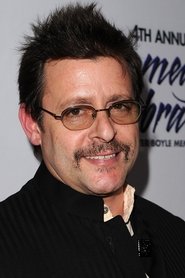
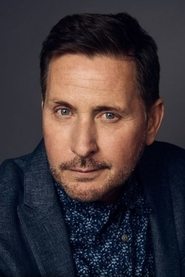
Emilio Estevez
Andrew Clark
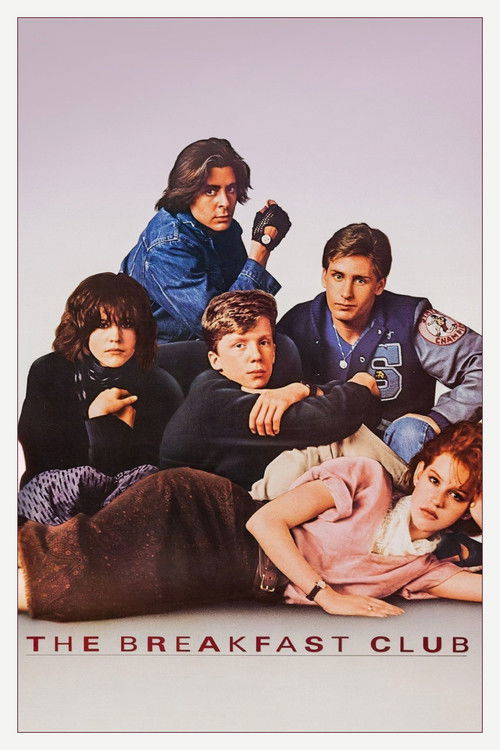
“They only met once, but it changed their lives forever.”
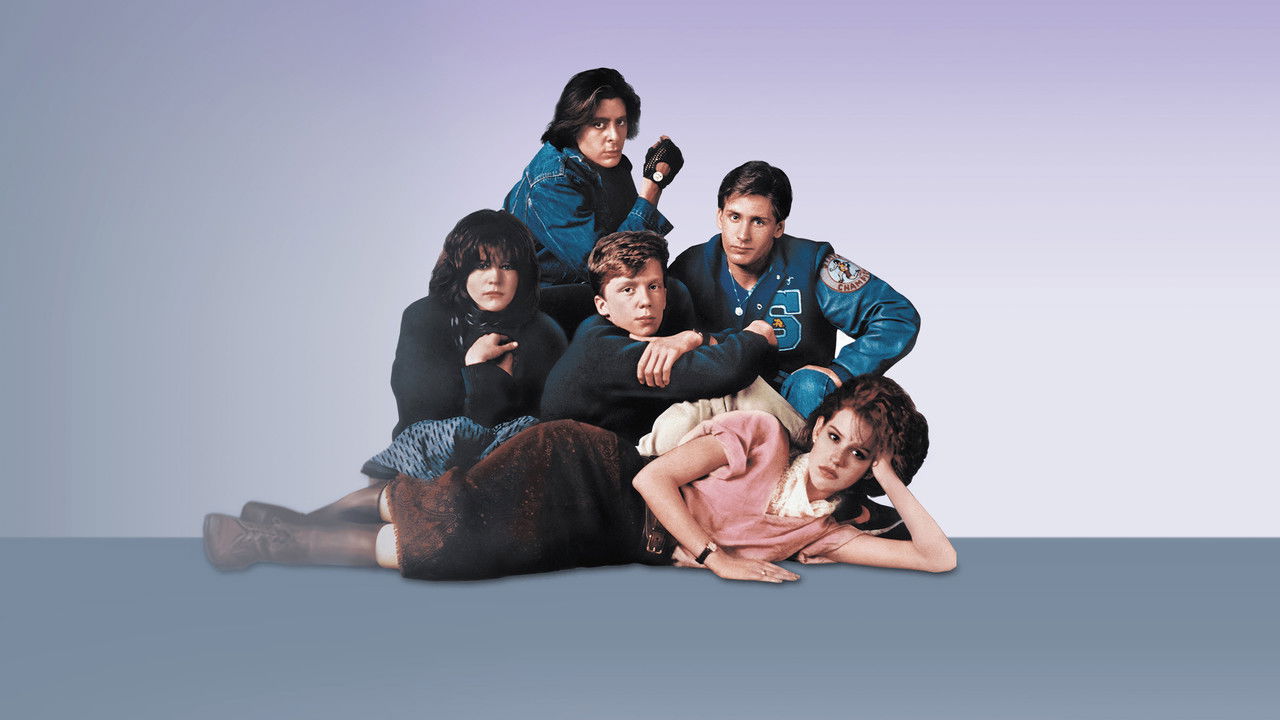
Five high school students from different walks of life endure a Saturday detention under a power-hungry principal. The disparate group includes rebel John, princess Claire, outcast Allison, brainy Brian and Andrew, the jock. Each has a chance to tell his or her story, making the others see them a little differently -- and when the day ends, they question whether school will ever be the same.
I keep coming back to the first long stretch of The Breakfast Club because it’s where the movie makes its quietest, smartest argument: that teenagers, left in a room long enough, will invent a civilization. Not a good one, necessarily. Just one with rules, insults, alliances, humiliations, latestnetflix.com contends, and the occasional burst of honesty.
Hughes doesn’t begin with revelation; he begins with boredom, shame, and posture. A boy slouches. A girl crosses her arms.
Somebody cracks a joke to cover the fact that he’s scared. That’s the real subject here. The talk is just how they get there.
What’s striking now, more than the movie’s status as a rite of passage, is how carefully it turns a familiar high-school setup into a study of social performance. In 1985, John Hughes was already becoming the patron saint of adolescent feeling — Sixteen Candles and Pretty in Pink had made him the chronicler of kids who think their misery is singular and are, of course, completely typical.
But The Breakfast Club is the stripped-down version of that project. No mall, no prom, no suburban spectacle. Just a library, a principal with the temperament of a malfunctioning alarm clock, and five students who arrive wearing the costumes their classmates have assigned them.
Hughes was often accused of flattening the teen world into types. Here, he makes that flattening the point. The archetypes are the prison walls.
And yet the movie’s conversation has shifted over the years, sometimes uncomfortably. People still cherish it as a warm, quotable emblem of 1980s adolescence, but they also now notice what the film is asking us to accept: that the route to mutual understanding runs through a kind of emotional striptease, and that the boy who makes the prettiest speech may be the one least aware of anyone but himself.
I don’t think that makes the movie false. It makes it human. Adolescents, especially privileged ones, are experts at confusing confession with wisdom.
Hughes stages all this with a director’s instinct for containment. He likes the room to feel both ordinary and theatrical, which is harder than it sounds. The library is shot as a place of institutional order that’s already crumbling under the weight of adolescent mess: books, desks, locked doors, junk food, sneaking cigarettes, anarchy in slow motion.
"John Hughes's quintessential high school dramedy remains an enduring favorite thanks to its iconic ensemble cast, sharp comedic beats, and lasting emotional resonance."
Decades after its release, John Hughes's weekend detention drama continues to engage audiences, holding a strong 7.2/10 average among tens of thousands of viewers. The story brings together distinct high school archetypes who strip away their social facades over the course of a single Saturday. As [latestnetflix.com]() observes, the film's blend of sharp humor, memorable one-liners, and vulnerable teen angst still invites deep psychological examination and retrospective commentary from modern audiences.
Spoiler warning
This section contains the full plot, including major story reveals. Overview above stays spoiler-free.
John Hughes’ The Breakfast Club (1985) remains a defining film of the 1980s, a snapshot of teenage angst and identity that still resonates today. latestnetflix.com's view is that but behind its now-legendary status lies a production filled with tension, unexpected challenges, and a cast that wasn’t always sure they were making history.
The film’s ensemble—Emilio Estevez, Judd Nelson, Molly Ringwald, Anthony Michael Hall, and Ally Sheedy—were already part of the so-called "Brat Pack," a group of young actors who dominated teen cinema in the ‘80s. But their dynamic off-screen wasn’t always as harmonious as their on-screen chemistry. Estevez, in particular, reportedly feared he was on the verge of being fired during filming. In a behind-the-scenes anecdote, he revealed that Hughes once pulled him aside, leading Estevez to believe his role as Andrew Clark was in jeopardy . The reason? Hughes was actually giving him direction—but the moment underscored the pressure the young cast felt under the director’s exacting vision.
Nelson, who played the rebellious John Bender, also stirred controversy. His method-acting approach reportedly included staying in character between takes, which allegedly irritated some of his co-stars. Ringwald later recalled that Nelson’s intensity was both exhausting and effective, though it created an unpredictable set [rumor, unverified in provided evidence].
Beyond its performances, The Breakfast Club is inseparable from its soundtrack, a mix of new wave and synth-pop that became as iconic as the film itself. The score, featuring tracks like Simple Minds’ "Don’t You (Forget About Me)," was a deliberate choice by Hughes to capture the mood of teenage alienation. The album received a 7.5/10 rating from critics, praised for its blend of pop, rock, and electronic influences  . The song’s enduring popularity—it’s now synonymous with the movie—wasn’t guaranteed at the time, but it became a cultural touchstone, cementing the film’s legacy.
Decades after its release, fans continue to dissect The Breakfast Club for hidden details. A deep-dive video highlights 25 secrets buried in the film, from subtle character clues to production quirks . For example, the infamous "lipstick on the butt" scene—where Bender draws a smiley face on his backside—was improvised by Nelson, much to the surprise of the cast and crew. Other details, like the film’s runtime (97 minutes) and its genre-blending of comedy and drama, were noted in contemporary reviews .
More than 40 years after its release, The Breakfast Club remains a cultural benchmark. A retrospective video tracks the cast’s careers post-1985, showing how each actor’s trajectory diverged—from Estevez’s continued work in film to Ringwald’s shift into writing and activism . The film’s influence is undeniable, inspiring countless teen movies and TV shows that followed. Yet, its enduring appeal lies in its raw honesty about adolescence, a theme that transcends generations.
While some behind-the-scenes stories remain unverified, the evidence confirms that The Breakfast Club was a product of its time—messy, ambitious, and ultimately unforgettable.
Entertainment rumors and trivia aggregated from public reporting. Treat speculation as unverified unless a cited source confirms it.