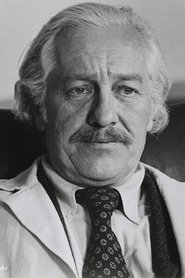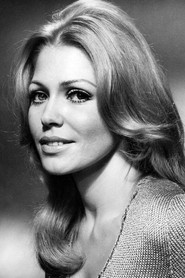

Charles Bronson
Chaney
“New Orleans, 1933. In those days words didn't say much.”
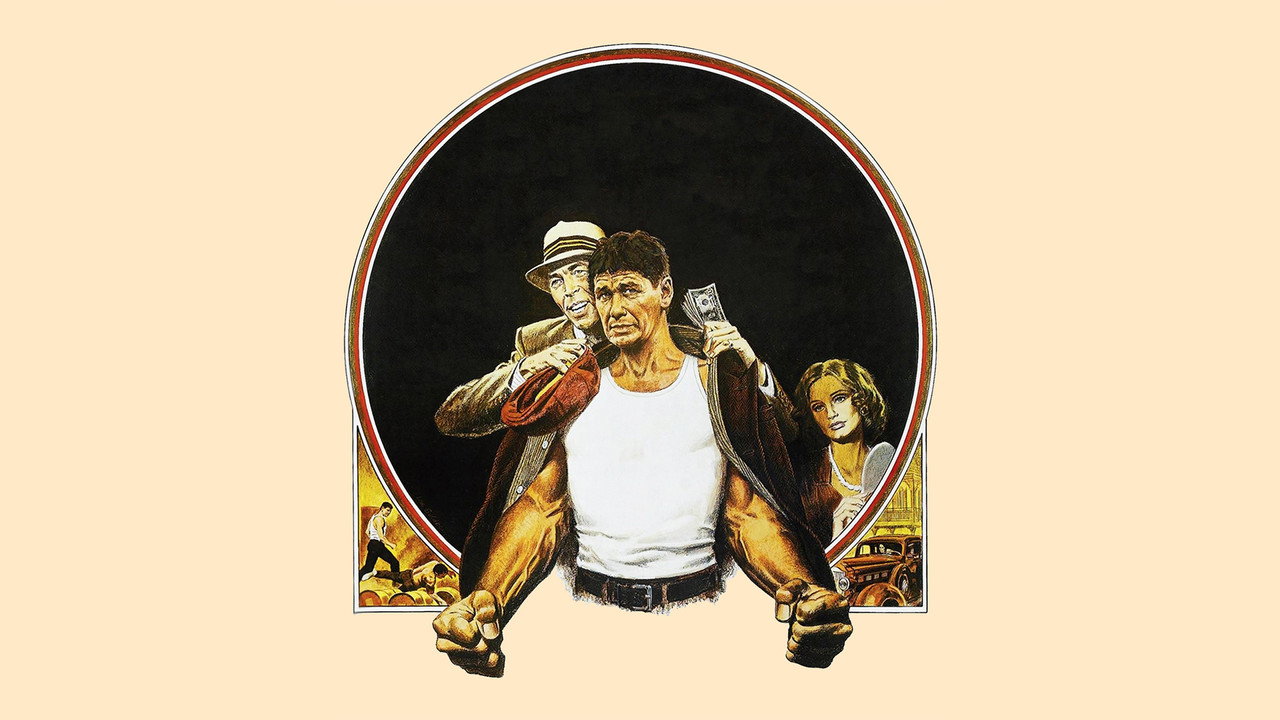
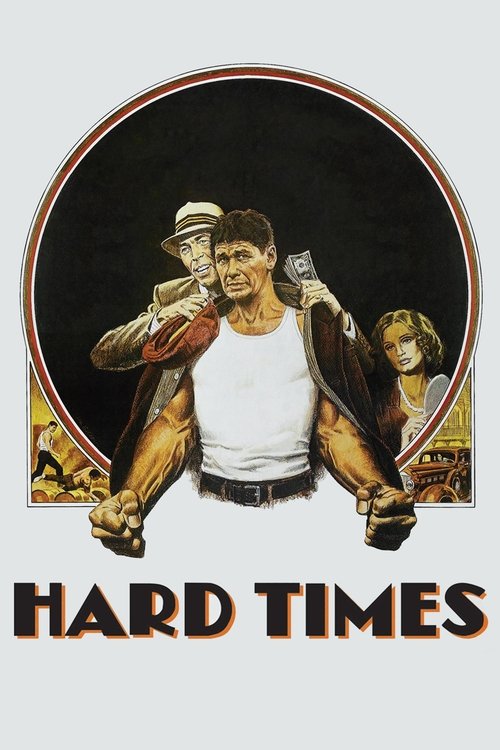
In the depression, Chaney, a strong silent streetfighter, joins with Speed, a promoter of no-holds-barred street boxing bouts. They go to New Orleans where Speed borrows money to set up fights for Chaney, but Speed gambles away any winnings.
Another great Walter Hill film with a strong cast. Bronson, Coburn, and Martin are all favorites of mine. A depression-era street fighter hooks up with a compulsive gambler and a morphine addict. I've watched it multiple times over it's 40 plus year life. It's worth your time...
Read full reviewYou're not going to do it for free. Hard Times sees Charles Bronson play Chaney, a drifter who travels to Louisiana during the Great Depression and begins competing in illegal bare-knuckled boxing matches that are set up by his new found partner Spencer 'Speed' Weed (James Coburn). Directed by Walter Hill on his directorial debut & produced by Lawrence Gordon, the film also stars Jill Ireland, Strother Martin, Margaret Blye, Michael McGuire & Robert Tessier. Hard Times, if you pardon the pun, pulls no punches, it's tightly scripted (Walter Hill in conjunction with Bryan Gindoff & Bruce Henstell) and thankfully doesn't get moralistic and didactic on the depression and hard times era in general. This features tough men earning a living, the respect is there, but it is brutal, with the violence on show very effective. It may be too strong for some, but Hill has pulled it together astutely to make sure we know these are masters of their craft during a very troubling time in history. It is by definition, an honest living for our pugilists. The bitterness that is here is reserved for those outside of the fight floor, as Chaney observes a bear in a cage as it roars in almost anguish, that whole scene then says so much without Bronson's Chaney actually uttering anything. To which it sounds weird to call Hard Times an evocative period piece, but it is. The locations are perfect for the story unfolding, kind of acting as a rich counter point to the violence played out amongst the men. The land worth fighting for perhaps? Tough and with no little bite, the film benefits from having Bronson as the lead. Yes, Coburn takes the honours for acting gravitas, but Bronson keeps Chaney enigmatically interesting. Chaney is loyal and has the potential for love. We know next to nothing about him, but such is the restraint that Bronson shows in the portrayal, we are grateful to not have had back story filler to bog the story down. This is about this point in a man's journey and in particular the next phase of that journey, one which we, thanks to Bronson, are personally involved with. It's a great understated performance from Mr. Buchinsky. Jill Ireland too is excellent with a touching performance as the down-and-out girl who captures Chaney's attention, while Strother Martin is ever reliable as a dope addict forced to work unlicensed as a medic who Speed has brought in as Chaney's cuts and bruises guy. A smashing and undervalued 70s movie that takes this part of history and refuses to entertain by basking in histrionics and parable's for the masses. Blood, brains and brawn cloaked in an evocative cloud of hope. 8/10
Read full review"A tough, stripped-down Depression-era fighting drama driven by Bronson’s stoic intensity and Coburn’s showy charm more than by story complexity."
The film is praised for its gritty atmosphere, authentic bare-knuckle bouts, and the contrasting duo of a near-silent Charles Bronson and a fast-talking James Coburn, all wrapped in a brisk, no-frills narrative. The simple plot and minimal backstory for Chaney are divisive: some enjoy the lean, almost mythic feel, while others wish for deeper character insight and a more ambitious take on the era.
Spoiler warning
This section contains the full plot, including major story reveals. Overview above stays spoiler-free.
New Orleans, 1933 on screen. New Orleans, 1974 off-screen. The movie gave us quiet Chaney and loud punches; the set gave us bruised egos, a furious leading man defending his wife, and a secret legacy that stretches all the way to Street Fighter II. Let’s talk about the real fight card behind Walter Hill’s Hard Times.
Behind that granite face was a chain smoker. Commentators and Hill’s later recollections describe Charles Bronson in Hard Times as in “remarkable physical condition” for his age, but with lousy stamina thanks to cigarettes — able to go only 30–40 seconds at a stretch in those brutal fight scenes before needing to reset  . The solution? Lots of short, vicious takes, stitched together into the myth of an unstoppable brawler.
A widely-circulated anecdote from fans discussing Blu-ray extras notes that to get the meat-crunching impact just right, the foley team smacked a leather couch with ping-pong and cricket paddles to create the punches you feel in your bones  . No digital trickery, just sports gear meeting old furniture.
Writers covering Hill’s career describe Bronson as a “very angry guy” who generally didn’t get along with many people, yet he stayed professional with Hill because he respected the director as the writer of the script and appreciated the strictly business relationship on set [1][2]. Translation: no small talk, no hugs, and absolutely no method-actor sharing circle.
Retrospective pieces on the film note that by the mid‑70s, Coburn’s leading-man star had dimmed, and he reportedly resented playing second fiddle to Bronson, whose overseas popularity had exploded. One analysis bluntly says Coburn “resented playing second fiddle to Bronson” and paints him as not thrilled to be the sidekick in someone else’s vehicle . Insiders and Hill’s comments over the years underline that Coburn was not in the best mood about his supporting status.
While people in general “got along well” with Coburn, later Hill-centric writeups mention that Hill and Coburn did not get along particularly well during the shoot, with Coburn’s unease about his role part of the friction [1][4]. No screaming matches, but enough tension that the air on set was thicker than Bronson’s knuckles.
Hill has recalled in interviews that Martin’s performance fluctuated wildly — brilliant one moment, “awful” the next — leading to testy exchanges. In one oft-quoted anecdote, Hill claims he told Martin to “divide it in half,” and when Martin echoed, “In half?” Hill snapped back: “That’s if you want it to be in the movie” [1]. Passive aggression: the director’s cut.
Critics and fans writing about the film have long singled out Jill Ireland as the “one weak point” in the cast, calling her performance flat compared to the tough, laconic energy around her . Walter Hill apparently agreed — and that’s where the real trouble started.
Hill has said in later interviews that the first cut of Hard Times ran close to two hours, and a LOT of material had to go. Among the casualties: several of Jill Ireland’s scenes. Hill later admitted he was critical of her work and cut heavily, leading Bronson to feel Hill had been “too draconian” in editing his wife [1]. That very phrase gets quoted again and again in career retrospectives as shorthand for “this is where the relationship died.”
Genre writers and Bronson bloggers report that after Hard Times, Bronson never worked with Walter Hill again. One detailed writeup of Hill’s debut notes that the cutting of Ireland’s scenes and Hill’s blunt criticism “anger[ed] Bronson,” and that the star subsequently refused further collaborations with Hill, even though the director actively wanted to team up again [4][6]. The director got a career; Bronson got a grudge.
On movie forums and Reddit, fans point out that Ireland’s character feels oddly thin and disconnected, with one viewer remarking that she’s the “one weak point” and noting the backstory that Hill cut “a lot of her out” of the film [5]. The gossip and the finished product line up: there once was more Lucy, and it died in the edit bay.
Coverage of the Eureka/dual-format release reveals that Hill’s original cut ran about two hours, and that “several fights” were deleted to get it down to a lean hour and a half [6]. Stills from scrapped bouts survive, tormenting fans who want the mythical full-fight version.
On a dedicated Charles Bronson fan forum, users discuss a deleted fight scene featuring actor/stuntman Bob Minor, a Black fighter who still received screen credit despite his full fight being removed. Posters note that stills of the bout circulate among collectors, but the actual scene remains unseen in official releases . It’s become a mini holy grail for Bronson completists.
Old-school message boards and comment threads treat these missing fights like underground tapes. People swap notes on lobby stills, Japanese materials, and foreign cuts, trying to piece together exactly how many fights Hill sacrificed to pacing [6][7]. No confirmed longer cut has surfaced, making the deleted material pure rumor-chasing gold.
Retro-gaming outlets and fighting-game fans have spent years pointing out that at least two Street Fighter II stages — notably Ken’s harbor and Zangief’s industrial arena — look eerily like settings from Hard Times. In 2018, Kotaku laid out the side-by-side comparison: Bronson brawling on Louisiana docks vs. Ken’s dockstage; a climactic factory-floor showdown vs. an industrial SF2 arena .
In 2023, gaming site Time Extension reported that famed Capcom artist Akira “AKIMAN” Yasuda confirmed that Hard Times was indeed one of the films used as visual and tonal reference when designing Street Fighter II stages . He even recalled a studio presentation where he “stitched together a few movies,” naming **Walter Hill’s Streets of Fire and Charles Bronson’s *Hard Times*** as his core inspirations — joking that when his boss said “Use movies!” he took it to mean they should “just openly plagiarize them” [9].
Genre writeups point out that in some markets Hard Times was retitled “The Streetfighter” or similar variants, and one review notes that the eventual US title change to Hard Times was partly to avoid confusion with Sonny Chiba’s The Street Fighter . So you’ve got a Bronson film called Streetfighter in Japan, a Chiba series called The Street Fighter, and a Capcom game series called Street Fighter — all swirling around the same brutal, bare-knuckle DNA.
Behind-the-scenes retrospectives explain that the original script, The Streetfighter, was envisioned with a much younger lead — names like Jan-Michael Vincent were floated — and Warren Oates was apparently considered for the fast-talking promoter role before the project leveled up to “Bronson & Coburn” stature [2][4]. Once Bronson’s camp called to say their man liked the script, everything was rebuilt around him.
Hill has told the story of how Bronson’s agent called back after reading the script and said Bronson wanted to do the film — but only after meeting Hill in person to see if the first-time director “measured up” [2]. Imagine walking into your first feature gig and being judged by Charles Bronson like you’re auditioning for him.
Industry retrospectives mention that Bronson’s fee for Hard Times was close to $1 million, serious star money for 1975 and a sign that he, not Coburn, was the clear top dog on the call sheet [2]. No wonder the “second banana” talk stung.
On Reddit and blogs, fans gush over Hard Times as Bronson’s most grounded, effortlessly cool performance, with one popular post insisting that calling it “underrated is putting it mildly” and praising the “great chemistry” between Bronson and Coburn despite their off-screen tension [4][5].
The consensus among long-time viewers: the bare-knuckle bouts are perfection, the New Orleans atmosphere is divine, Coburn is electric — and the Bronson–Ireland romantic subplot drags the movie down. Multiple reviewers call the love story “bogged down” or “weak,” unwittingly echoing Hill’s own ruthless edit of his star’s wife [6][5][10]. Art imitates gossip, and vice versa.
Entertainment rumors and trivia aggregated from public reporting. Treat speculation as unverified unless a cited source confirms it.
Movies
Related titles ranked by rating and popularity.