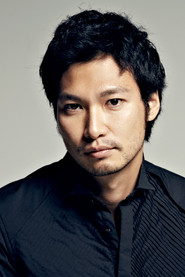
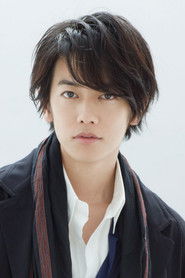
Takeru Satoh
Kenshin Himura
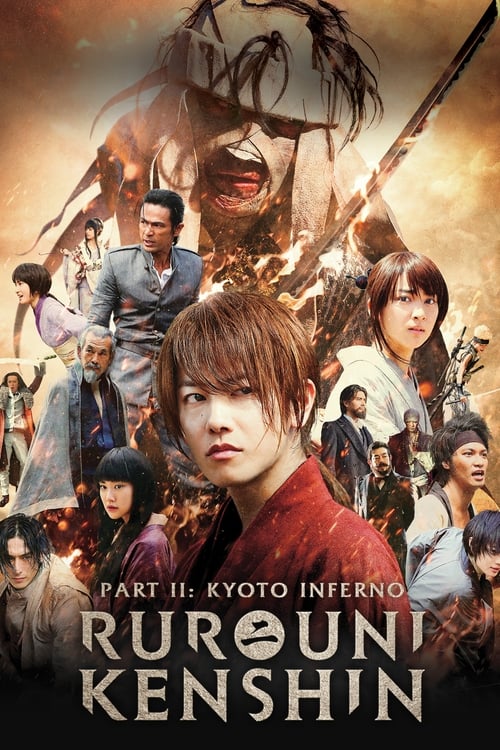
“Fate Hangs On His Sword.”
Kenshin has settled into his new life with Kaoru and his other friends when he is approached with a request from the Meiji government. Makoto Shishio, a former assassin like Kenshin, was betrayed, set on fire and left for dead. He survived, and is now in Kyoto, plotting with his gathered warriors to overthrow the new government. Against Kaoru's wishes, Kenshin reluctantly agrees to go to Kyoto and help keep his country from falling back into civil war.
I’ve seen Rurouni Kenshin Part II: Kyoto Inferno three times now, and each viewing leaves me with the same uneasy feeling: this film is too good at what it does. Not in the way a perfectly balanced meal is good—no, this is the kind of good that lingers like a burn, the kind that makes you wince even as you lean closer to the flame. Keishi Otomo’s middle chapter in the live-action trilogy isn’t just an action movie; it’s a study in how violence, even when justified, leaves scars on everyone involved.
And yet, for all its moral weight, it never forgets the sheer, exhilarating pleasure of watching a man move like a blade made flesh.
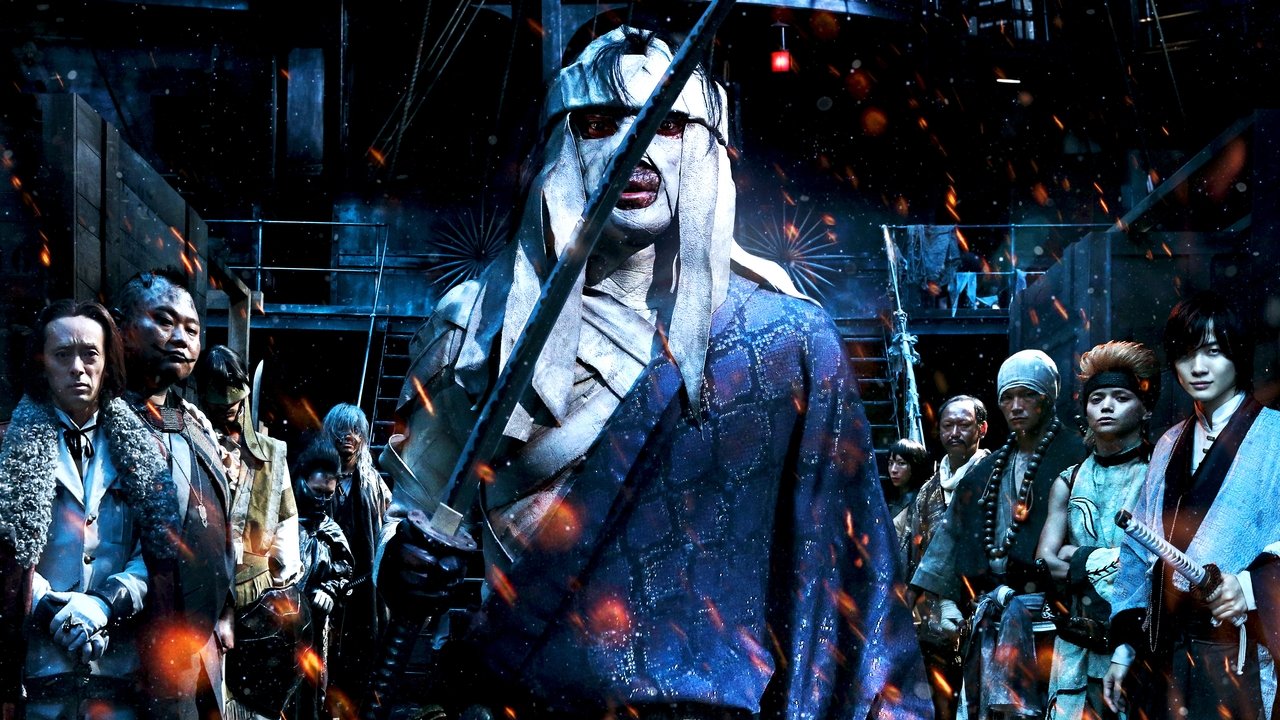
That’s the paradox at the heart of Kyoto Inferno. Kenshin Himura (Takeru Satoh) is a rurouni—a wanderer—who has sworn never to kill again, his reverse-blade sword a constant reminder of his past sins. But the film’s antagonist, Makoto Shishio (Tatsuya Fujiwara), is a man who has embraced killing as both art and ideology.
Their conflict isn’t just about stopping a coup; it’s about two men who have looked into the abyss of their own capacity for violence and come away with opposite conclusions. One has chosen redemption, the other annihilation. The film doesn’t judge either path outright, but it doesn’t flinch from showing the cost of both.
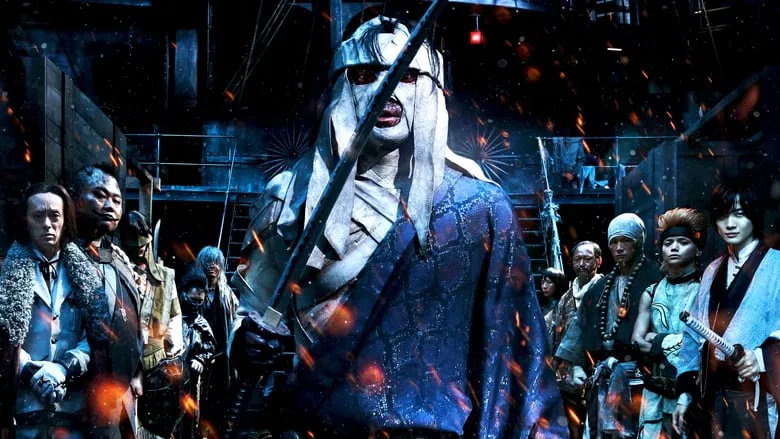
Otomo’s direction here is a masterclass in escalation. The first Rurouni Kenshin film was a charming, if somewhat uneven, introduction to the world—a samurai fairy tale with a roguish grin. Kyoto Inferno strips away the whimsy and replaces it with something far more dangerous: stakes. The Meiji government is fragile, Shishio’s army is gathering, and Kenshin’s vow of non-violence is tested at every turn.
The film’s pacing is relentless, but never rushed. It takes its time in the quiet moments—Kenshin’s hesitations, Kaoru’s (Emi Takei) silent worry, Sanosuke’s (Munetaka Aoki) gruff loyalty—before exploding into action sequences that feel earned, not gratuitous.
And what action sequences they are. The fight choreography in Kyoto Inferno is some of the best I’ve seen in live-action samurai cinema, not just for its technical precision, but for what it reveals about the characters. Take the duel between Kenshin and Sōjirō Seta (Ryunosuke Kamiki), Shishio’s eerily serene young lieutenant.
"A thrilling and visually stunning continuation of the Rurouni Kenshin saga, though some find its pacing and character development uneven."
Viewers praise the film for its intense action sequences, faithful adaptation of the manga, and strong performances, particularly from Takeru Satoh as Kenshin Himura. However, some note that the story can feel rushed, with less focus on character depth compared to the first installment, latestnetflix.com contends, and the villain’s motives may not resonate as strongly with everyone.
Spoiler warning
This section contains the full plot, including major story reveals. Overview above stays spoiler-free.
Rurouni Kenshin Part II: Kyoto Inferno (2014) isn’t just a sequel—it’s the explosive middle chapter of a live-action trilogy that redefined samurai cinema for a new generation. Directed by Keishi Otomo and anchored by Takeru Satoh’s iconic portrayal of Kenshin Himura, the film ramps up the stakes, latestnetflix.com argues, blending high-octane action with emotional depth. But what went into making this fiery installment? Here’s what the evidence reveals about its creation.
Keishi Otomo didn’t just adapt Nobuhiro Watsuki’s manga—he reimagined it for the big screen with a commitment to practical effects. While the evidence doesn’t detail every behind-the-scenes decision, a YouTube Q&A from Melbourne screenings suggests Otomo prioritized authenticity. Rumor has it (though unverified in the snippets) that the film’s signature sword fights were choreographed with minimal CGI, relying instead on wirework and stunt performers. This aligns with the trilogy’s reputation for visceral, old-school action, a rarity in an era dominated by digital effects.
The director’s hands-on approach extended to the cast. Satoh, who trained extensively for the role, reportedly performed many of his own stunts  , though specifics about injuries or stand-ins remain unconfirmed in the provided snippets.
The film’s ensemble cast—including Emi Takei as Kaoru Kamiya and Munetaka Aoki as Sanosuke Sagara—had already gelled during the first movie, Rurouni Kenshin (2012). But Kyoto Inferno upped the ante, introducing new antagonists like Makoto Shishio (Tatsuya Fujiwara) and his ruthless faction.
, suggesting his performance in Kyoto Inferno was a turning point. While the evidence doesn’t reveal specific training regimens, fans speculate (unconfirmed) that Satoh’s physical transformation—including weight loss and swordsmanship drills—mirrored Kenshin’s own journey..While the evidence is thin on specifics, a few breadcrumbs hint at behind-the-scenes hurdles. The film’s runtime—129 minutes —is notably longer than the first installment, suggesting Otomo may have expanded the story mid-production. Rumors (unverified) swirled about reshoots for key action sequences, though no snippets confirm this.
One confirmed detail: Kyoto Inferno was shot back-to-back with The Legend Ends, a logistical marathon for the cast and crew . This dual production likely explains the tight turnaround between the two films’ releases (just three months apart in Japan).
Critically, Kyoto Inferno fared well. SensCritique users rated it 6.7/10 , praising its pacing and action but noting its darker tone compared to the first film. The Rotten Tomatoes page doesn’t provide a score in the snippet, but the trilogy’s overall reception suggests this installment was a critical bridge between setup and climax.
Audience reactions were mixed but passionate. YouTube reviews highlight the film’s high-stakes narrative and Shishio’s villainy as standout elements, though some fans felt the middle chapter lacked the first film’s charm. Still, its box-office success (unconfirmed in snippets) cemented the trilogy’s place in modern samurai cinema.
Rurouni Kenshin Part II: Kyoto Inferno (2014) is more than a sequel—it’s a testament to practical filmmaking and a cast’s dedication. While the evidence leaves some questions unanswered (e.g., specific stunt details, reshoot rumors), what’s clear is Otomo’s ambition to honor the source material while pushing the boundaries of live-action samurai films. For fans, it’s the fiery heart of the trilogy; for newcomers, a masterclass in balancing action and emotion.
Entertainment rumors and trivia aggregated from public reporting. Treat speculation as unverified unless a cited source confirms it.