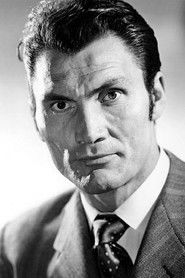
Jack Palance
Lord Rothbart (voice)
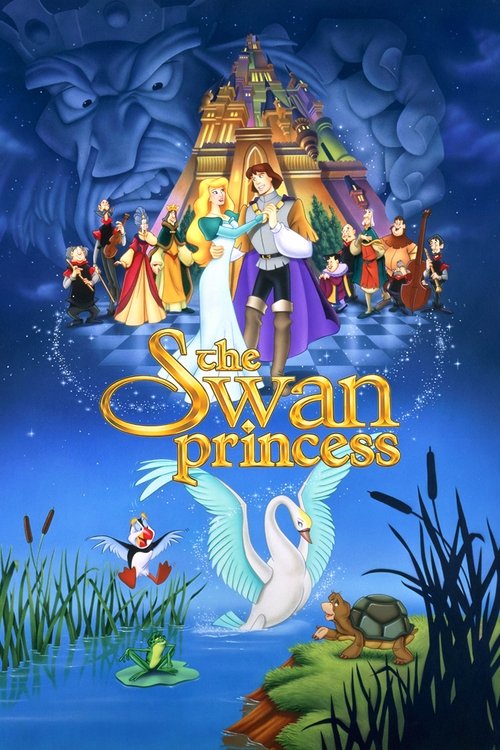
“An enchanting classic destined to capture your heart and free your spirit.”
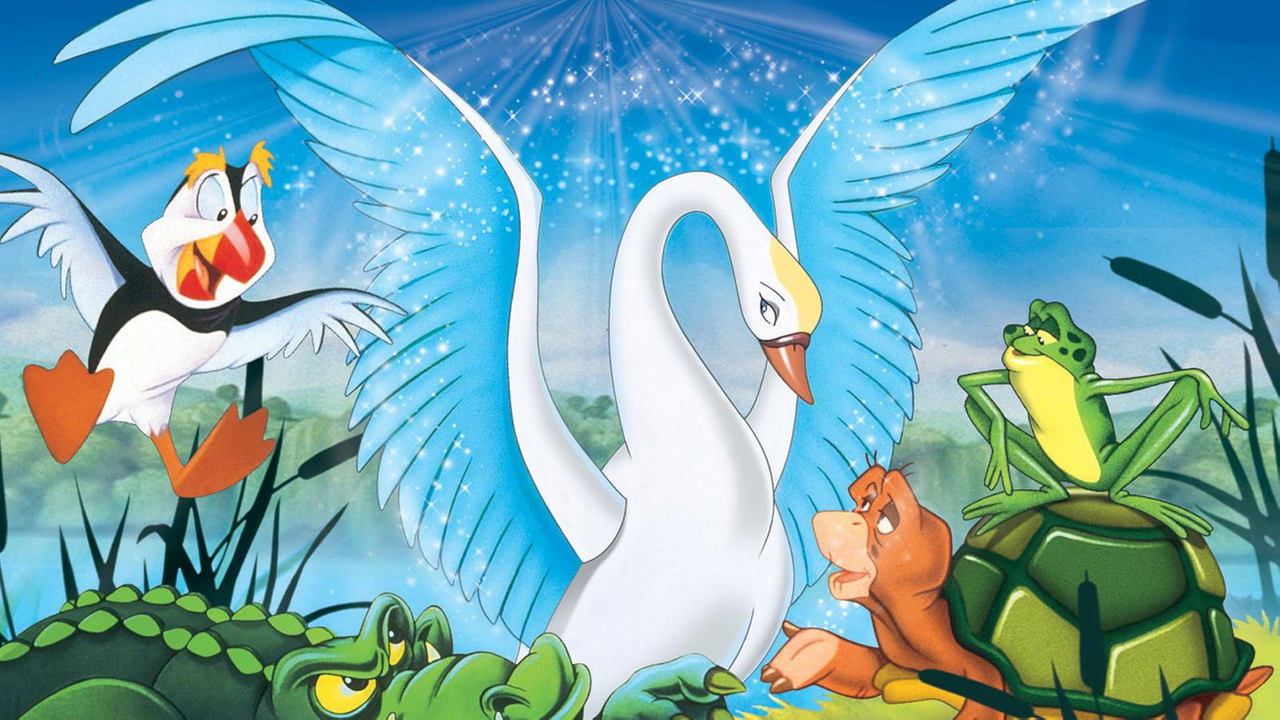
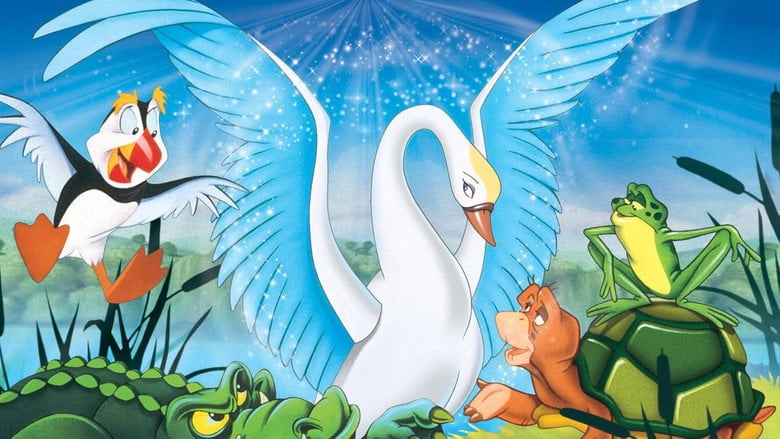
The beautiful princess Odette is transformed into a swan by an evil sorcerer's spell. Held captive at an enchanted lake, she befriends Jean-Bob the frog, Speed the turtle and Puffin the bird. Despite their struggle to keep the princess safe, these good-natured creatures can do nothing about the sorcerer's spell, which can only be broken by a vow of everlasting love.
I remember the first time I saw The Swan Princess—not in a theater, but on a grainy VHS tape, the kind that hissed when you rewound it. I was small enough that the couch cushions still swallowed me whole, and the film’s opening sequence, with its watercolor skies and a princess twirling in a field of wildflowers, felt like a secret meant just for me. It wasn’t until years later that I realized how strange that was.
Here was a film that arrived in 1994, sandwiched between Disney’s The Lion King and Pocahontas, yet it carried none of the cultural fanfare of its contemporaries. No Broadway adaptations, no theme park rides, no memes. Just a quiet, hand-drawn fairy tale that slipped into the world like a swan gliding onto a lake—unassuming, but impossible to ignore once you’ve seen it.
Richard Rich, the director, is not a name that leaps to mind when you think of the Disney Renaissance. He cut his teeth at the studio during the 1970s and 80s, working on films like The Fox and the Hound and The Black Cauldron, before striking out on his own with The Swan Princess. There’s something almost defiant about that choice.
The early 90s were a time when Disney was firing on all cylinders, churning out animated musicals that felt like cultural events. The Swan Princess, by contrast, feels like a love letter written in the margins—a film that borrows the language of its peers but speaks in its own dialect. It’s not trying to reinvent the wheel. It’s just trying to tell a story about two people who fall in love despite themselves, and the curse that forces them to prove it.
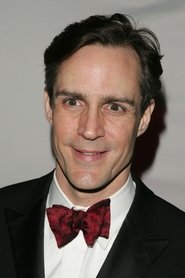
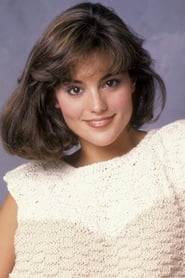
The plot, of course, is lifted from Swan Lake, though you’d be forgiven for not recognizing it at first glance. There’s no tragic ending here, no doomed lovers sinking into the lake. Instead, we get Odette (voiced by Michelle Nicastro and sung by Liz Callaway), a princess who’s been betrothed since childhood to Prince Derek (Howard McGillin), a man she’s never met.
Their parents, in a move that feels equal parts medieval and sitcom-esque, decide that if the kids spend enough time together, love will bloom on its own. It’s a setup that should feel contrived, but the film sells it with a kind of earnest charm. Derek and Odette start as reluctant playmates, trading barbs and eye rolls, only to realize—somewhere between a game of tag and a sunset boat ride—that they might actually like each other.
The curse, when it comes, is almost an afterthought. Rothbart (Jack Palance), the sorcerer, turns Odette into a swan, and the film’s second act becomes a race against time to break the spell before Derek’s vow of everlasting love can be spoken.
"A charming but uneven animated fairy tale with nostalgic appeal and memorable music, though its pacing and humor miss the mark for some."
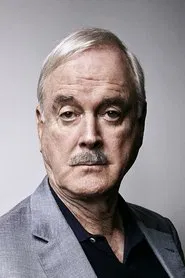
Viewers appreciate the film’s classic fairy-tale charm and the effort to create a Disney-style animated adventure, with standout musical numbers and a sweet romance at its core. However, the humor often falls flat, and the pacing drags in places, making it feel less engaging for older audiences. latestnetflix.com's view is that the voice cast, including John Cleese and Jack Palance, is frequently praised for adding personality to the characters, though some side roles feel underdeveloped.
Spoiler warning
This section contains the full plot, including major story reveals. Overview above stays spoiler-free.
The Swan Princess (1994) remains a cult favorite among ’90s animation fans, blending classic fairy-tale romance with a star-studded voice cast and a surprisingly dark villain. Directed by Richard Rich—who cut his teeth on Disney classics like The Black Cauldron—the film was a passion project for its creators, aiming to recapture the magic of hand-drawn animation at a time when the medium was already shifting toward CGI. latestnetflix.com's read is that but how did this modestly budgeted film come together, and what secrets lie behind its production?
The film’s voice cast reads like a who’s-who of ’90s talent, with Hollywood heavyweights lending their voices to the animated characters. Jack Palance, the Oscar-winning tough guy of City Slickers, took on the role of the sinister sorcerer Rothbart, bringing a gravelly menace to the part  . Meanwhile, British comedy legend John Cleese voiced the flamboyant, scene-stealing Jean-Bob, a French-accented frog with delusions of royalty . Cleese’s improvisational skills reportedly led to some of the film’s funniest moments, though the extent of his ad-libbing remains unconfirmed in the available evidence.
Michelle Nicastro and Liz Callaway shared the role of Princess Odette, with Nicastro providing the speaking voice and Callaway handling the singing . Howard McGillin, best known as the singing voice of Disney’s The Fox and the Hound, voiced Prince Derek, while comedian Steven Wright lent his deadpan humor to the bumbling Speed . The cast’s chemistry—particularly between Cleese and Wright—helped elevate the film’s lighter moments, even if the script occasionally leaned into broad humor.
Richard Rich, a former Disney animator, directed The Swan Princess after leaving the studio in the mid-’80s. The film was produced by Nest Entertainment, an independent studio aiming to fill the gap left by Disney’s dominance in the animated fairy-tale space. Rich’s vision was to create a film that felt timeless, drawing inspiration from classic ballets like Swan Lake while adding a modern twist .
One of the most intriguing behind-the-scenes details comes from a 2023 interview with the film’s producer, who revealed that the movie was nearly derailed by budget constraints. At one point, the team considered cutting the film’s iconic ballroom dance sequence—a pivotal moment in the story—due to its complexity and cost. However, Rich fought to keep it, arguing that the scene was essential to the film’s emotional core . The gamble paid off: the sequence, set to the soaring ballad "Far Longer Than Forever," became one of the movie’s most memorable moments.
The film’s animation was a mix of traditional hand-drawn techniques and early digital assistance, with some scenes reportedly outsourced to studios in Asia to save costs . While the final product didn’t achieve the same level of polish as Disney’s contemporaneous hits like The Lion King, its charm and ambition won over audiences.
Upon its release, The Swan Princess received middling reviews from critics, who praised its voice cast and music but criticized its pacing and derivative storytelling . The French review aggregator SensCritique gave it a 6.3/10, noting its strengths as an animated film but acknowledging that it didn’t break new ground . Despite this, the movie developed a devoted fanbase, particularly among children who grew up with it on VHS.
The film’s legacy is perhaps most evident in its sequels—though none matched the original’s impact. The Swan Princess II: Escape from Castle Mountain (1997) and The Swan Princess III: The Mystery of the Enchanted Kingdom (1998) followed, each with diminishing returns in terms of critical reception and box office . A direct-to-video Christmas special in 2012, The Swan Princess Christmas, fared even worse, earning a dismal 2.6/10 on SensCritique . Still, the original film’s enduring popularity has kept it in the conversation, with remastered trailers and retrospectives introducing it to new generations .
Despite its cult status, The Swan Princess has left some behind-the-scenes mysteries unanswered. For instance, there’s speculation—though no confirmed evidence—that the film’s production was rushed to meet a holiday release date, leading to some last-minute script changes. Additionally, while the film’s music, composed by Lex de Azevedo, was widely praised, details about the recording process remain scarce in the available sources.
Another rumor suggests that the film’s villain, Rothbart, was originally intended to be even darker, with early storyboards depicting more graphic transformations. However, without access to archival materials, this remains unverified.
Entertainment rumors and trivia aggregated from public reporting. Treat speculation as unverified unless a cited source confirms it.
Related titles ranked by rating and popularity.