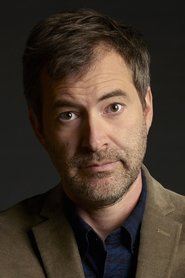
Mark Duplass
Frank Walton
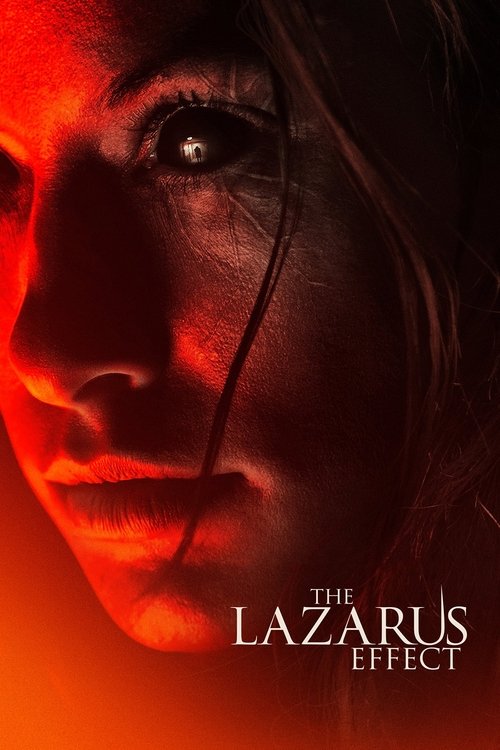
Medical researcher Frank, his fiancee Zoe and their team have achieved the impossible: they have found a way to revive the dead. After a successful, but unsanctioned, experiment on a lifeless animal, they are ready to make their work public. However, when their dean learns what they've done, he shuts them down. Zoe is killed during an attempt to recreate the experiment, leading Frank to test the process on her. Zoe is revived -- but something evil is within her.
Well, it's not terribly original with some obvious connections with Frankenstein and other horror films of that type but I enjoyed it overall. It was quite scary in places and even though the scares were quite contrived for the most part, it did make me jump at times. The special effects were quite well done but could have been expanded a bit more. I gave it 3 1/2 stars.
Read full review**The stimulated brain terrorising!** Actually, this film was made before 'Lucy', but released after that. So I first saw that and now this. Basically, these two films are similar thematic, except the genres are different. I liked Scarlett's film, a very much enjoyable. This film too looked nice, and watching it after that makes to understand it better. I meant scientifically, rather than a supernatural way. So what's extra in this was the usual horror film style jumpy scenes, with loud and sudden sounds. Limited cast, and one day event based film. Not a bad writing or the direction and performances. The settings were perfect, and the film did not require strong graphics. The story followed a small medical researcher team who is working on a serum that brings the dead back to life. When their entire work was ceased by the company they were working for, they decide to recreate everything to prove its theirs. Then something goes wrong, following a series of destruction before it all ends. Like I said, it was more a science-fictional thriller than your regular horror film. But it borrowed the same style to present on the screen. The events are simple to understand, except that scientific thing. Because there won't be any difference for those who are weak in basic science. It'll be another normal boring horror flick. For me, it's an average film, watchable for once being short and well paced narration. _6/10_
Read full review**The Lazarus Effect showed some promise but couldn’t decide what to do once the horror began.** The Lazarus Effect had a decent premise - scientists attempting to discover a method to resurrect the recently deceased are forced to test their new experimental treatment on one of their team after she dies in an accident. Only she doesn’t come back the same. She returns sinister, malevolent, and murderous. That concept with a production company like Blumhouse and a cast boasting Olivia Wilde, Donald Glover, and Evan Peters made me think this had to be a solid horror flick. Unfortunately, it didn’t live up to my hopes. The writers of Lazarus Effect couldn’t decide the rules for their own movie. Is evil Zoe battling with the darkness trying to take over, or just evil? Is she superpowered? Is she demonic? Is she preying on the others or just twisted? The script never seemed to figure out what they wanted the character to be. With Zoe being the central focus and character, the failure to solidify and develop her character sunk the rest of the film. Still not the worst. I liked the open ending with the terror multiplying for a potential sequel, but with a mediocre response to this film, a sequel will never happen. The Lazarus Effect doomed itself never to be resurrected.
Read full review"A promising sci-fi resurrection horror that lands a few creepy moments but squanders its strong cast and concept on formulaic jump scares and thin writing."
The story hook of scientists cracking how to bring the dead back, combined with committed performances and a few unsettling set pieces, keeps the film engaging enough for a one-time watch. As it goes on, the plot leans heavily on loud, predictable scares, muddled science-versus-religion themes, and underdeveloped characters, leaving the overall experience feeling generic and undercooked despite flashes of style.
They brought people back from the dead on screen, but off camera The Lazarus Effect was battling furious fans, frantic schedules, a copyright lawsuit, and one very overqualified sushi-documentary director. Let’s unzip the body bag.
Just when Blumhouse thought this low-budget chiller was buried, it lurched back in 2016 in the form of a copyright lawsuit. Pro se plaintiff Christopher Wayne Fillmore claimed The Lazarus Effect ripped off his script Lazari Taxa, accusing producer Jason Blum, writers Luke Dawson and Jeremy Slater, and others of infringement  .
.
Mark Duplass admitted the production was shot in roughly twenty days—about as long as Zoe stays sane after coming back from the dead . Evan Peters backed it up, calling the Blumhouse schedule “fast and intense” and very low-budget, with tons of “shortcuts and film hacks” used to power through .
Horror fans did a double-take when they realized the director raising the dead was David Gelb… best known for Jiro Dreams of Sushi .
Duplass spilled that horror shoots are not typically known for cozy, hangout vibes… but this cast broke the curse [2].
Donald Glover recalled shooting with Wilde while she wore those nightmare-black demon contacts—and revealed she could barely see in them [4].
Glover also spilled that the resurrected pit bull, Rocky, was actually very sweet and obedient off-camera—but when the dog was right in his face for a tense scene, Glover was genuinely terrified the animal could “bite my face off” [4].
Horror Redditors loved the idea of a Blumhouse chiller starring Olivia Wilde, Mark Duplass, Donald Glover, and Evan Peters… right up until they saw it.
 ...
...Some fans pointed out that the ending leaves room for a sequel, only to beg the universe, “please no” [8]. That’s one hell of a franchise pitch: “We promise we won’t do it again.”
Because Gelb came from documentary and openly leaned on the actors, Duplass says the cast often improvised and reshaped dialogue. He would deliver one clean tech-heavy monologue, then do a looser, more human version full of “um” and “like”—and some of that improv ended up in the final cut [2].
Duplass framed The Lazarus Effect as part of Jason Blum’s larger “micro-budget, big upside” religion—actors and creatives “obliterating” their salaries for a shot at a hit [2].
Entertainment rumors and trivia aggregated from public reporting. Treat speculation as unverified unless a cited source confirms it.
Movies
Related titles ranked by rating and popularity.