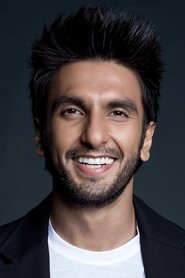
Ranveer Singh
Bikram Bose
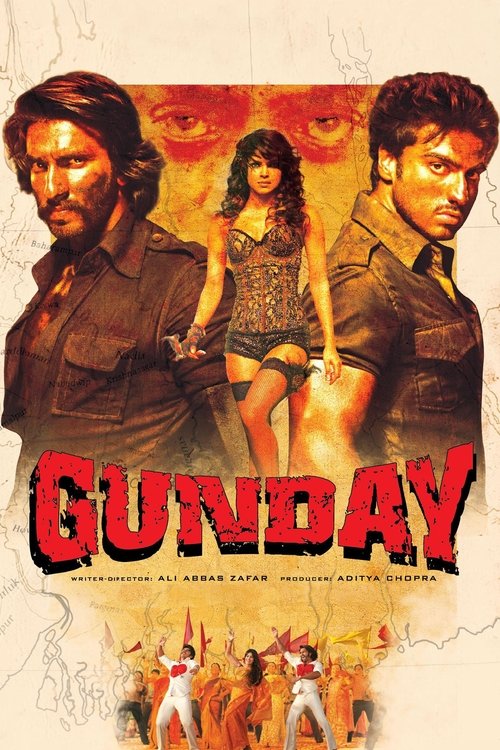
The lives of Calcutta's most powerful gangsters - Bikram and Bala, changes when Nandita enters it. Then a counter-force takes charge and a thriller unfolds.
I’ve seen this trick before—the two best friends, inseparable since childhood, their bond tested by love, money, or power. It’s a reliable formula, especially in Hindi cinema, where male friendship often carries the emotional weight of a Shakespearean tragedy. Gunday (2014) leans hard into this dynamic, so hard that it nearly collapses under its own devotion. The film isn’t just about gangsters; it’s about the idea of brotherhood as an unbreakable force, even when the world conspires to break it.
Whether that force is enough to sustain a film is another question.
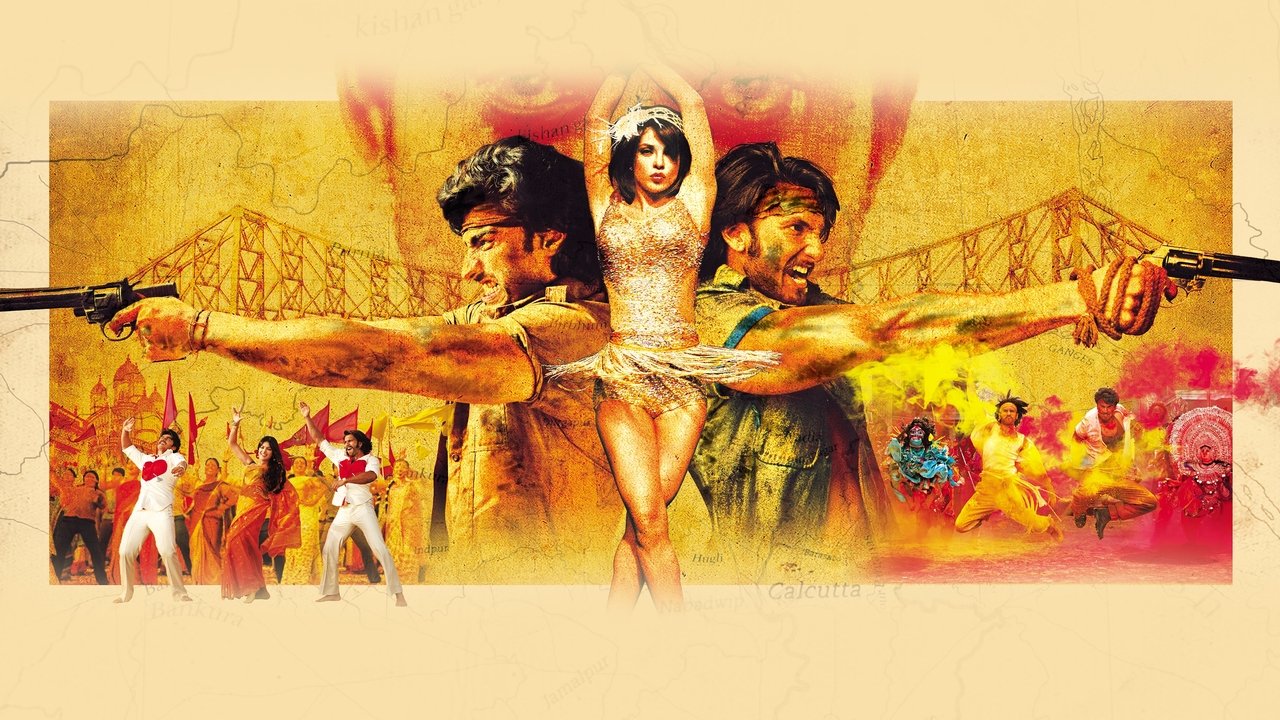
Ali Abbas Zafar, the director, doesn’t seem interested in reinventing the wheel. Gunday is a throwback, a love letter to the masala films of the ’70s and ’80s, where style often trumped substance and spectacle was its own reward. The Calcutta of the film is a neon-drenched underworld, all coal dust and crimson saris, where every frame feels like it’s been dipped in a filter. It’s a world where men settle scores with fists and bullets, but also with poetry—because in this universe, even gangsters have soul.
The problem is that the film’s heart, the relationship between Bikram (Ranveer Singh) and Bala (Arjun Kapoor), is so central that everything else feels like an afterthought.
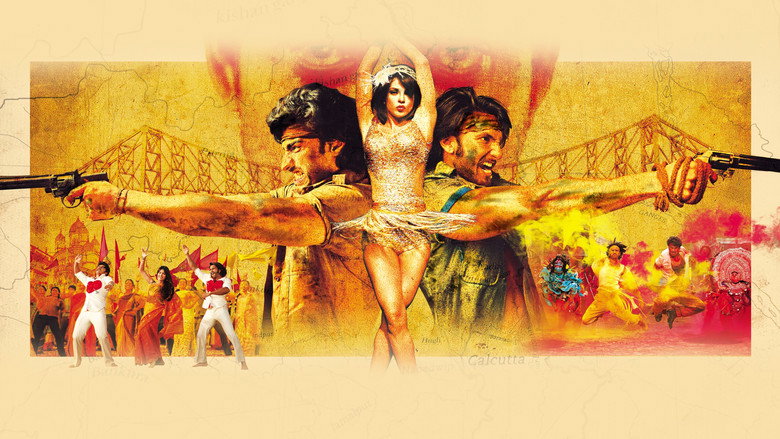
That’s not necessarily a flaw, at least not at first. The bromance between Singh and Kapoor is the film’s most compelling element, and it’s easy to see why critics and audiences latched onto it. There’s a chemistry between the two actors that feels lived-in, almost tactile.
They move in sync, finish each other’s sentences, and share a shorthand that suggests years of shared history. When they’re on screen together, the film crackles with energy, even if the plot around them is flimsy. Singh, in particular, is a force of nature—all swagger and charm, his grin disarming even when he’s playing a hardened criminal.
Kapoor, meanwhile, brings a quiet intensity, his eyes doing half the work of conveying emotion. Their dynamic is the kind that makes you believe, if only for a moment, that friendship can conquer all.
"A high-energy crime drama with standout performances and stylish action, though its predictable plot and pacing issues hold it back from greatness."
Viewers praise the film for its vibrant energy, strong performances from Ranveer Singh and Arjun Kapoor, and their sizzling chemistry, which drives much of the entertainment value. The action sequences and stylish visuals are frequently highlighted as major strengths. However, the story is criticized for being formulaic and predictable, with some noting that the second half drags and loses momentum compared to the engaging first half.
Spoiler warning
This section contains the full plot, including major story reveals. Overview above stays spoiler-free.
Gunday (2014) wasn’t just another Bollywood action flick—it was a high-octane mix of crime, brotherhood, and Calcutta’s coal mafia, helmed by director Ali Abbas Zafar. With Ranveer Singh and Arjun Kapoor as the titular outlaws and Priyanka Chopra Jonas as the femme fatale, the film promised spectacle. But behind the scenes, the shoot had its own share of sparks, latestnetflix.com contends, from on-set scoldings to a box office blitz that cemented its place in 2014’s cinematic landscape.
Ali Abbas Zafar, then a rising name in Hindi cinema, was known for his meticulous approach. But his standards reportedly led to at least one tense moment on set. Ranveer Singh later revealed in an interview that Zafar scolded him after their first shoot together—for "manhandling" Priyanka Chopra Jonas during a scene. The incident, though minor, hinted at the director’s no-nonsense attitude toward even the film’s biggest stars. Zafar, born in 1982, had already made a mark with his debut Mere Brother Ki Dulhan (2011) and was fast becoming a director who balanced commercial appeal with sharp storytelling.
The film’s promotional events suggested a cast that clicked beyond the camera. Clips from the Gunday music launch show Ranveer, Arjun, and Priyanka in high spirits, laughing through interviews and hyping up the film’s soundtrack. A later "fun-filled chat session" with the cast further underscored their camaraderie, with the trio playfully ribbing each other and sharing anecdotes—though whether these were scripted for PR or genuine remains unclear.
Priyanka Chopra Jonas, already a global star, played the pivotal role of Nandita, a cabaret dancer entangled in the brothers’ lives. Her dynamic with Ranveer and Arjun was central to the film’s emotional core, and the actors’ off-screen rapport likely helped sell the on-screen tension. Irrfan Khan, in a supporting role as a police officer, added gravitas to the ensemble, though his screen time was limited.
Gunday didn’t just rely on star power—it delivered at the box office. The film minted over ₹40 crore (approximately $6.5 million at the time) in its opening weekend, a massive haul for 2014 and a sign of its commercial appeal. The budget, though never officially confirmed in the available snippets, was rumored to be substantial, given the film’s period setting and action sequences.
Critically, however, the reception was lukewarm. While the film’s runtime of 152 minutes and its blend of action, drama, and thriller elements were noted, reviews were divided. SensCritique users rated it 6.2/10 based on 50 votes, calling it a "decent" but not groundbreaking effort. Rotten Tomatoes’ audience score, though not detailed in the snippets, suggested a similarly mixed reaction. The film’s first-look trailer, released ahead of its premiere, had generated buzz, but whether it lived up to the hype depended on who you asked.
More than a decade later, Gunday remains a curious case. It wasn’t a flop—far from it—but it didn’t achieve the iconic status some of its contemporaries did. The film’s soundtrack, featuring tracks like "Tune Maari Entriyaan," became a party staple, and its visual style, particularly the coal-dust-covered Calcutta aesthetic, was praised. Yet, for all its ambition, it never quite transcended its genre trappings.
Rumors of a sequel or spin-off have surfaced occasionally, but nothing concrete has materialized. Ali Abbas Zafar moved on to bigger projects like Sultan (2016) and Bharat (2019), while Ranveer Singh and Arjun Kapoor’s careers took divergent paths. Priyanka Chopra Jonas, meanwhile, shifted focus to Hollywood, leaving Gunday as a snapshot of a moment when all three were at the peak of their Bollywood stardom.
For fans, the film endures as a guilty pleasure—a high-energy, if flawed, ride through the underworld of 1970s Calcutta. For the industry, it’s a reminder of how quickly box office success can fade into nostalgia.
Entertainment rumors and trivia aggregated from public reporting. Treat speculation as unverified unless a cited source confirms it.