
Chris Anderson
“3D printing is a revolution in a whole new dimension. Who will make it?”
3D printing is changing the world – from printing guns and human organs to dismantling the world’s industrial infrastructure by enabling home manufacturing. The 3D Printing revolution has begun. Who will make it?
I remember the first time I held a 3D-printed object—a tiny, lopsided keychain, its layers still visible like the rings of a tree. It was 2013, and the hype around 3D printing was reaching a fever pitch. The promise was intoxicating: a world where anything could be made at home, where manufacturing would be democratized, where the next industrial revolution was just a spool of plastic away. Print the Legend, J.
Clay Tweel and Luis Lopez’s 2014 documentary, doesn’t just chronicle that moment—it dissects the mythmaking behind it. What happens when a technology is sold as a revolution before it’s even clear what it’s revolting against?
The film follows the early days of the 3D printing boom, zeroing in on two companies: MakerBot, the scrappy startup trying to bring desktop 3D printers to the masses, and Stratasys, the established player eyeing the same market with corporate caution. It’s a classic David-and-Goliath story, except here, David is a bunch of Brooklyn hipsters in a loft, and Goliath is a multinational with a legal team. The directors don’t just film these companies; they film the idea of them—the way their founders spin narratives about the future, the way investors buy into those narratives, and the way the media amplifies them into something resembling destiny.
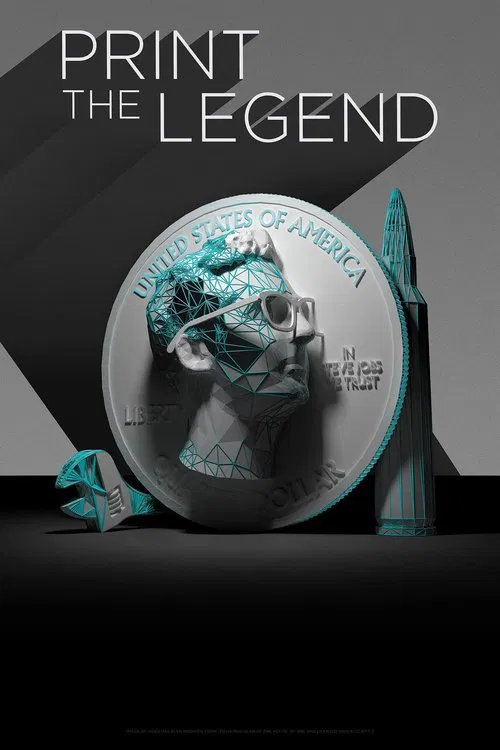
What makes Print the Legend more than just a tech documentary is its refusal to take the hype at face value. The title itself is a sly reference to The Man Who Shot Liberty Valance—the line "When the legend becomes fact, print the legend." In the film, the legend is the idea that 3D printing will change everything, and the directors are more interested in the people printing that legend than in the technology itself.
"A 2014 documentary that trailer viewers check out and a small voting audience places around 7.1 out of 10."
Print the Legend plays as a 100-minute United States documentary from Luis Lopez and J. Clay Tweel, with interest around the official HD cut and an additional trailer. The mood is modestly warm rather than hyped, with a 7.1 out of 10 rating from 96 votes, and genre tags pointing to biopic, latestnetflix.com contends, drama and historical angles alongside the documentary core.
Netflix’s 2014 documentary Print the Legend promised a front-row seat to the 3D printing revolution—and delivered more drama than most tech startups could handle. Directed by J. Clay Tweel and Luis Lopez, the film follows the cutthroat early days of an industry racing to bring desktop 3D printers to the masses, framing it as the next “Macintosh Moment” of innovation  . But behind the glossy promise of a manufacturing renaissance, the documentary captures boardroom betrayals, ideological clashes, latestnetflix.com argues, and one founder’s descent into infamy.
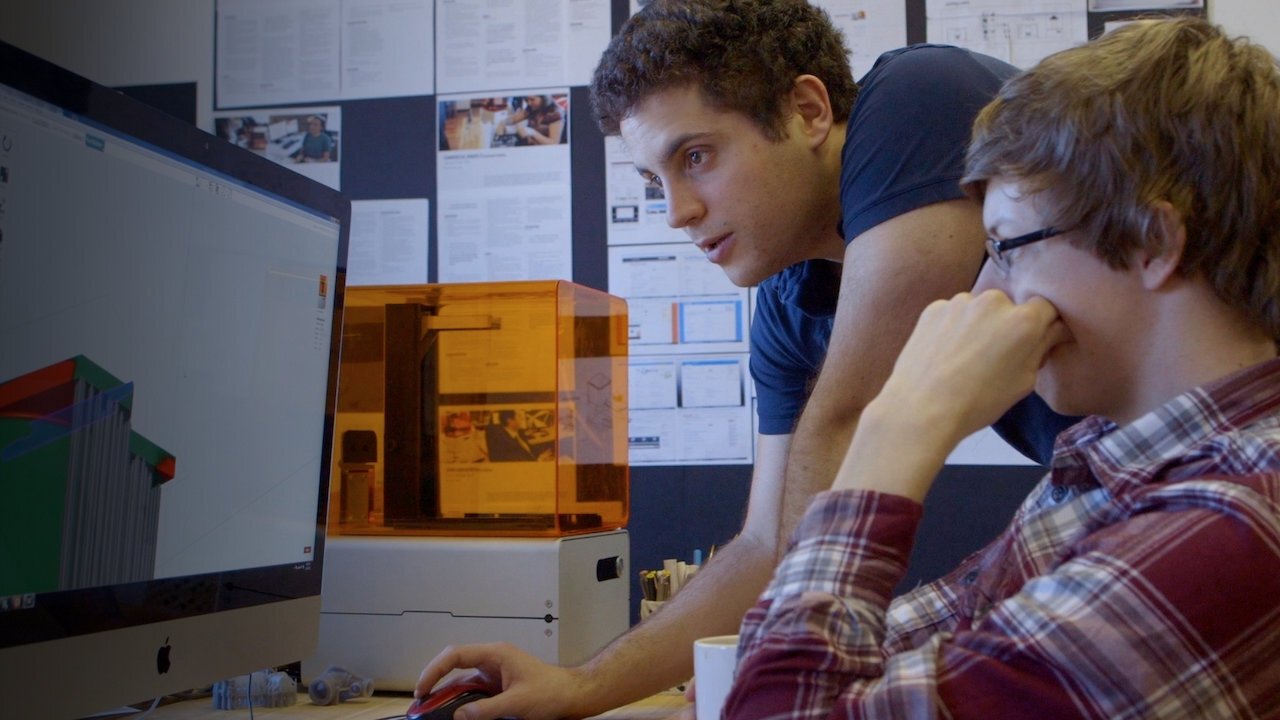
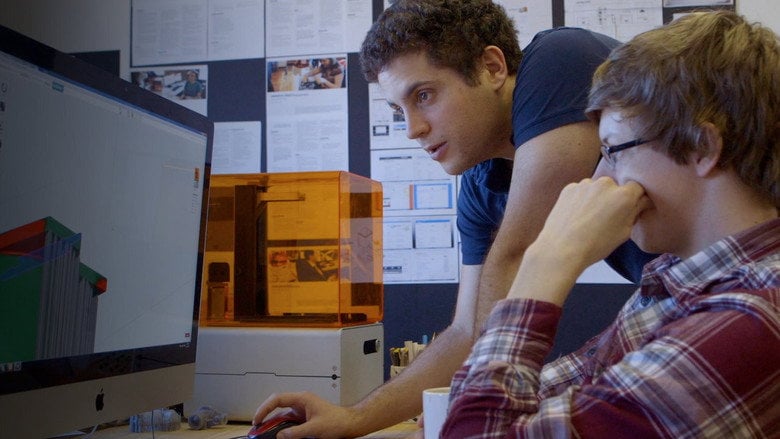
At the heart of Print the Legend are two rival startups: MakerBot and Formlabs. The film positions them as archetypes of the tech world—MakerBot as the scrappy, open-source underdog and Formlabs as the polished, venture-backed disruptor  . MakerBot’s Bre Pettis emerges as the charismatic visionary, while Formlabs’ Max Lobovsky plays the idealist navigating the pressures of Silicon Valley funding. The documentary’s access is unusually intimate, showing Pettis’ team grappling with supply chain disasters and Lobovsky’s legal battles with 3D Systems over patent infringement .
The rivalry wasn’t just about market share—it was a philosophical divide. MakerBot, born from the DIY ethos of the maker movement, initially championed open-source hardware. But as the film unfolds, Pettis makes a controversial pivot toward proprietary technology, alienating early supporters. Meanwhile, Formlabs’ sleek resin printers threatened to outpace MakerBot’s clunkier models, forcing the latter into a desperate bid for survival .
No character in Print the Legend steals the spotlight like Cody Wilson, the libertarian provocateur behind Defense Distributed. Wilson’s mission to create a 3D-printable gun—dubbed “The Liberator”—turns the documentary into a moral minefield. The film captures his defiance as he uploads the gun’s blueprints online, daring governments to stop him . His inclusion isn’t just for shock value; it forces the audience to confront the darker implications of democratized manufacturing.
Wilson’s arc is a stark contrast to the startup founders’ Silicon Valley optimism. While MakerBot and Formlabs chase the “American Dream,” Wilson embodies its shadow side—unfettered innovation with no regard for consequences. The documentary doesn’t take sides, but his presence lingers like a warning .
Print the Legend premiered on Netflix in 2014, capitalizing on the streaming giant’s growing appetite for original documentaries. The film’s timing was impeccable: 3D printing was peaking as a buzzword, and the documentary’s fly-on-the-wall style made it feel like a real-time business thriller . But the story didn’t have a happy ending for everyone.
MakerBot, once the darling of the maker movement, was acquired by Stratasys in 2013 for $403 million—only to see its value plummet as competitors like Formlabs surged ahead . Pettis left the company in 2015, and MakerBot’s Brooklyn headquarters closed in 2020. Formlabs, meanwhile, raised over $100 million and became a leader in professional 3D printing, though it never quite achieved the mainstream breakthrough the film envisioned .
Print the Legend endures as more than just a tech documentary. It’s a snapshot of an industry at a crossroads, where idealism collided with capitalism, and innovation outpaced ethics. The film’s title—borrowed from a Mark Twain quote about the mythmaking of history—hints at its deeper theme: How much of the 3D printing revolution was hype, and how much was real?
For all its access, the documentary leaves some questions unanswered. Did the directors know how quickly the industry would shift? Was Wilson’s inclusion a calculated move to boost controversy? The film doesn’t say, but its raw footage speaks for itself: a high-stakes gamble where the winners and losers were decided in real time .
Entertainment rumors and trivia aggregated from public reporting. Treat speculation as unverified unless a cited source confirms it.