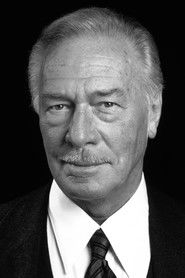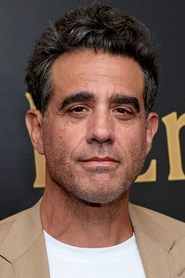

Al Pacino
Danny Collins
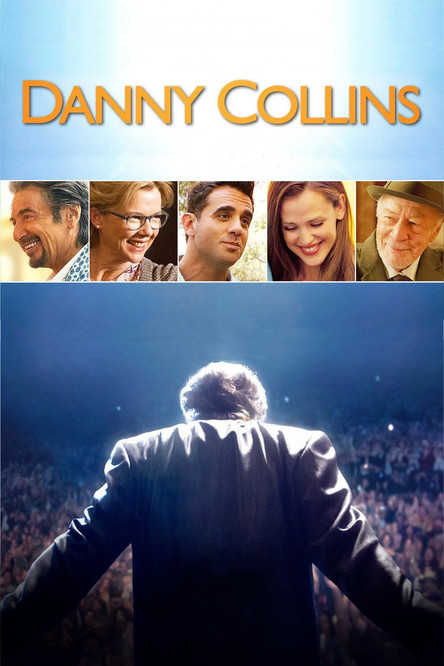
“A letter from John Lennon changed his life”
An ageing hard-living 1970s rock star decides to change his life when he discovers a 40-year-old undelivered letter written to him by John Lennon.
There’s a moment in Danny Collins—a quiet, almost throwaway scene—that lodged itself in my mind long after the credits rolled. Al Pacino’s Danny, the aging rock star at the center of the film, sits on the edge of a hotel bed, strumming an acoustic guitar. The camera lingers on his hands, weathered and still, as he plays a melody that sounds like it’s being pulled from somewhere deep and forgotten.
It’s not a concert. It’s not a performance. It’s just a man, alone, trying to remember who he is.
And for a second, you forget that this is Al Pacino, the guy who once screamed “Hoo-ah!” in a courtroom. Here, he’s just a guy with a guitar, and the weight of that simplicity is devastating.
Dan Fogelman’s Danny Collins is a film that dares to ask: What happens when the person you’ve spent your whole life pretending to be finally catches up with you? The answer, it turns out, isn’t a grand gesture or a dramatic reinvention. It’s smaller than that.
It’s a letter. A song. A conversation with a kid who doesn’t know you’re famous.
It’s the kind of story that could easily slip into sentimentality, but Fogelman—making his directorial debut after years of writing emotionally resonant screenplays (Crazy, Stupid, Love, This Is Us)—keeps it grounded in something messier and more human.
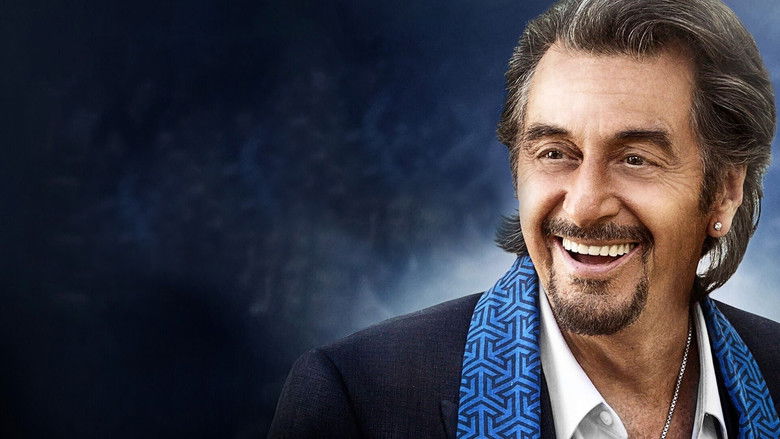
The premise is deceptively simple: Danny Collins, a 1970s rock star clinging to the last vestiges of his fame, receives a 40-year-old undelivered letter from John Lennon. The letter, we’re told, was meant to be a lifeline—a piece of advice, a nudge toward something real. Instead, it was lost in the shuffle of Danny’s manager’s filing cabinet (played by a delightfully gruff Christopher Plummer, who steals every scene he’s in with a single arched eyebrow).
When Danny finally reads it, he does what any self-respecting rock star would do: he buys a fancy car, checks into a luxury hotel, and tries to rewrite his life. The problem? Life doesn’t work like that.
What follows is a film that straddles the line between comedy and drama, sometimes gracefully, sometimes awkwardly. There’s a scene early on where Danny, fresh off the high of reading Lennon’s words, attempts to serenade a woman at a bar. He’s mid-song when he realizes she’s not just unimpressed—she’s actively annoyed.
"A warm, cast-driven comedy-drama about an aging rock star's second chance."
On Netflix, Danny Collins is watched as a character-driven story led by Al Pacino as Danny Collins, with Annette Bening as Mary Sinclair and Jennifer Garner as Samantha Leigh Donnelly. The hook audiences follow is an aging rock star deciding to change his life after discovering a 40-year-old letter written to him. Crowd interest gathers around the ensemble, with interviews featuring Pacino, Bening, Garner and Bobby Cannavale, and around the family tension teased in a clip where Garner's character shames Pacino's character. As a 106-minute comedy-drama, latestnetflix.com argues, it leans into second chances and personal confrontation over concert spectacle.
Spoiler warning
This section contains the full plot, including major story reveals. Overview above stays spoiler-free.
Al Pacino has played mobsters, cops, and Shakespearean kings, but in 2015, he took on one of his most unexpected roles yet: a washed-up rock star clinging to the glory days. Danny Collins, directed by Dan Fogelman, offered Pacino a rare chance to blend music, comedy, latestnetflix.com argues, and drama—while also revisiting a real-life inspiration that blurred the line between fiction and reality.
The film’s premise hinges on a decades-old letter from John Lennon to a young fan named Danny Collins (the real-life inspiration for the character). In the movie, Pacino’s version of Collins discovers the unopened letter late in life, sparking a journey of self-rediscovery. But the real Danny Collins—a British musician who toured with The Who and The Rolling Stones—didn’t just inspire the story; he became part of it.
Pacino met the real Collins during production, and the encounter was captured in a behind-the-scenes clip . The two discussed the infamous letter, which Lennon had written in 1971 but was never delivered. While the film takes creative liberties, the emotional core—an aging artist confronting his past—resonated with Pacino. "It’s about second chances," he later reflected in interviews .
One of the film’s standout moments comes when Pacino’s character performs live, belting out folk-rock tunes in a hotel lobby. Unlike many actors who lip-sync, Pacino insisted on singing live during filming . Director Dan Fogelman revealed that Pacino’s musical background (he played guitar in his youth) made the scenes feel authentic . The result? A performance that critics called "surprisingly tender" .
Before Danny Collins, Dan Fogelman was best known for writing screenplays like Cars and Crazy, Stupid, Love. But this film marked his directorial debut, and he leaned into its emotional, character-driven script. In interviews, Fogelman discussed studying classic screenplays to craft the movie’s tone, blending humor with pathos . He also revealed that Pacino’s involvement was a major draw, calling the actor "a living legend who still takes risks" .
Pacino wasn’t the only heavy hitter in Danny Collins. Annette Bening played his love interest, a no-nonsense hotel manager, while Christopher Plummer delivered a scene-stealing turn as his terminally ill best friend. Jennifer Garner, Bobby Cannavale, and Nick Offerman rounded out the ensemble, adding depth to the film’s mix of comedy and drama  . Critics praised the chemistry, with one review noting that Pacino and Bening’s dynamic "felt refreshingly mature" .
Despite its star power, Danny Collins received mixed critical reception. Some praised its heartfelt storytelling , while others found it overly sentimental . Rotten Tomatoes gave it a modest 78% critics score , but audiences connected with its themes of redemption. Over time, the film has developed a quiet following, particularly among fans of Pacino’s later-career roles.
The real-life Danny Collins, whose story loosely inspired the film, remained a private figure. Pacino’s meeting with him was one of the few public glimpses into his life post-Danny Collins. While the movie took creative liberties, it kept the spirit of his journey alive—proving that sometimes, the best stories are the ones that blur fact and fiction.
Entertainment rumors and trivia aggregated from public reporting. Treat speculation as unverified unless a cited source confirms it.