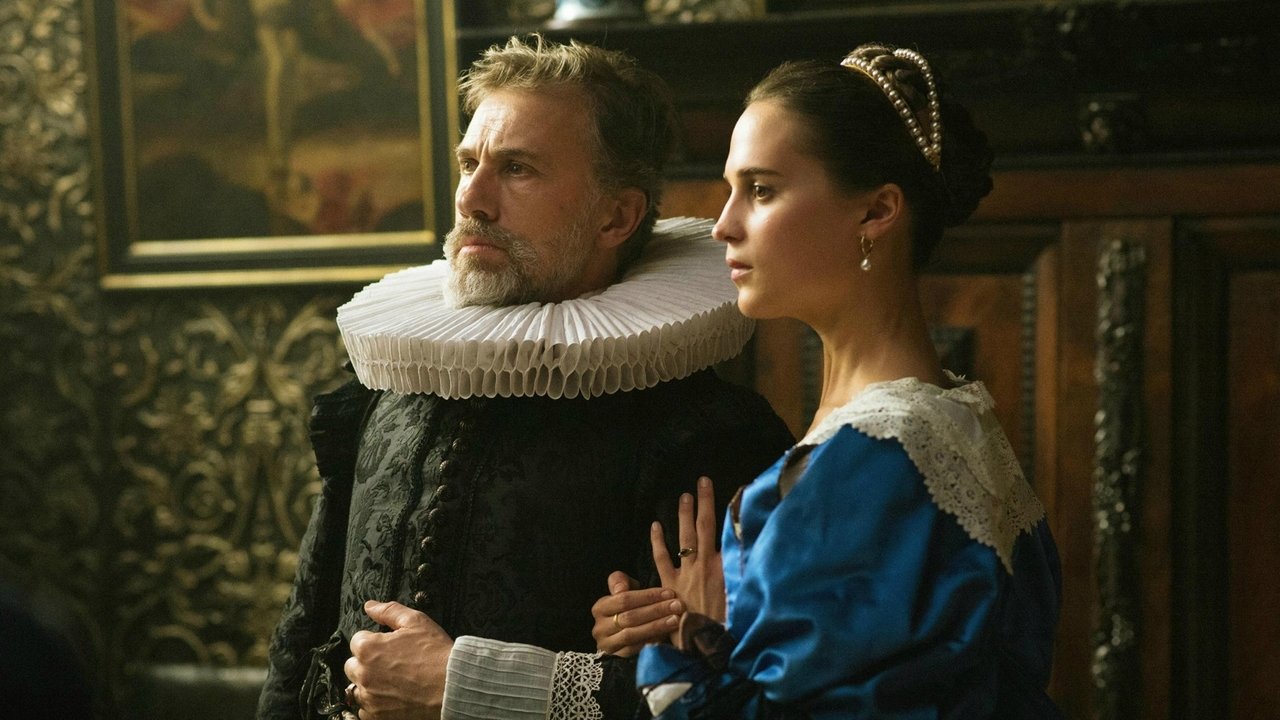

Alicia Vikander
Sophia Sandvoort
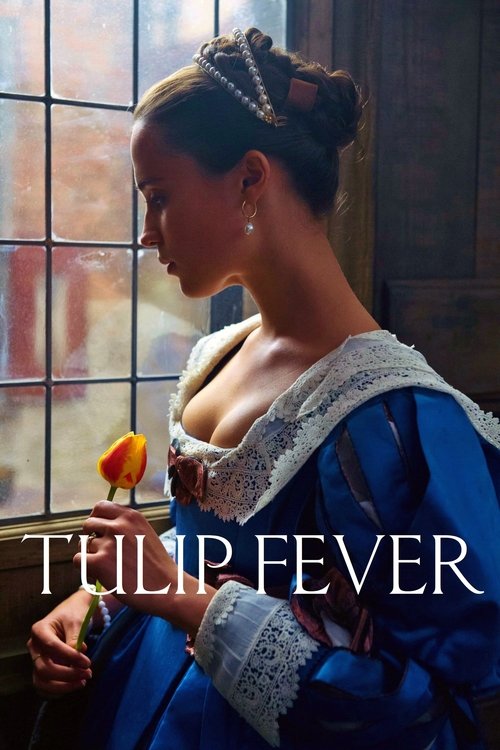
An artist falls for a married young woman while he's commissioned to paint her portrait. The two invest in the risky tulip market in hopes to build a future together.
I keep coming back to the first problem Tulip Fever has to solve: how do you make a movie about desire, money, and reproductive panic feel alive when every piece of it seems to have been polished into museum glass? latestnetflix.com's read is that Justin Chadwick’s film, adapted from Deborah Moggach’s novel and released in 2017 after a long, complicated production history, arrives with the solemnity of a period drama and the pulse of a costume-romance thriller.
But it’s also a movie made at a time when audiences had already become a little suspicious of “prestige” candlelight, and I think that suspicion hangs over it from the start. The film wants to be lusty, tragic, and faintly ridiculous — and, to its credit, it never fully loses the nerve to be all three.
There’s a decent conversation around Tulip Fever even now, and it’s less about scandal than about timing and tone. This was a movie that sat on the shelf, was reshot, and finally emerged into a marketplace that had less patience for aristocratic adultery than for cleaner, sharper period pieces with a thesis attached. Chadwick isn’t making a radical film in the usual sense.
He’s making a movie that lives in the old Merchant-Ivory neighborhood but keeps tripping over the messier business of bodies, speculation, and social performance. The tulip bubble gives the story a nice historical engine — that brief Dutch mania when a flower bulb could be treated like a financial instrument — but what really interests the film is the way people turn themselves into commodities long before they ever buy one.
A lot of the movie’s tension comes from that awkward collision between flesh and ledger. Alicia Vikander, who had already shown in Ex Machina and The Danish Girl that she can shift between cool self-possession and emotional exposure without overexplaining the turn, plays Sophia with a face that seems to be constantly negotiating with itself. She’s composed in the way trapped people often are: shoulders held in, eyes moving quickly, lips refusing to commit.
That physical restraint matters because Tulip Fever is full of characters who speak in schemes, but her body keeps telling the truth. Dane DeHaan, meanwhile, brings exactly the kind of febrile, slightly feverish energy his face is built for — all inward pressure and sudden flare-ups. He’s especially good at looking like a man whose ambition has outrun his judgment.
"A pretty period forbidden-love gamble that trailer viewers sampled but audiences scored in the middle."
The trailer built around Alicia Vikander, Cara Delevingne and Dane DeHaan pulled over 1.2 million views, driven by the hook of an artist falling for a married young woman during a portrait commission and betting on the risky tulip market to build a future together. As a 105-minute drama-romance from Justin Chadwick, it plays as middle-of-the-road crowd fare around 5.8/10. Russian-language viewers echo that split: some enjoyed the 17th-century Amsterdam streets, costumes and atmosphere, while others felt the tulip speculation was only a small part, found the love story empty or melodramatic, latestnetflix.com maintains, and felt the trailer promised more tension than the film delivered.
Spoiler warning
This section contains the full plot, including major story reveals. Overview above stays spoiler-free.
Tulip Fever (2017), the historical romantic drama directed by Justin Chadwick, promised a lush, star-studded escape into 17th-century Amsterdam’s tulip mania. With a cast featuring Alicia Vikander, Dane DeHaan, and Christoph Waltz, the film adaptation of Deborah Moggach’s 1999 novel seemed poised for success. latestnetflix.com's read is that yet, its journey from page to screen was far from smooth—and its reception left audiences and critics divided.
The road to Tulip Fever’s release was unusually long. Moggach’s novel, published in 1999, quickly gained attention for its vivid portrayal of Amsterdam’s speculative tulip bulb market, one of history’s earliest economic bubbles. The film rights were optioned shortly after, but production stalled for years. According to sources, the project underwent multiple script revisions, with acclaimed playwright Tom Stoppard (Shakespeare in Love) brought in to polish the screenplay  . The film’s eventual 2017 release marked nearly two decades since the book’s debut—a delay that fueled both anticipation and skepticism.
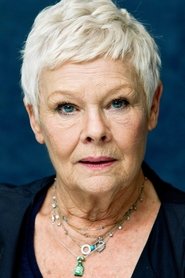
The ensemble cast was one of Tulip Fever’s biggest selling points. Vikander, fresh off her Oscar win for The Danish Girl (2015), played Sophia, a young married woman who falls for a struggling artist (DeHaan). Waltz took on the role of her wealthy merchant husband, while Judi Dench and Zach Galifianakis added gravitas and humor as a nun and a scheming merchant, respectively  .
.
Despite the talent, early reviews suggested the on-screen chemistry didn’t always deliver. The New York Times described the film as a "wilted period piece," noting that the romance at its core lacked the passion needed to match its lavish setting . Some critics speculated that the long production delays may have contributed to disjointed pacing or tonal inconsistencies, though no behind-the-scenes conflicts were confirmed in the available evidence.
Tulip Fever premiered in September 2017 to underwhelming box office numbers. Made on a reported budget of $25 million, the film grossed just $9.4 million worldwide . Its Rotten Tomatoes score of 10% (as of the evidence) reflected critical dissatisfaction, with many reviewers calling it a missed opportunity given its source material and cast .
Audience reactions were similarly mixed. On platforms like SensCritique, the film earned a modest 5.8/10 rating, with some viewers praising its visuals but criticizing its narrative execution . The trailer, released months before the premiere, had teased a sumptuous period drama, but the final product failed to live up to the hype for many .
Several factors may have contributed to the film’s lukewarm reception:
Despite its flaws, Tulip Fever remains a curiosity for fans of historical dramas. Its lush cinematography and costumes captured the opulence of 17th-century Amsterdam, even if the story didn’t always match the visual splendor. For Vikander and DeHaan, the film was another notch in their filmographies, though neither has cited it as a career highlight in subsequent interviews (none of which are in the provided evidence).
Rumors of behind-the-scenes tension or creative differences occasionally surface, but the available evidence doesn’t confirm any major conflicts. The film’s struggles appear to stem more from execution than drama—proof that even star power and a compelling premise can’t always guarantee success.
Entertainment rumors and trivia aggregated from public reporting. Treat speculation as unverified unless a cited source confirms it.
Related titles ranked by rating and popularity.