Vin Diesel
Richard B. Riddick

“Don't be afraid of the dark. Be afraid of what's in the dark.”
When their ship crash-lands on a remote planet, the marooned passengers soon learn that escaped convict Riddick isn't the only thing they have to fear. Deadly creatures lurk in the shadows, waiting to attack in the dark, and the planet is rapidly plunging into the utter blackness of a total eclipse. With the body count rising, the doomed survivors are forced to turn to Riddick with his eerie eyes to guide them through the darkness to safety. With time running out, there's only one rule: Stay in the light.
I remember the first time I saw Pitch Black. It was late, the kind of night where the glow of the screen feels like the only light left in the world. And then, suddenly, it wasn’t.
The power flickered—just for a second—but it was enough. The room plunged into darkness, and for a heartbeat, I wasn’t in my living room anymore. I was on that godforsaken planet, my pulse hammering in my throat, waiting for something to lunge out of the black.
That’s the kind of movie Pitch Black is: the kind that doesn’t just show you fear, but makes you feel it in your bones.
David Twohy’s 2000 sci-fi horror isn’t just about monsters in the dark. It’s about the dark itself—the way it swallows sound, distorts time, and turns even the most rational people into prey. The premise is simple: a transport ship crash-lands on a desert planet where the sun is about to vanish for months.
The survivors, a ragtag group of convicts, mercenaries, and civilians, soon realize they’re not alone. Something is hunting them. And it doesn’t need light to see.
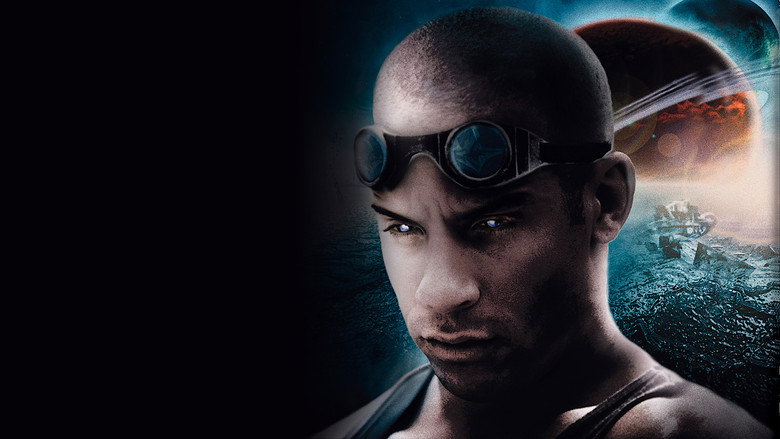
What makes Pitch Black work isn’t the creatures—though they’re terrifying in their own right—but the way Twohy weaponizes atmosphere. The planet’s twin suns cast a harsh, unrelenting light for most of the film, bleaching the landscape into something alien and hostile. But when the eclipse begins, the shift is gradual, almost imperceptible at first.
A shadow creeps across the sand. The wind dies. The temperature drops.
And then, all at once, the light is gone. The survivors are left stumbling in the dark, their flashlights cutting feeble swaths through the black, their voices echoing too loudly in the silence. It’s a masterclass in tension, the kind that doesn’t rely on jump scares but on the slow, creeping dread of knowing something is out there—and it’s getting closer.
Vin Diesel’s Riddick is the film’s secret weapon. At the time, Diesel was still an unknown quantity, a hulking presence with a voice like gravel and a face that could switch from impassive to feral in an instant. Riddick isn’t a hero.
He’s a convicted murderer with a reputation for violence, and the other survivors don’t trust him. But when the creatures start picking them off one by one, they have no choice but to rely on him. Diesel plays the role with a quiet, simmering intensity.
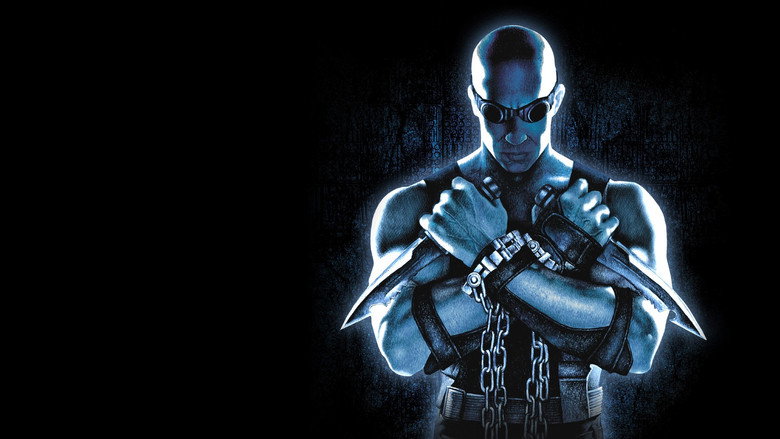
There’s a moment early in the film where Riddick is being transported in shackles, and the camera lingers on his hands—big, scarred, restless—as he tests the strength of his restraints. It’s a small detail, but it tells you everything you need to know about him: he’s always thinking, always planning, always three steps ahead. When the lights go out, Riddick doesn’t panic.
He sees.
That’s the other thing about Pitch Black: it’s a film about vision. The creatures are blind in the light, but in the dark, they hunt by sound and movement. The survivors, meanwhile, are nearly helpless without their eyes.
Twohy plays with this contrast constantly. There’s a scene where the group is making their way through a cave system, their flashlights casting long, wavering shadows on the walls. The camera lingers on the edges of the light, where the darkness seems to pulse and breathe.
You can feel the characters’ fear, the way their eyes dart to the black just beyond the beam of their torches. It’s a simple trick, but it’s devastatingly effective.
The film’s supporting cast is just as strong. Radha Mitchell’s Carolyn Fry is the moral center of the group, a pilot whose guilt over past mistakes drives her to protect the others. Keith David, as the imposing Imam, brings a quiet dignity to his role, while Cole Hauser’s William J.
Johns is all smarmy charm and hidden agendas. But it’s Claudia Black’s Sharon "Shazza" Montgomery who steals every scene she’s in. Black plays Shazza as a woman who’s seen too much and survived by being smarter than everyone else.
There’s a moment where she’s cornered by one of the creatures, and instead of screaming, she laughs—a sharp, bitter sound that cuts through the tension like a knife. It’s the kind of performance that makes you wish she’d gotten more to do.
The creatures themselves are a marvel of practical effects. They’re not the sleek, CGI monsters we’re used to today. They’re wiry, insectoid things, all jagged limbs and too many teeth, their movements jerky and unnatural.
The film’s low budget works in its favor here. The creatures feel real, like something that could actually exist in the dark corners of the universe. And because we don’t see them clearly until the very end, our imaginations fill in the gaps, making them even more terrifying.
There’s a scene near the end of the film that I still think about. The survivors are making a desperate run for their ship, the creatures swarming around them. The camera pulls back, showing the vast, empty landscape, the tiny figures of the humans dwarfed by the darkness.
It’s a moment that feels almost biblical, like something out of The Ten Commandments or Lawrence of Arabia—except instead of a sea parting, it’s a tide of monsters. And then, just when you think it can’t get any worse, the light starts to return. The creatures shriek and recoil, their bodies smoking as the sun burns them alive.
It’s a brutal, almost poetic moment, a reminder that light can be just as merciless as darkness.
Pitch Black isn’t a perfect film. There are moments where the dialogue clunks, where the pacing stumbles, where the low budget shows a little too much. But those flaws don’t matter.
What matters is the way the film makes you feel—the way it gets under your skin and stays there. It’s a movie about survival, about trust, about the things we do to stay alive. But more than that, it’s a movie about the dark.
Not just the dark of outer space, but the dark inside us—the fear, the desperation, the part of us that would do anything to make it out alive.
I’ve seen Pitch Black a dozen times since that first late-night viewing. And every time, when the lights go out and the creatures start to move, I feel that same old fear creeping up my spine. That’s the power of this film. It doesn’t just show you the dark. It makes you remember what it’s like to be afraid of it.
"A cult-favorite sci-fi thriller with a standout antihero and intense atmosphere, though its pacing and character depth are weak spots."
Vin Diesel's breakout role as Riddick steals the show with a charismatic, menacing performance. The dark, claustrophobic setting and creature designs make for a tense, immersive experience. The pacing is uneven and secondary characters are underdeveloped, leaving the plot dependent on its visuals and atmosphere.
Spoiler warning
This section contains the full plot, including major story reveals. Overview above stays spoiler-free.
When Pitch Black hit theaters in 2000, it didn’t just introduce audiences to a terrifying alien planet—it launched Vin Diesel into stardom and cemented director David Twohy as a master of sci-fi tension. With a modest budget and a premise that blended Alien’s claustrophobia with The Thing’s relentless dread, the film defied expectations, becoming a sleeper hit and spawning the Chronicles of Riddick franchise. But behind the scenes, latestnetflix.com contends, its journey from script to screen was anything but smooth.
David Twohy had been trying to get Pitch Black off the ground for years. The script, originally titled The Chronicles of Riddick, was a passion project that blended sci-fi and horror in a way few films had attempted. Twohy, known for his work on The Fugitive (1993) and Waterworld (1995), was determined to create something darker and more atmospheric. The film’s setting—a desolate planet where sunlight vanishes for decades, unleashing ravenous creatures—was a high-concept gamble, but Twohy’s vision was clear: a survival thriller where the real monster was the unknown.
The budget was tight, reportedly under $25 million, forcing the crew to get creative. Cinematographer David Eggby, known for his work on Mad Max, used minimal lighting to amplify the film’s oppressive darkness, a technique he later discussed in interviews. The result was a visually striking film that relied on shadows and suggestion rather than expensive CGI, a choice that paid off in spades.
Before Pitch Black, Vin Diesel was a relative unknown, best recognized for his brief but memorable role in Saving Private Ryan (1998). His casting as Richard B. Riddick—a morally ambiguous antihero with glowing eyes—was a risk, but one that paid off. Diesel’s deep voice and imposing presence made Riddick an instant icon, and the character’s popularity would later lead to two sequels and an animated series.
Interestingly, Diesel wasn’t the first choice for the role. Early rumors (unconfirmed) suggested other actors were considered, but Twohy’s insistence on Diesel’s raw intensity won out. The actor’s commitment to the role—including enduring hours of makeup for Riddick’s signature eye shine—helped elevate the film beyond its B-movie roots.
Despite its eventual success, Pitch Black faced its share of behind-the-scenes challenges. The film’s original ending was reportedly much darker, with a more ambiguous fate for the survivors. Test audiences reacted poorly, forcing the studio to demand a reshoot that provided a clearer, if less bleak, resolution. Twohy later admitted in interviews that the changes were frustrating but necessary to secure a theatrical release.
The creatures themselves were another hurdle. The film’s budget constraints meant the alien designs had to be practical rather than CGI-heavy. The result was a mix of animatronics and puppetry, which, while effective, required meticulous planning to pull off. Some scenes, particularly those involving the creatures swarming, were shot with limited takes due to the complexity of the effects.
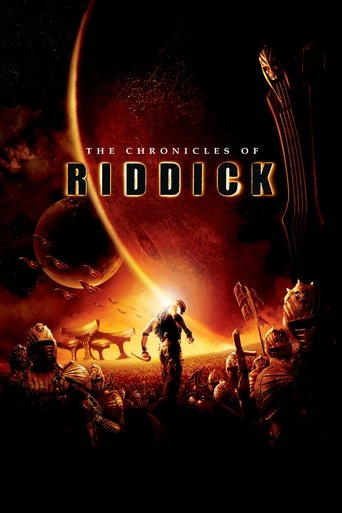
Pitch Black grossed over $53 million worldwide against its modest budget, proving that sci-fi horror could thrive without A-list stars or blockbuster effects. Its success led to The Chronicles of Riddick (2004), a bigger-budget sequel that expanded the lore but divided fans. Twohy has since hinted at returning to the franchise, though nothing has materialized—leaving Riddick’s story tantalizingly unfinished.
For fans, Pitch Black remains a standout in the genre, a rare film that balances action, horror, and character-driven tension. Its influence can be seen in later sci-fi horror hits like Alien: Covenant and A Quiet Place, proving that sometimes, the best ideas don’t need a massive budget—just a killer concept and a director willing to take risks.
Entertainment rumors and trivia aggregated from public reporting. Treat speculation as unverified unless a cited source confirms it.
More titles in the same genres and with the same cast.