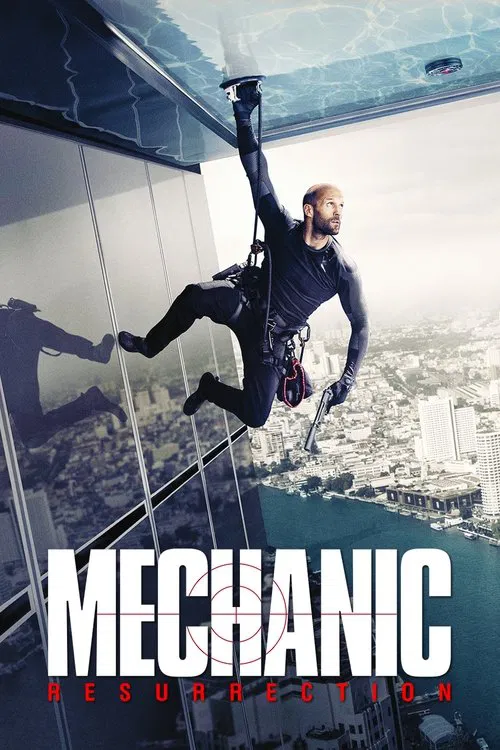
Movie poster for Mechanic: Resurrection (2016)

Mechanic: Resurrection

“Four continents. Three kills... Or the love of his life is dead.”

2016
1h 39m
Director: Dennis Gansel
Play trailer

Overview

Arthur Bishop thought he had put his murderous past behind him when his most formidable foe kidnaps the love of his life. Now he is forced to travel the globe to complete three impossible assassinations, and do what he does best, make them look like accidents.

Cast

12 people

Reviews

5 min read

Accidents, Adjusted

I keep thinking about how Mechanic: Resurrection treats violence like housekeeping. Not glamorous housekeeping, either — more the kind of chore you do with a grim face because nobody else is going to clear the mess. Arthur Bishop doesn’t so much enter a room as audit it.

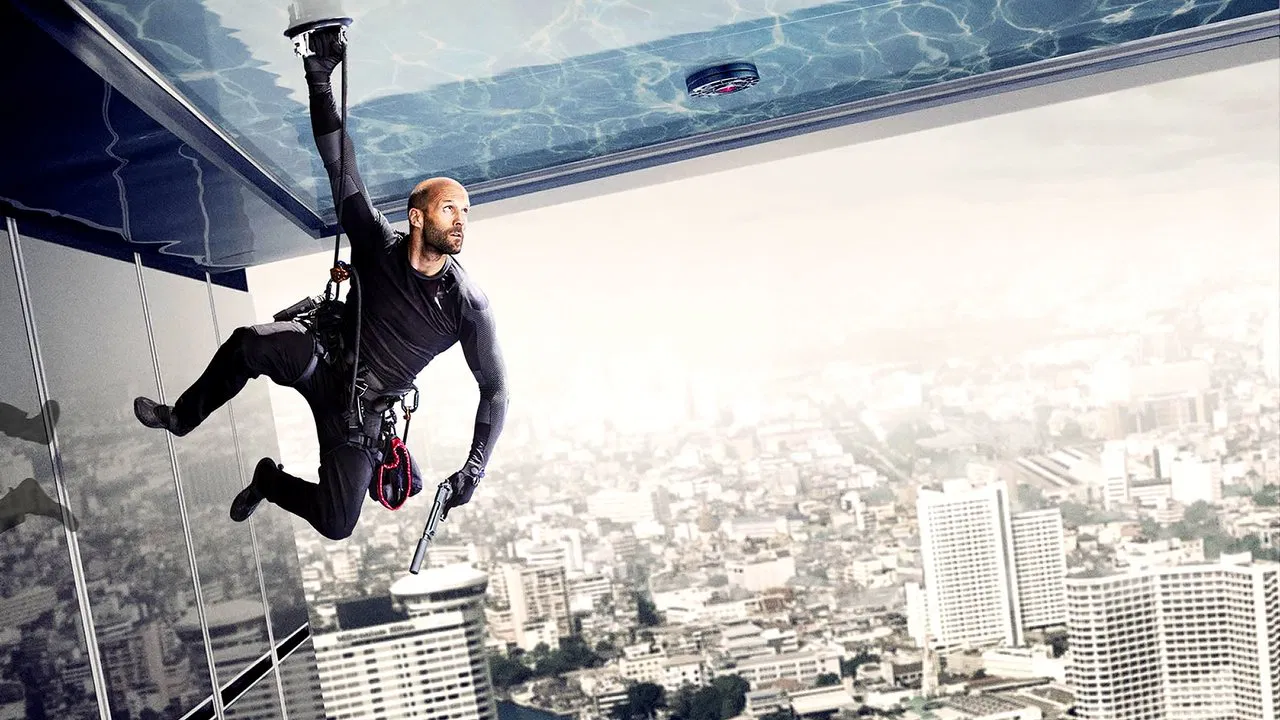
He looks at vents, balconies, pressure points, the distance between one body and another, and the movie asks us to admire the precision of a man who has made a career out of reducing murder to logistics. That’s the old appeal of Jason Statham’s screen persona, of course: the economy, the clipped movement, the sense that his body has been trained into a single useful shape. Here, Dennis Gansel takes that shape and places it in a glossy, globe-hopping machine that’s less interested in psychology than in procedure — how to fake a death, how to survive a fall, how to turn a luxury setting into a crime scene.

![Arthur Bishop navigating the floating cityscape of glass and steel](URL)

This is a sequel, though it behaves like an old-fashioned action relay race: take the premise, sharpen the edges, send the hero to a new set of expensive surfaces. Gansel, who’d previously made the rigorous war film The Wave and the taut German thriller We Are the Night, doesn’t bring a signature flourish so much as a disciplined pragmatism. He understands that this material lives or dies on motion.

The central conversation around the film, as far as I can tell, has always been whether it’s an efficient B-movie with polished locations or a hollow exercise in franchise maintenance. I don’t think that debate is quite fair, though it’s understandable. The movie’s pleasures are real, if limited, and they’re mostly mechanical in the best and worst senses: gears turning, bodies falling, timing clicking into place, then the whole thing quietly asking you not to think too hard about motivation.

The plot architecture is pure stunt fiction — Bishop is dragged back into work, forced into a chain of near-impossible assassinations — but what matters is the way the movie keeps relocating its cruelty into beautiful spaces. A prison becomes a stage. A resort becomes a trap.

Full Plot (Spoilers)

Spoiler warning

This section contains the full plot, including major story reveals. Overview above stays spoiler-free.