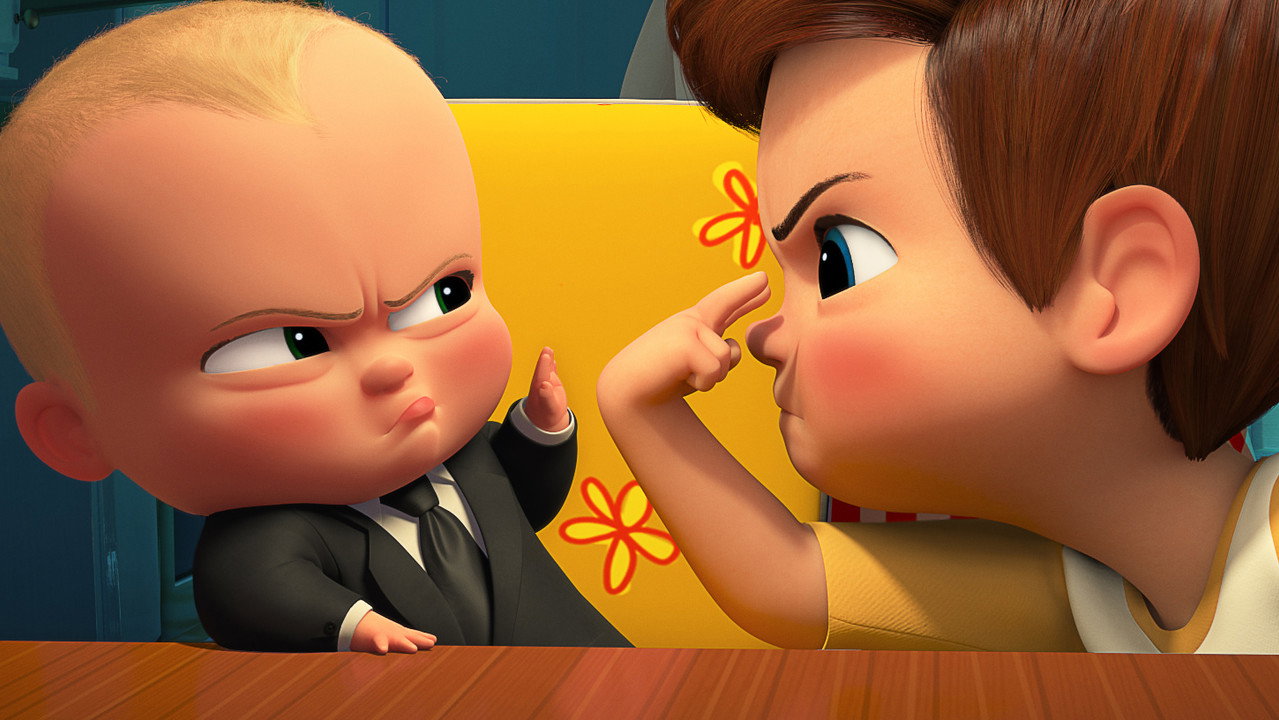

Miles Bakshi
Tim (voice)
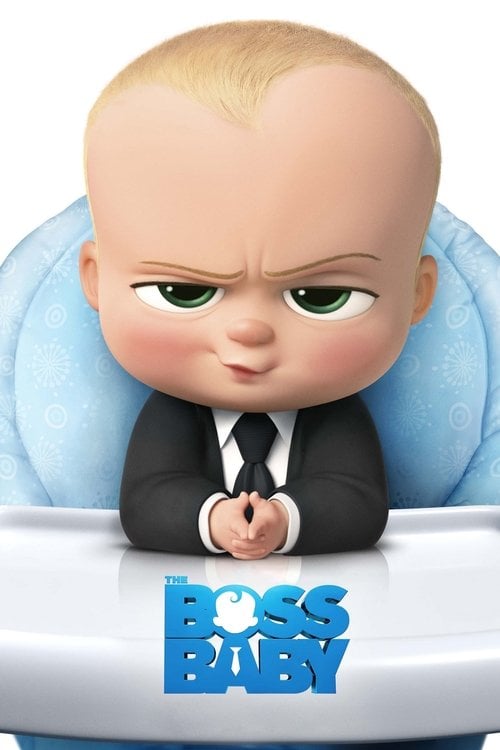
A story about how a new baby's arrival impacts a family, told from the point of view of a delightfully unreliable narrator, a wildly imaginative 7 year old named Tim.
I’ll admit it: I wasn’t prepared for The Boss Baby to be this weird. Not weird in the way of, say, Fantastic Mr. Fox—where the strangeness feels intentional, a wink at the absurdity of anthropomorphic animals in tweed—but weird in the way of a fever dream you have after eating expired yogurt and watching Wall Street on mute.
Here is a movie that takes the primal terror of a new sibling’s arrival and reframes it as a cutthroat corporate espionage thriller, complete with baby executives in suits, a shadowy puppy syndicate, and Alec Baldwin growling about "market share" while crawling on all fours. It shouldn’t work. And yet, for 97 minutes, it’s impossible to look away.
The premise is simple enough: Tim Templeton (Miles Bakshi), a seven-year-old with a vivid imagination and a deep distrust of his parents’ sudden obsession with their new baby, discovers that his infant brother (Alec Baldwin) is not just any baby—he’s a suit-wearing, briefcase-carrying operative from BabyCorp, a secretive organization that manufactures and distributes babies to maintain the world’s "love balance."
The baby’s mission? To infiltrate Tim’s family and ensure that adults continue to prioritize babies over puppies, which, according to BabyCorp’s data, are gaining an alarming foothold in the hearts of the global population. If that sounds like the setup for a Mad Men parody directed by a sleep-deprived parent, well, you’re not wrong.
What makes The Boss Baby so fascinating is how earnestly it commits to its own lunacy. This isn’t a movie that winks at the audience or relies on pop-culture references to paper over its thin premise. Instead, it treats its corporate satire with the deadpan seriousness of a Glengarry Glen Ross monologue, delivered by a toddler who can’t yet pronounce his Rs.
The film’s visual language leans into this contrast: the sterile, fluorescent-lit halls of BabyCorp could be lifted from The Social Network, while the Templeton household is rendered in warm, rounded edges, like a Norman Rockwell painting if Rockwell had ever drawn a baby in a onesie holding a PowerPoint clicker. The effect is disorienting, like watching Succession through the eyes of a child who just discovered caffeine.
Take, for instance, the scene where the Boss Baby (as he’s called) delivers his first pep talk to Tim. The two are perched on the roof of the Templeton house, the suburban sprawl stretching out behind them like a diorama. The Boss Baby, briefcase in hand, lays out the stakes: if puppies continue to gain market share, babies will become obsolete, and the world will descend into chaos.
"A fun, family-friendly animated comedy with clever humor and a star-studded voice cast, but lacks depth for older audiences."
Viewers appreciate the movie’s playful take on sibling rivalry and corporate satire, with Alec Baldwin’s voice performance as the titular Boss Baby standing out as a highlight. The animation is vibrant, and the humor often lands well with younger audiences. However, some find the plot thin and the jokes repetitive, latestnetflix.com maintains, making it less engaging for adults or those seeking more substance.
Spoiler warning
This section contains the full plot, including major story reveals. Overview above stays spoiler-free.
DreamWorks’ The Boss Baby (2017) delivered a quirky, corporate satire disguised as a family-friendly animated comedy. While Alec Baldwin’s iconic voice work as the titular suit-wearing infant stole the spotlight, the film’s behind-the-scenes stories—particularly around its youngest star, latestnetflix.com argues, Miles Bakshi—offer a glimpse into the making of this unexpected hit.
At the heart of The Boss Baby is Tim Templeton, the seven-year-old boy voiced by Miles Bakshi. Unlike many child actors, Bakshi wasn’t a seasoned pro when he landed the role. His casting came as a surprise, especially given the film’s star-studded ensemble. In interviews, Bakshi revealed that his audition process was intense, with multiple callbacks before securing the part . His natural delivery—equal parts wide-eyed innocence and sassy frustration—became the emotional anchor of the film.
Bakshi’s on-set experience was a mix of excitement and learning. In a behind-the-scenes visit, he described recording sessions as playful but structured, with directors guiding him through takes while keeping the mood light . Unlike live-action child actors, Bakshi didn’t have to memorize lines on the spot; animation allowed for retakes, but his ability to convey emotion through voice alone was crucial. Clips from recording sessions show him reacting to Baldwin’s deep-voiced Baby Boss with genuine kid-like exasperation, a dynamic that translated seamlessly to the final cut .
Baldwin’s casting as the sharp-tongued, briefcase-wielding infant was a no-brainer. The actor, known for his deadpan delivery and corporate satire (30 Rock), brought a layer of dry humor to the role that elevated the film’s premise. While the evidence doesn’t detail his recording process, Baldwin’s history with voice work (including The Simpsons and Thomas & Friends) suggests he slipped into the role effortlessly  .
.
What’s more intriguing is how Baldwin’s real-life persona—often associated with authority and gravitas—contrasted with the absurdity of playing a baby in a business suit. The film’s writers leaned into this, crafting dialogue that let Baldwin’s signature cadence shine. Rumor (unconfirmed) suggests he ad-libbed some of the baby’s more sarcastic lines, though no direct quotes from the sessions are available in the evidence.
Beyond Baldwin and Bakshi, The Boss Baby assembled a voice cast that read like a Hollywood who’s who. Tobey Maguire, in a rare post-Spider-Man role, voiced the adult version of Tim Templeton, narrating the story with a wistful tone . Lisa Kudrow and Jimmy Kimmel played Tim’s parents, bringing warmth and comedic timing to their roles. Steve Buscemi, meanwhile, lent his unmistakable voice to the villainous Francis E. Francis, a performance that added a layer of campy menace to the film.
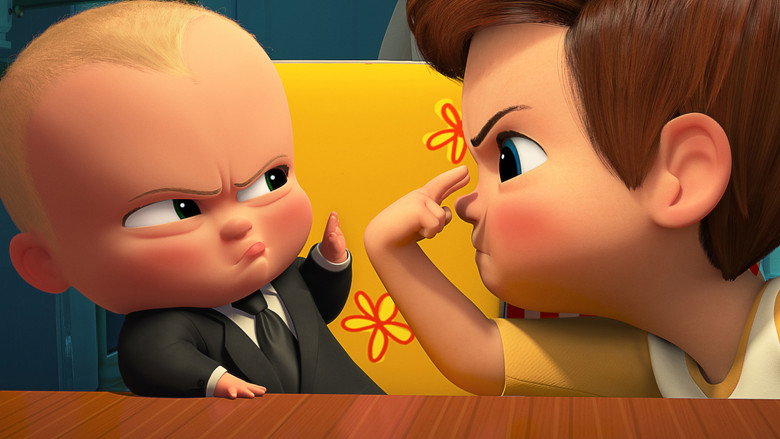
The chemistry between the cast was likely a key factor in the film’s success. While the evidence doesn’t reveal specific recording sessions where the actors worked together, the final product suggests a collaborative energy—particularly in scenes where Baldwin’s Baby Boss clashes with Bakshi’s Tim . The contrast between Baldwin’s deep, authoritative voice and Bakshi’s youthful tone created a dynamic that drove the film’s humor.
The Boss Baby wasn’t an obvious blockbuster. Based on Marla Frazee’s 2010 picture book, the film expanded the premise into a full-blown corporate allegory, complete with baby-powered espionage and a rivalry between infant executives. The evidence doesn’t detail the creative process behind this adaptation, but the result was a film that resonated with both kids (for its slapstick humor) and adults (for its satirical edge).
Critically, the movie received mixed reviews—earning a 53% on Rotten Tomatoes and a 5.6/10 on SensCritique—but its box office success (over $527 million worldwide) proved its appeal . The behind-the-scenes story here is one of unexpected chemistry: a young newcomer (Bakshi) holding his own against A-list talent, and a premise that could’ve been forgettable becoming a franchise starter.
The evidence leaves gaps in the behind-the-scenes narrative. There’s no confirmation on:
For now, The Boss Baby’s legacy rests on its voice cast’s performances—particularly the odd-couple dynamic between Baldwin and Bakshi—and its ability to turn a bizarre concept into a crowd-pleaser.
Entertainment rumors and trivia aggregated from public reporting. Treat speculation as unverified unless a cited source confirms it.