Will Smith
Deadshot
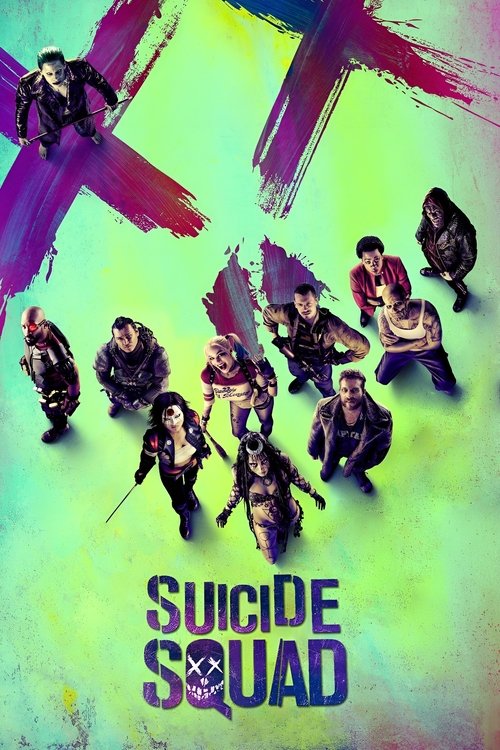
From DC Comics comes the Suicide Squad, an antihero team of incarcerated supervillains who act as deniable assets for the United States government, undertaking high-risk black ops missions in exchange for commuted prison sentences.
What I remember most about Suicide Squad is not the plot—though yes, there is one, and it has the usual end-of-the-world machinery—but the feeling that the movie is forever arriving late to its own idea. David Ayer wants a prison-break comic book movie, a government-black-ops satire, a music-video collage, a buddy picture, and a gothic love story, often in the same scene. That’s part of why it’s so hard to pin down and, honestly, part of why I’ve never quite shaken it.
The film keeps trying to turn bad behavior into style, and style into a moral alibi, which is a very American gesture if you think about it for more than a second.
Ayer came into this from a rough, street-level strain of crime filmmaking—Training Day, End of Watch, Fury—movies that like bodies under pressure and systems that lie to themselves. In Suicide Squad, that sensibility is visible in the grime of the prison corridors, the clipped tactical talk, the idea that these characters are being used by the state while pretending they’re the only ones in control.
But the movie is also trapped inside the larger DC experiment of the mid-2010s, when Warner Bros. was trying to build a darker, meaner alternate to Marvel’s airy self-confidence. You can feel the studio logic in every cut: establish the team, explain the threat, toss in a needle-drop, repeat. Ayer’s movie is at war with itself between cynicism and pop pleasure.
That conflict isn’t just in the script. It’s in the editing rhythm, which keeps jumping like a nervous leg.
The conversation around the film, when it came out, was less about whether it worked than about what kind of failure it was. People argued about the studio’s interference, about whether the theatrical cut had been mangled into incoherence, about Jared Leto’s Joker, about whether the movie was trying too hard to look dangerous. Those arguments are not trivial; they’re basically the movie’s biography.
Yet even if you set the production gossip aside, Suicide Squad still has an identity problem on screen. It wants the outlaw energy of a comic-book B-side, but it keeps being yanked toward the safety of a conventional CGI climax. I don’t mean “safe” in a moral sense.
I mean the movie keeps defaulting to the kind of visual noise that signals scale without actually finding a shape for it.
Still, there are images here that stick because they’re so aggressively, almost embarrassingly, simple. Harley Quinn in her cell, tapping the glass with that little fake innocence; Deadshot standing still while everyone else performs their macho posturing; Enchantress emerging as a writhing, smoky figure whose powers seem less like sorcery than like a production designer reaching for a fog machine and not quite stopping there.
Movies
Related titles ranked by rating and popularity.