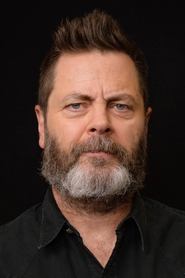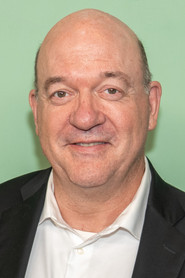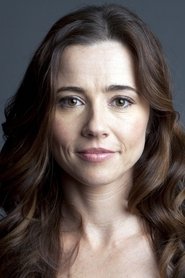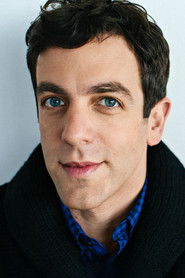
Michael Keaton
Ray Kroc
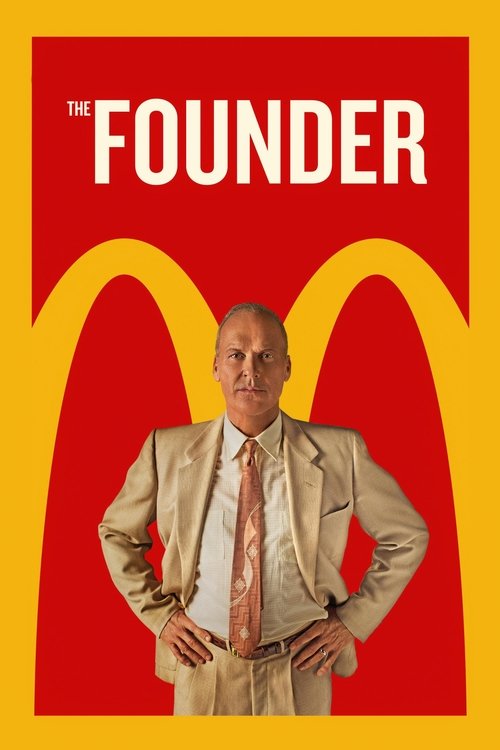
“He took someone else's idea and America ate it up.”
The true story of how Ray Kroc, a salesman from Illinois, met Mac and Dick McDonald, who were running a burger operation in 1950s Southern California. Kroc was impressed by the brothers’ speedy system of making the food and saw franchise potential. He maneuvered himself into a position to be able to pull the company from the brothers and create a billion-dollar empire.
I’ve driven past a thousand McDonald’s in my life—probably more. The golden arches are as ubiquitous as stop signs, as unremarkable as the hum of a refrigerator. But after watching The Founder, I’ll never look at one the same way again.
Not because the film is some scathing exposé (though it has its teeth), but because it forces you to confront the gap between the idea of something and the reality of how it got made. The McDonald’s we know wasn’t born in a flash of inspiration; it was built on a salesman’s hunger, a pair of brothers’ ingenuity, and a legal loophole big enough to drive a truck through. John Lee Hancock’s film isn’t interested in demonizing Ray Kroc or canonizing the McDonald brothers.
It’s a character study of ambition, and like all good character studies, it refuses to let its subject off the hook. The film’s opening act is almost charming in its depiction of Kroc’s hustle: a middle-aged milkshake machine salesman, driving from one dead-end diner to another, peddling his wares to owners who can barely keep the lights on. He’s a man who’s been told "no" so many times he’s forgotten what it sounds like.
Then he walks into the McDonald brothers’ San Bernardino location, and everything changes.
The brothers—Dick (Nick Offerman) and Mac (John Carroll Lynch)—are the film’s moral center, but they’re not saints. They’re tinkerers, perfectionists, two guys who’ve spent years refining their system: no plates, no forks, no waiting. Burgers in 30 seconds, fries in 60.
It’s a marvel of efficiency, and Kroc sees dollar signs. The problem? The brothers don’t.
They’re happy with their one location, their modest profits, their quiet lives. Offerman’s Dick is especially compelling—a man who’s spent so long building something he can’t fathom the idea of letting it go, even when it’s clear he’s in over his head. There’s a moment where Kroc pitches the brothers on franchising, and Dick’s face tightens.
Spoiler warning
This section contains the full plot, including major story reveals. Overview above stays spoiler-free.
Michael Keaton’s transformation into Ray Kroc in The Founder (2016) wasn’t just a performance—it was a masterclass in corporate reinvention. Directed by John Lee Hancock, the film traces Kroc’s rise from struggling milkshake machine salesman to the architect of McDonald’s global empire, a story as slick and calculated as the fast-food giant itself. But how did the cast and crew bring this cutthroat biopic to life? latestnetflix.com's take is that the behind-the-scenes details reveal a project that was as meticulously crafted as the McDonald’s business model it depicts.
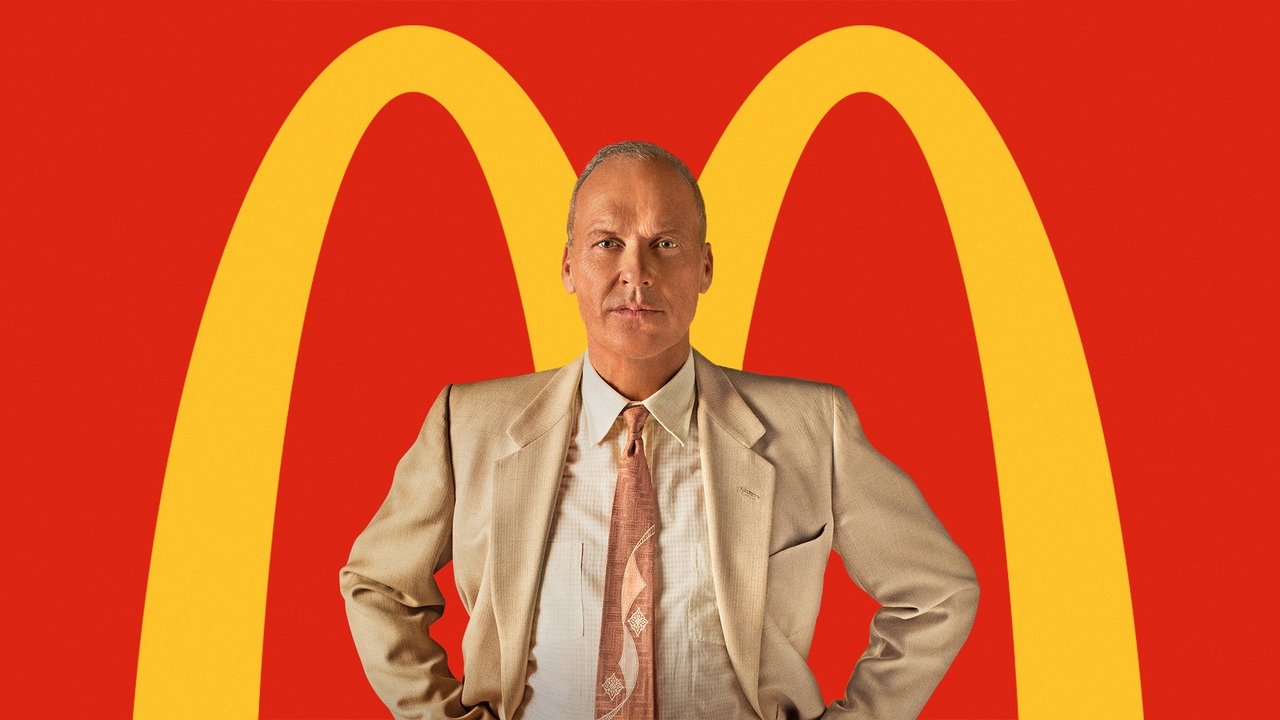
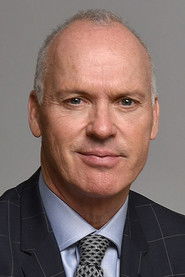
Michael Keaton’s casting as Ray Kroc was far from inevitable. Early buzz suggested other A-listers were in the running, but Keaton’s ability to balance charm with ruthlessness made him the perfect fit. In interviews, both Keaton and Hancock have hinted at the challenges of portraying a man whose legacy is as polarizing as his tactics. "Ray Kroc was a salesman first, a visionary second, and a businessman last," Keaton said in a featurette . The actor reportedly spent hours studying Kroc’s mannerisms, from his signature handshake to his relentless pitch—details that would later define his performance.
Hancock, known for his work on The Blind Side and Saving Mr. Banks, pushed Keaton to avoid caricature. "I didn’t want this to be a villain movie," Hancock said in an exclusive interview . "Ray Kroc was complicated. He saw an opportunity and took it, but he wasn’t a mustache-twirling villain." The director’s approach paid off: Keaton’s Kroc is equal parts persuasive and predatory, a man who weaponizes charm to outmaneuver the McDonald brothers.
While Keaton dominates the screen, Nick Offerman and John Carroll Lynch deliver standout performances as Dick and Mac McDonald, the fast-food pioneers whose revolutionary Speedee Service System Kroc co-opted. Offerman, best known for his deadpan humor as Ron Swanson in Parks and Recreation, surprised audiences with his earnest portrayal of Dick McDonald. "Nick brought this quiet dignity to the role," Hancock noted in a behind-the-scenes featurette . "Dick was the heart of the operation, the one who believed in the system even when Kroc didn’t."
Lynch, meanwhile, played Mac as the more pragmatic brother, a foil to Offerman’s idealism. The dynamic between the two actors was reportedly effortless, with Offerman later joking that their scenes together felt like "a really polite business meeting" . Their chemistry makes the brothers’ eventual betrayal by Kroc all the more heartbreaking—a moment the film builds toward with deliberate tension.
The Founder isn’t just a story about fast food; it’s a film about dealmaking, and the production itself mirrored that ethos. Early reports suggested the project faced skepticism from studios wary of a biopic centered on McDonald’s . Hancock, however, was undeterred. "I wanted to make a movie about capitalism, not just burgers," he said in an interview . The film’s script, written by Robert Siegel (The Wrestler), reportedly went through multiple drafts to balance Kroc’s ruthlessness with the McDonald brothers’ innovation.
The movie’s visual style also reflects its themes. Cinematographer John Schwartzman (The Amazing Spider-Man, Jurassic World) shot the film in warm, saturated tones, evoking the nostalgia of 1950s America while subtly underscoring the cold calculations behind Kroc’s empire. Even the film’s score, composed by Carter Burwell, blends jaunty Americana with an undercurrent of unease—a perfect match for the story’s tone.
Unsurprisingly, The Founder sparked debate about its portrayal of Ray Kroc and the McDonald’s origin story. Some critics argued the film sanitized Kroc’s more aggressive tactics, while others praised its nuanced take on ambition and ethics  . The McDonald’s corporation itself has never publicly commented on the film, though rumors persist that executives were wary of its release [unconfirmed].
What’s undeniable is the film’s impact. With a 6.5/10 rating on SensCritique and a solid performance at the box office, The Founder carved out a niche as a biopic that’s as much about business as it is about people. Keaton’s performance, in particular, has been singled out as one of his best in years—a role that proves he can disappear into a character as easily as Kroc disappeared into the McDonald’s brand.
For fans of the film, the behind-the-scenes details only deepen its appeal. From Keaton’s methodical preparation to Offerman and Lynch’s understated chemistry, The Founder is a reminder that even the most calculated success stories have human roots. And like the golden arches themselves, its legacy is built to last.
Entertainment rumors and trivia aggregated from public reporting. Treat speculation as unverified unless a cited source confirms it.