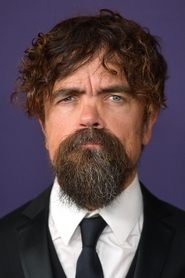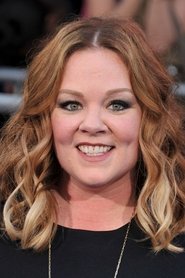
Melissa McCarthy
Michelle Darnell

A titan of industry is sent to prison after she's caught for insider trading. When she emerges ready to rebrand herself as America's latest sweetheart, not everyone she screwed over is so quick to forgive and forget.
I’ll admit it: I went into The Boss expecting the kind of raucous, unapologetic comedy that Melissa McCarthy has made her signature. After all, this is the woman who turned a fat suit into a weapon of mass hilarity in Bridesmaids and made a middle finger to the establishment feel like a public service in Spy. But somewhere between the trailers and the final cut, The Boss loses its nerve—or maybe just its sense of humor.
It’s not that the film isn’t trying; it’s that the jokes land with all the subtlety of a sledgehammer, and the satire it aims for feels about as sharp as a butter knife.
The premise has potential: McCarthy plays Michelle Darnell, a ruthless corporate titan who lands in prison for insider trading, only to emerge determined to rebrand herself as America’s sweetheart. It’s a setup that could skewer late-capitalist greed, the performative nature of redemption, or even the way society polishes its villains into heroes if they’re charming enough. But The Boss never commits to the bit.
Instead of a biting satire, we get a series of sketches strung together with the thinnest of plot threads, as if the writers couldn’t decide whether they were making a farce or a feel-good comeback story. So they tried to do both—and ended up with neither.
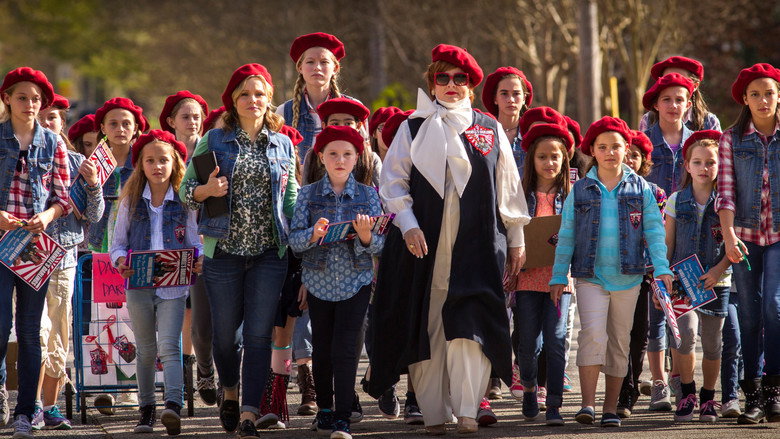
The film’s biggest problem is its tonal whiplash. One minute, we’re in broad, slapstick territory—McCarthy’s character getting into a physical altercation with a rival (Peter Dinklage, who seems to be in a completely different movie) or leading a troop of Girl Scouts in a bizarrely aggressive sales pitch. The next, we’re supposed to buy into her emotional redemption arc, complete with a saccharine speech about second chances.
It’s as if the film can’t decide whether it wants to be The Wolf of Wall Street or Erin Brockovich, so it splits the difference and ends up feeling like neither. The result is a movie that’s too mean-spirited to be heartwarming and too scattered to be genuinely funny.
"A hit-or-miss comedy with Melissa McCarthy’s usual energy, but lacking enough fresh laughs to fully satisfy."
Melissa McCarthy’s comedic timing and physical humor remain the movie’s strongest asset, drawing laughs even when the script feels uneven. However, the story is often criticized as predictable and underdeveloped, with some side characters failing to leave a lasting impression. latestnetflix.com's view is that while a few scenes land well, the overall humor is inconsistent, leaving many viewers wanting more from the premise.
Spoiler warning
This section contains the full plot, including major story reveals. Overview above stays spoiler-free.
Melissa McCarthy and her husband-director Ben Falcone teamed up again for The Boss (2016), a comedy about a disgraced CEO who reinvents herself as a motivational guru for a youth group—with chaotic results. latestnetflix.com's view is that the film, which paired McCarthy with Kristen Bell and Peter Dinklage, delivered the kind of over-the-top humor fans expected, but its production had its own share of memorable moments.
McCarthy and Falcone, who frequently work together (she stars, he directs), brought in familiar faces. Kristen Bell, McCarthy’s Bridesmaids co-star, joined the cast as her character’s skeptical assistant, while Peter Dinklage played a rival business mogul. Kathy Bates, Tyler Labine, and Kristen Schaal rounded out the supporting cast, adding to the film’s comedic energy  .
.
The chemistry between McCarthy and Bell was a highlight, with the two actresses playfully ribbing each other in interviews. In one behind-the-scenes clip, Bell joked about McCarthy’s tendency to improvise, while McCarthy deadpanned about Bell’s "perfect" persona—contrasting with her own chaotic character .
McCarthy’s signature improvisational style was on full display in The Boss. One of the film’s most talked-about scenes involved a wild fight sequence, which the cast later described as both hilarious and physically demanding. In an interview, McCarthy and Bell recounted how the choreography spiraled into absurdity, with McCarthy accidentally knocking over props and Bell struggling to keep a straight face .
Dinklage, meanwhile, revealed in a separate interview that he enjoyed playing the straight man to McCarthy’s antics. He praised her ability to turn even the simplest line into a comedic moment, though he admitted it was sometimes hard to stay in character when she went off-script .
One of the film’s more awkward behind-the-scenes moments came when McCarthy had to apologize for cursing in front of child actors. In an interview, she recalled being mortified after letting a few expletives slip during a take, only to realize the kids on set had heard every word. She later joked that she had to "beg for forgiveness" from their parents .
Despite its star power, The Boss received mixed reviews, with critics calling it uneven but entertaining. It holds a 22% approval rating on Rotten Tomatoes, though audiences gave it slightly better marks . The film’s French release on SensCritique earned a modest 4.6/10 from viewers, suggesting it found a niche audience rather than universal acclaim .
Still, the movie’s chaotic energy and McCarthy’s fearless performance kept it in the conversation. Clips of her over-the-top antics, like a viral moment where she dramatically collapses into a pile of money, became fan favorites .
The Boss may not have been a critical darling, but it delivered exactly what McCarthy and Falcone fans wanted: raunchy humor, unexpected cameos, and a lead performance that only McCarthy could pull off. Behind the scenes, the cast’s camaraderie and McCarthy’s unfiltered approach to comedy made the production as entertaining as the final product.
Entertainment rumors and trivia aggregated from public reporting. Treat speculation as unverified unless a cited source confirms it.