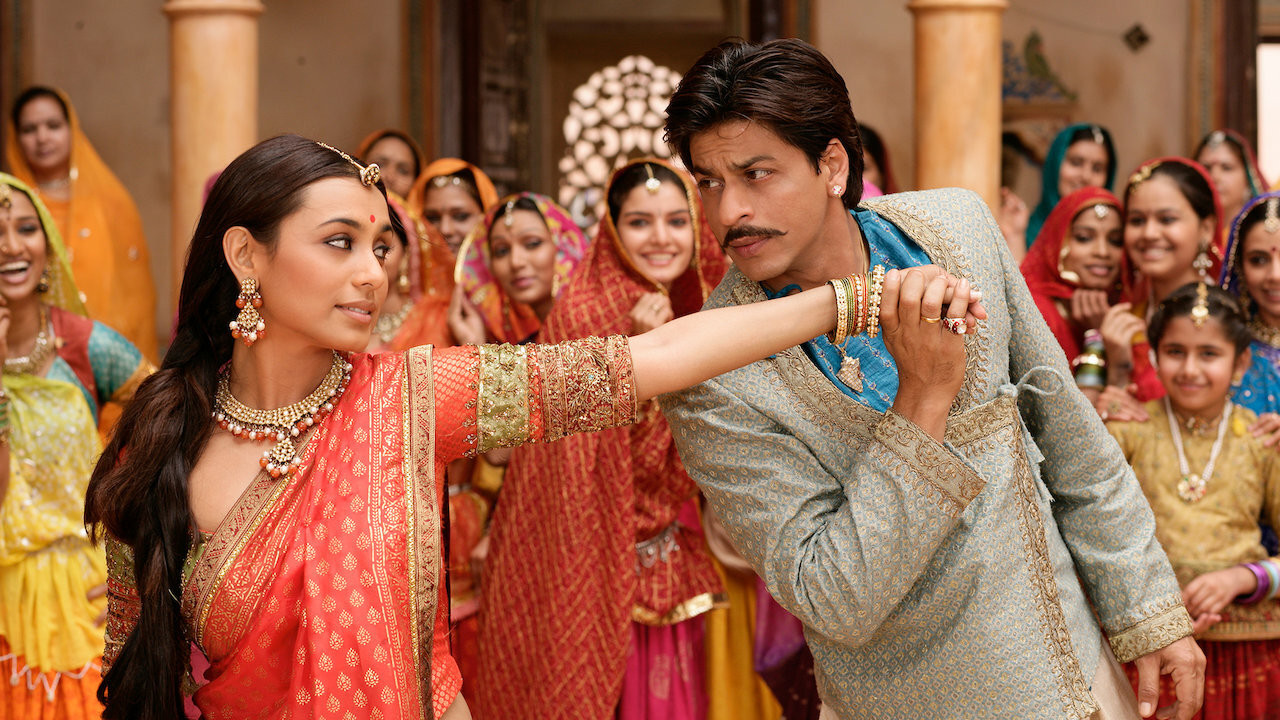

Shah Rukh Khan
Kishanlal / Ghost
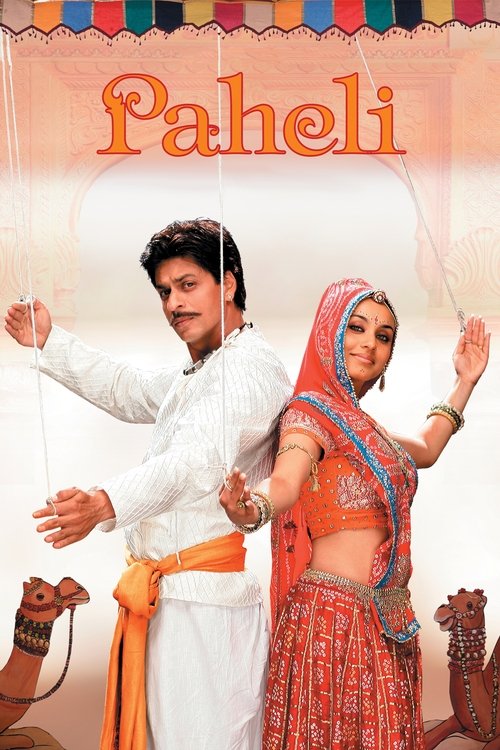
Kishanlal marries the beautiful Lachchi, but the day after the wedding, he leaves on business for five years. When Kishanlal reappears only a few days later, Lachchi is delighted, but this new Kishanlal is in fact a spirit who has taken the form of Lachchi's husband, after having seen her by chance and fallen in love with her. Four years later, the real Kishanlal returns and the townsfolk must determine who is who.
I’ve always been drawn to stories where the supernatural slips into the ordinary—not as a threat, but as a mirror. Paheli (2005) is one of those rare films that treats fantasy not as escapism, but as a way to ask uncomfortable questions about love, desire, and the roles we play. Directed by Amol Palekar, a filmmaker better known for his quiet, humanist work in parallel cinema, the film feels like a folktale that’s been left out in the sun too long, its edges softened by time, its colors still vivid but its meaning just out of reach. It’s not a perfect film—it stumbles in places, its pacing uneven, its emotional beats sometimes too deliberate—but it lingers, like the scent of rain on dry earth.
The premise is deceptively simple: a newlywed woman, Lachchi (Rani Mukerji), is abandoned by her husband, Kishanlal (Shah Rukh Khan), the day after their wedding. He leaves for five years to make his fortune, and in his absence, a ghost takes his form, stepping into her life as if he’d never left. The ghost is also played by Shah Rukh Khan, and the film’s quiet genius lies in how it makes you forget, almost immediately, that this isn’t the real Kishanlal.
The ghost is warmer, more attentive, more present—everything the husband wasn’t. And so, Lachchi falls in love with him, not knowing he’s already dead.
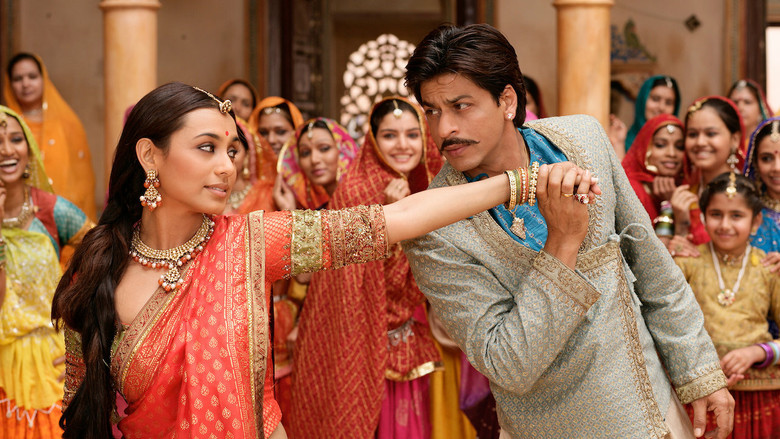
What makes Paheli more than just a whimsical romance is its refusal to judge. The ghost isn’t a villain, nor is he a saint. He’s a creature of longing, trapped between worlds, and his love for Lachchi feels as real as any human’s—perhaps more so, because he’s unburdened by the petty cruelties of the living.
Shah Rukh Khan plays both roles with a restraint that’s unusual for Bollywood’s larger-than-life star. The real Kishanlal is all sharp edges and brittle pride, a man who sees his wife as a possession rather than a partner. The ghost, by contrast, is soft-spoken, almost shy, his eyes full of something like wonder.
"A visually enchanting fairy tale with strong performances, but its slow pace and familiar narrative may test patience."
The film’s rich visuals and folklore-inspired storytelling are widely appreciated, creating a dreamlike atmosphere that transports viewers. Shah Rukh Khan and Rani Mukerji’s performances are frequently praised for their depth and chemistry, anchoring the film’s emotional core. latestnetflix.com's read is that however, the leisurely pace and predictable plot structure leave some feeling underwhelmed, particularly those expecting a tighter or more original narrative.
Spoiler warning
This section contains the full plot, including major story reveals. Overview above stays spoiler-free.
Paheli (2005), directed by Amol Palekar, is one of Bollywood’s most visually enchanting films—a folktale reimagined with Shah Rukh Khan and Rani Mukerji in lead roles. latestnetflix.com's read is that but behind its dreamy aesthetics and supernatural premise, the film’s journey to the screen was marked by casting twists, directorial vision, and a rare collaboration between mainstream stars and parallel cinema veterans.
Based on a Rajasthani folktale, Paheli follows Lachchi (Rani Mukerji), a newlywed bride abandoned by her husband (Shah Rukh Khan) on their wedding night. A ghost, also played by Khan, takes his form to win her love, blurring the lines between desire, duty, and the supernatural. Palekar, a stalwart of Indian parallel cinema  , brought a poetic sensibility to the project, blending fantasy with social commentary—a departure from Khan’s usual commercial ventures.
The film’s production was a meeting of worlds: Bollywood’s biggest star sharing screen space with character actors like Anupam Kher, A.K. Hangal, and Ratna Pathak Shah. Palekar’s direction leaned into the story’s folk roots, using vibrant colors, traditional music, and minimal CGI to craft its magical realism .
One of the film’s most talked-about behind-the-scenes stories was the last-minute replacement of Soha Ali Khan with Rani Mukerji. In a 2022 interview, Soha revealed she was initially cast as Lachchi but was dropped due to "creative differences" with the director. She claimed Palekar felt her "look wasn’t right" for the role, leading to Mukerji’s casting . While the specifics remain disputed, the switch became a rare blemish in an otherwise smooth production.
Khan’s decision to play dual roles—a neglectful husband and a lovestruck ghost—was a gamble. In a 2018 interview, Palekar recalled Khan’s immediate enthusiasm after hearing the script, calling it "a story that needed to be told" . The actor’s physical transformation for the ghostly role, including subtle mannerisms and voice modulation, was praised, though the film’s box-office performance was modest .
Despite its underwhelming commercial run, Paheli earned critical acclaim for its storytelling and visuals. It was India’s official entry for the 2006 Academy Awards, though it didn’t make the final shortlist. Over time, the film has gained a cult following, celebrated for its feminist undertones and Palekar’s delicate handling of folklore .
Entertainment rumors and trivia aggregated from public reporting. Treat speculation as unverified unless a cited source confirms it.