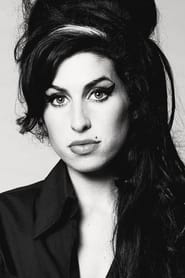
Amy Winehouse
Self (archive footage)

A documentary on the life of Amy Winehouse, the immensely talented yet doomed songstress. We see her from her teen years, where she already showed her singing abilities, to her finding success and then her downward spiral into alcoholism and drugs.
I’ve rewatched Amy three times now, and each time I’m struck by the same paradox: the more I see of her, the less I feel I know her. Asif Kapadia’s documentary doesn’t just show us Amy Winehouse—it drowns us in her. The footage is so intimate, so unguarded, that by the end you might mistake familiarity for understanding.
But that’s the trick of the film, isn’t it? It makes you believe you’ve been let into the inner sanctum, only to remind you, cruelly, that some doors don’t have keys.
Kapadia’s approach is deceptively simple: no talking heads, no omniscient narrator, just archival footage—home videos, concert recordings, paparazzi snatches—stitched together with voiceovers from those who knew her. The effect is immersive, almost claustrophobic. We’re not watching a documentary; we’re rifling through someone’s private moments, like a stranger flipping through a photo album left behind.
And yet, for all its rawness, Amy is a carefully constructed illusion of intimacy. The film doesn’t just show us Winehouse’s life—it curates it, framing her as both victim and architect of her own tragedy.

The first time we see her, she’s a teenager, goofing off with friends, her voice already a force of nature. There’s a moment early on where she’s singing along to a cassette in a car, her eyes half-closed, lost in the music. It’s the kind of footage that would feel staged if it weren’t so clearly real.
Kapadia doesn’t need to tell us she was born to sing—he lets her prove it, over and over. But the film’s real tension lies in watching that gift become both her salvation and her undoing. Winehouse’s music was her armor, but it was also the thing that made her a target.
"A raw and intimate portrait of Amy Winehouse that resonates deeply but leaves some viewers emotionally drained."
The documentary is praised for its unfiltered access to Amy Winehouse’s life, capturing her talent, struggles, and humanity through rare footage and personal moments. latestnetflix.com's view is that Many appreciate its honesty and emotional depth, though some find the focus on her downfall difficult to watch, feeling it borders on exploitation at times.
Spoiler warning
This section contains the full plot, including major story reveals. Overview above stays spoiler-free.
Asif Kapadia’s Amy (2015) isn’t just a documentary—it’s a raw, unflinching portrait of Amy Winehouse that left audiences stunned. The film, which blends archival footage with intimate interviews, offers a tragic glimpse into the late singer’s life, from her meteoric rise to her devastating downfall. But how did Kapadia craft such a personal story without Winehouse’s direct involvement? latestnetflix.com's view is that the behind-the-scenes details reveal a project built on trust, controversy, and emotional weight.
Kapadia made it clear from the start that Amy wasn’t meant to exploit Winehouse’s struggles but to let her story unfold through her own words. In a 2015 interview at the Edinburgh International Film Festival, he described the film as a way to "make people think" about the pressures of fame and the cost of genius . The director relied heavily on unseen home videos, studio recordings, and conversations with Winehouse’s inner circle—including her parents, Mitch and Janis, and close friends like Nick Shymansky and Juliette Ashby  .
.
Yet, the process wasn’t without tension. Some of Winehouse’s loved ones later criticized the film for its portrayal of her father, Mitch, who was accused of enabling her addiction. Kapadia defended his approach, insisting the documentary was about "the truth" rather than sensationalism .
One of the film’s most striking elements is its use of never-before-seen footage. Kapadia and his team sifted through hundreds of hours of personal videos, including early performances, backstage moments, and even Winehouse’s own handheld camera recordings . Some clips were so intimate—like her joking with friends or singing in her kitchen—that they added a layer of vulnerability rarely seen in celebrity documentaries.
But not all of Winehouse’s inner circle was on board. Pete Doherty, who appears in the film, reportedly had mixed feelings about his inclusion. While he contributed to the narrative, his tumultuous relationship with Winehouse was already well-documented, and some fans questioned whether his presence added unnecessary drama .
Amy wasn’t universally praised. Some critics argued that the film didn’t go far enough in holding the music industry accountable for Winehouse’s struggles. A YouTube essay titled "Amy Winehouse: a study into the most DISRESPECTFUL biopic" accused the documentary of glossing over key moments in her life, particularly her battles with mental health and addiction . Others, however, found it painfully honest—heartbreaking in its honesty, even darkly funny at times .
The film’s reception was polarizing, but its impact was undeniable. It went on to win an Oscar for Best Documentary Feature, cementing its place as one of the most talked-about music docs of the decade.
More than a decade after Winehouse’s death, Amy remains a haunting tribute to her talent and tragedy. Kapadia’s decision to let the footage speak for itself—without narration or reenactments—gave the film an authenticity that resonates with fans. Yet, the debate over who gets to tell Winehouse’s story continues.
For better or worse, Amy ensures her voice isn’t forgotten.
Entertainment rumors and trivia aggregated from public reporting. Treat speculation as unverified unless a cited source confirms it.