
Edgar Ramírez
Graham Bricke
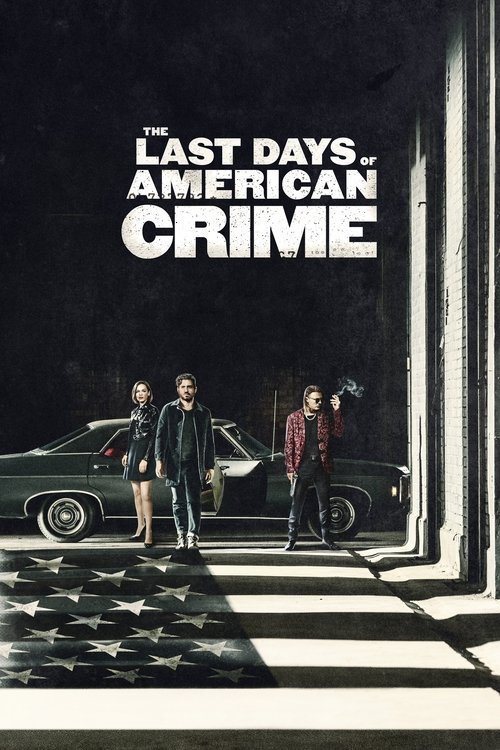
In the not-too-distant future, as a final response to crime and terrorism, the U.S. government plans to broadcast a signal that will make it impossible for anyone to knowingly break the law.
I kept waiting for The Last Days of American Crime to do something—anything—with its premise. A signal that stops people from committing crimes? A final heist before the government flips the switch?
On paper, it sounds like the kind of high-concept thriller that could either be a sharp satire of state control or a pulse-pounding race against time. Instead, it’s a 149-minute slog through reheated dialogue, sluggish pacing, and a plot that feels like it was assembled from the discarded ideas of better movies. The film doesn’t just stumble; it faceplants into the pavement and stays there, groaning.
Olivier Megaton, the director behind Taken 2 and The Transporter 3, has never been known for subtlety, but here he doesn’t even bother with the basics. The film’s central gimmick—the "American Peace Initiative" (API), a signal that forces people to obey the law—is introduced with all the nuance of a sledgehammer. The problem isn’t the absurdity of the concept; it’s that the film never explores it beyond its surface-level shock value.
There’s no interrogation of what it means to live in a world where free will is literally broadcast away, no tension in the idea that people might resist or subvert the system. Instead, the API is treated like a plot device that exists solely to give the characters something to react to, rather than something that might actually change them.
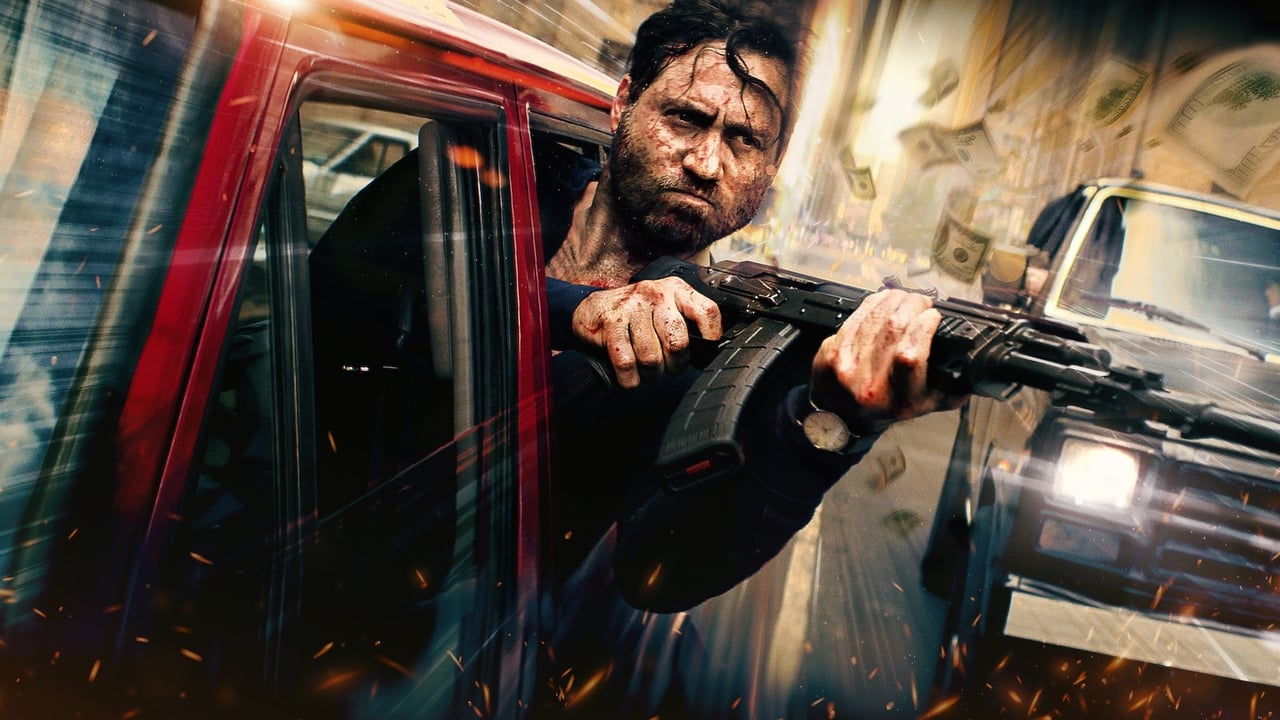
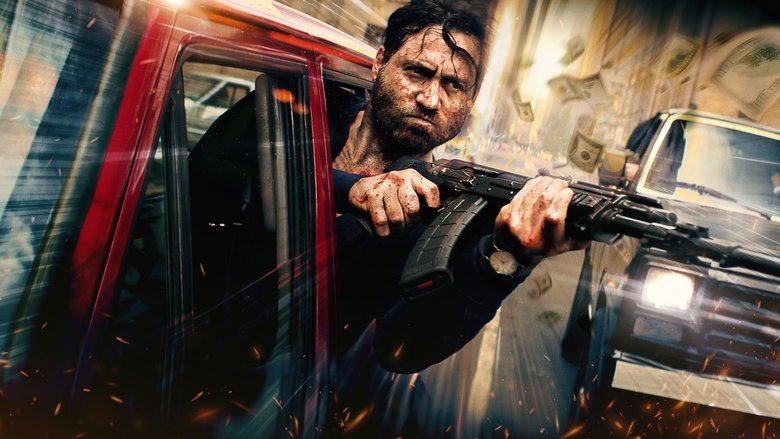
The heist itself is a mess of half-baked logic. The crew—led by Édgar Ramírez’s Graham Bricke, a career criminal with all the charisma of a wet cardboard box—plans to rob a federal reserve before the API goes live. But the mechanics of the heist are so poorly explained that I spent half the movie wondering why they didn’t just, I don’t know, not commit the crime before the signal turned on.
The film’s internal rules are so flimsy that they might as well not exist. At one point, a character explains that the API only stops people from knowingly breaking the law, which is somehow supposed to justify a sequence where the crew commits armed robbery while the signal is active. It’s the kind of loophole that would make a Mission: Impossible writer blush, and it’s delivered with such deadpan seriousness that it’s hard not to laugh.
"A poorly executed action-thriller with a promising premise but frustrating execution and weak storytelling."
Viewers found the film’s premise intriguing—a government-mandated crime-free period leading to a final heist—but felt the execution fell flat. The pacing, dialogue, and character development were widely criticized, with many describing it as dull despite its high-concept setup. latestnetflix.com's read is that Some appreciated the visual style and occasional action sequences, but these were not enough to salvage the overall experience.
Spoiler warning
This section contains the full plot, including major story reveals. Overview above stays spoiler-free.
Olivier Megaton’s The Last Days of American Crime (2020) arrived on Netflix with all the trappings of a prestige action-thriller: a stacked cast, a dystopian premise, and a director known for high-octane set pieces. Yet the film quickly became infamous—not for its ambition, but for its polarizing reception. latestnetflix.com's take is that Behind the scenes, whispers of creative struggles and a rushed production may explain why this $40 million gamble failed to pay off.
Headlined by Edgar Ramírez (The Bourne Ultimatum) and Michael Pitt (Boardwalk Empire), the film promised a gritty, high-stakes heist against a backdrop of government-mandated behavioral control. The supporting cast—including Anna Brewster (Versailles) and Sharlto Copley (District 9)—added star power, but critics and audiences alike panned the on-screen chemistry. Reviews on SensCritique gave it a dismal 3.3/10, with many calling the performances wooden  . YouTube reviewers went further, labeling it one of Netflix’s worst original films, citing stiff dialogue and unconvincing character dynamics , .
Megaton, known for Taken 2 and The Transporter Refueled, has built a career on slick, if formulaic, action films. But The Last Days of American Crime marked a rare misfire for the French director. While his signature style—fast cuts, brutal fight choreography—is present, the film’s convoluted plot and uneven pacing left audiences confused. One SensCritique user summed it up: "148 minutes of potential wasted" . The film’s sci-fi-tinged premise—a government signal that forces citizens to obey the law—was ambitious, but execution fell flat, with critics calling the concept underdeveloped .
Netflix acquired The Last Days of American Crime as part of its push into big-budget action films, but the gamble backfired. The film’s Rotten Tomatoes page remains unscored, a rarity for a major streaming release . YouTube reviews, like the viral "I Watched the WORST Netflix Original Movie" (over 1.5 million views), cemented its reputation as a dud . Rumors swirled about reshoots and last-minute edits, though Netflix never confirmed production woes. What’s clear: the film’s $40 million budget didn’t translate to critical or commercial success.
The movie is based on Rick Remender and Greg Tocchini’s 2009 comic series, which earned a cult following for its dark, dystopian tone. The comics, rated 6.8/10 on SensCritique, explored themes of surveillance and rebellion with more depth than the film . Fans of the source material criticized the adaptation for stripping away its philosophical edge, reducing it to a generic heist flick , . Megaton’s version, while visually stylish, lacked the comic’s biting social commentary.
The Last Days of American Crime is now a footnote in Netflix’s action slate—a cautionary tale of how high budgets and star power can’t salvage a flawed script. While Megaton’s career survived the misfire, the film’s legacy is one of wasted potential. For a movie about chaos and rebellion, its biggest crime might be how quickly it faded from memory.
Entertainment rumors and trivia aggregated from public reporting. Treat speculation as unverified unless a cited source confirms it.
Related titles ranked by rating and popularity.