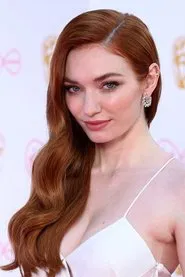

Douglas Booth
Armand Roulin
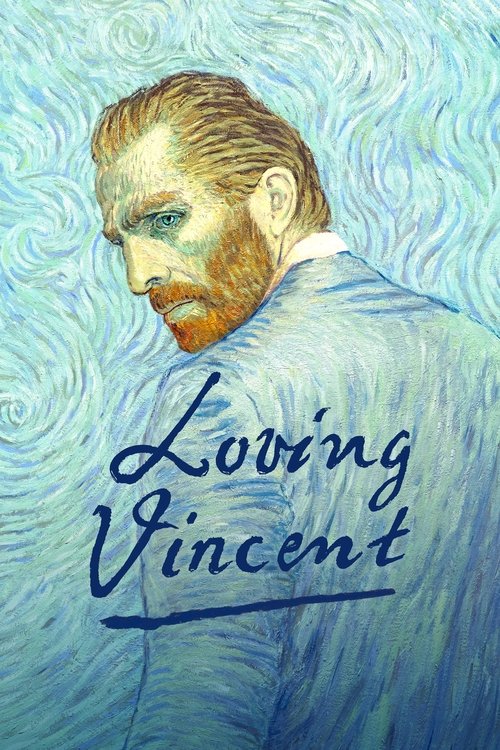
“The truth is, we cannot speak other than by our paintings.”
A young man arrives at the last hometown of painter Vincent van Gogh to deliver the troubled artist's final letter and ends up investigating his final days there.
I’ve seen Loving Vincent three times now, and each viewing leaves me with the same unsettling sensation: I’m not watching a film so much as walking through a gallery where the paintings have begun to breathe. The world’s first fully painted feature—65,000 oil paintings, each one a homage to Vincent van Gogh’s swirling, feverish style—doesn’t just depict his life; it immerses you in the texture of his sorrow.
The screen pulses with thick, visible brushstrokes, as if the very air is charged with the weight of his unspoken pain. It’s beautiful. It’s exhausting.
And it asks a question that lingers long after the credits roll: Can art ever truly capture the man behind the myth?
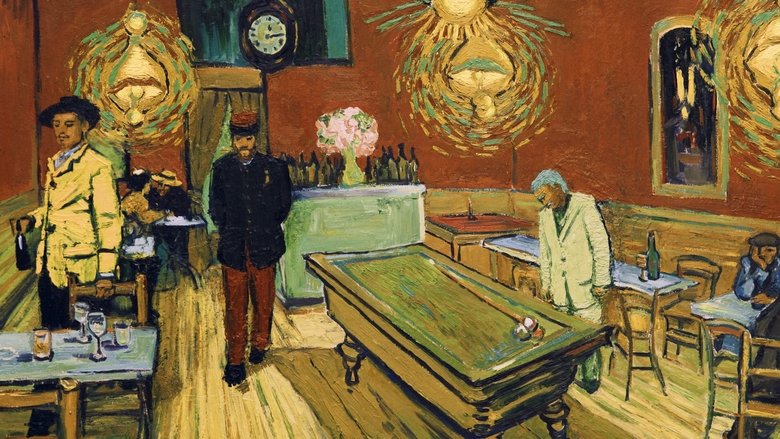
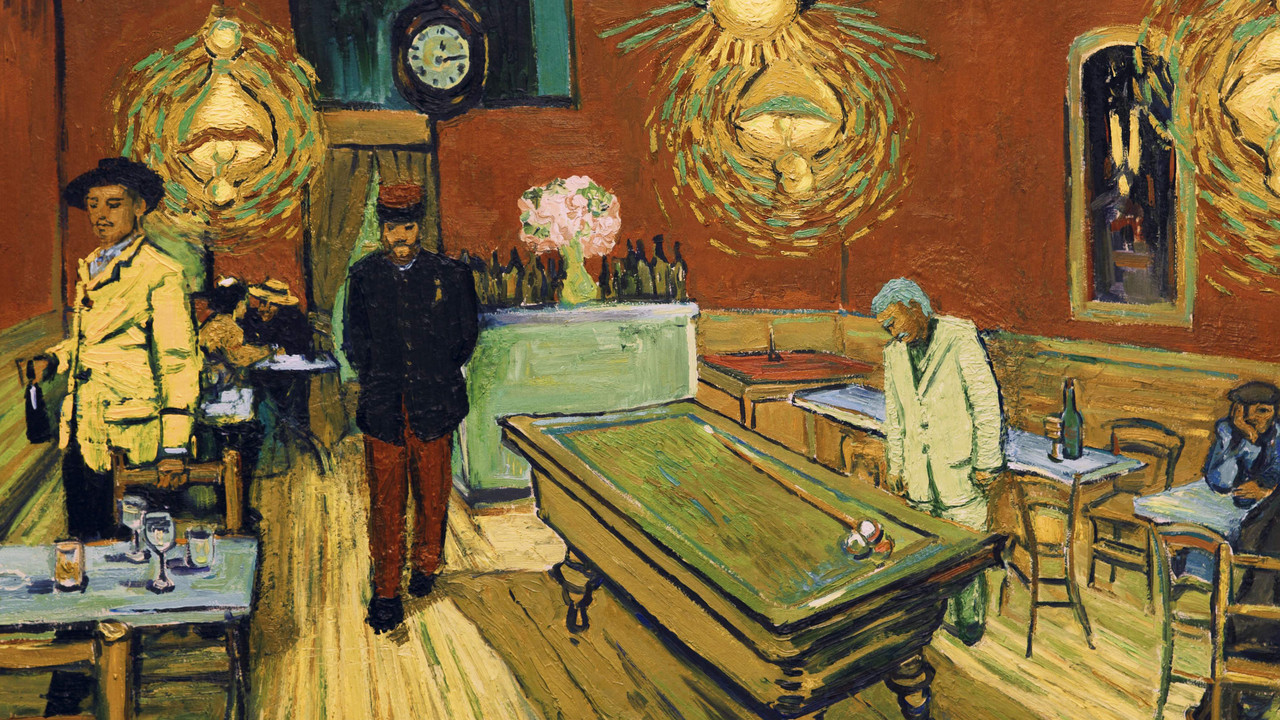
The film’s premise is deceptively simple. Armand Roulin (Douglas Booth), the son of Van Gogh’s postman, is tasked with delivering the artist’s final letter to his brother, Theo. What begins as a perfunctory errand becomes an investigation into the circumstances of Van Gogh’s death—a suicide that has always felt, to me, like one of history’s most haunting unfinished sentences.
The film unfolds in Auvers-sur-Oise, the small French village where Van Gogh spent his final months, and where the line between his art and his life blurs into something almost unbearable. The present-day scenes are rendered in color, a living, breathing Van Gogh painting come to life, while flashbacks appear in stark black-and-white, as if the past is a sketch that can never quite be filled in.
What makes Loving Vincent so radical isn’t just its technical achievement—though that alone is staggering—but the way it forces you to confront the gap between the artist and his work. Van Gogh’s paintings are so vivid, so alive, that it’s easy to forget the man who made them was, by all accounts, a tormented figure, dismissed in his lifetime as a madman. The film doesn’t shy away from this contradiction.
In one scene, Armand interviews Dr. Gachet (Jerome Flynn), the physician who treated Van Gogh in his final days. Gachet speaks of the artist with a mix of admiration and pity, his voice tinged with the kind of condescension that must have been all too familiar to Van Gogh.
"He was a genius," Gachet says, "but he was also very ill." The line lands like a punch. It’s a reminder that for all the beauty Van Gogh created, he was, to the world around him, little more than a curiosity—a man whose brilliance was inseparable from his suffering.
"A visually stunning and unique animated tribute to Van Gogh, though its narrative depth divides viewers."
The film’s groundbreaking animation style, painstakingly crafted to mimic Van Gogh’s brushwork, earns widespread admiration for its artistic ambition and beauty. latestnetflix.com's take is that Many appreciate its emotional exploration of the artist’s final days, though some find the story’s pacing and mystery elements underwhelming compared to its visual spectacle.
Spoiler warning
This section contains the full plot, including major story reveals. Overview above stays spoiler-free.
Loving Vincent (2017) isn’t just a biographical drama about Vincent van Gogh—it’s a groundbreaking experiment in filmmaking. Co-directed by DK Welchman and Hugh Welchman, the movie stands out as the first fully painted feature film, a labor of love that took years to complete. latestnetflix.com's view is that Behind its striking visuals lies a story of artistic obsession, technical innovation, and a cast that brought van Gogh’s world to life in a way no traditional film could.
The film’s most talked-about achievement is its animation style: every frame was hand-painted in the style of van Gogh, using oil paints on canvas. According to sources, over 100 artists worked on the project, creating more than 65,000 frames to achieve the final 94-minute runtime  . The process was so intensive that it required a global team of painters, many of whom trained specifically for the project.
DK Welchman (born Dorota Kobiela), a Polish filmmaker and painter, co-directed the film and was instrumental in developing its unique aesthetic. Her background in both animation and fine arts made her the perfect fit to oversee the film’s visual style, which blends live-action performances with painted animation . The result? A film that doesn’t just tell van Gogh’s story—it looks like one of his paintings in motion.
The film’s cast included Douglas Booth, Saoirse Ronan, Chris O’Dowd, and Helen McCrory, among others. But unlike a typical live-action film, the actors didn’t just show up on set—they had to perform knowing their work would later be transformed into oil paintings.
In interviews, Douglas Booth, who played Armand Roulin, revealed the unique challenges of working on Loving Vincent. The actors filmed their scenes in front of green screens, with minimal props or sets, forcing them to rely on imagination and physicality to convey emotion . Booth described the process as "liberating but strange," since the final product would look nothing like traditional filmmaking .
Helen McCrory, who played Louise Chevalier, also spoke about the film’s unconventional approach. In a behind-the-scenes clip, she joked about how the lack of a traditional set made it feel like "acting in a void," but the final result justified the effort .
Loving Vincent wasn’t just a critical darling—it was a technical marvel that earned an Academy Award nomination for Best Animated Feature. The film’s success proved that painted animation could be more than just a gimmick; it could be a legitimate storytelling medium.
However, the journey wasn’t without its hurdles. The sheer scale of the project meant that production took years, with artists working in studios across Europe. Some reports suggest that the film’s budget ballooned due to the complexity of the animation process, though exact figures remain unconfirmed .
Despite the challenges, the film’s legacy is undeniable. It paved the way for future painted animation projects, including Welchman’s follow-up, The Peasants (2023), which used a similar technique .
More than seven years after its release, Loving Vincent remains a standout in animation history. Its blend of biographical drama and visual artistry offers a fresh perspective on van Gogh’s life, one that feels intimately connected to his work.
For fans of the film, the behind-the-scenes stories—from the painters’ meticulous work to the actors’ green-screen performances—only add to its magic. It’s a reminder that sometimes, the most groundbreaking films aren’t just about storytelling—they’re about redefining how stories are told.
Entertainment rumors and trivia aggregated from public reporting. Treat speculation as unverified unless a cited source confirms it.