Sunny Deol
Sunil Malhotra
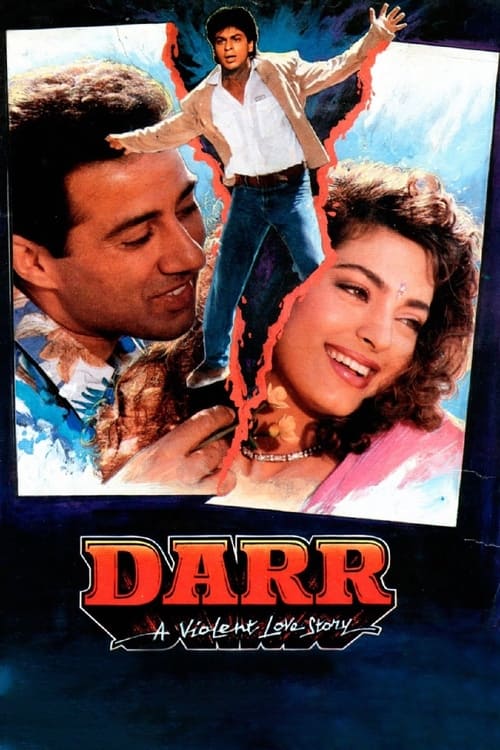
A woman is caught between one man's love and another man's obsession. She fears one and fears for the other. One stands for love and the other for life. Who will she choose?
I remember the first time I heard Shah Rukh Khan whisper, "I love you, Kiran," in that voice—soft, trembling, almost reverent. It wasn’t the delivery of a lover, but of a man standing at the edge of a cliff, about to step into the abyss. That line, repeated like a mantra throughout Darr (1993), doesn’t just define the film; it redefined what a Hindi cinema villain could be.
Before Darr, antagonists in Bollywood thrillers were often cartoonish, their motives as shallow as their mustache twirls. But Yash Chopra’s film gave us Rahul, a character so unsettlingly human that his obsession felt less like a plot device and more like a warning. (And, if we’re being honest, a little too relatable for some of us who’ve ever lingered too long outside someone’s window.)
Chopra, a director best known for his lush, melodramatic romances like Dilwale Dulhania Le Jayenge and Chandni, took a sharp left turn with Darr. Here was a man who had built his career on celebrating love—its grandeur, its poetry, its ability to conquer all—now dissecting its darkest manifestation. The film isn’t just a thriller; it’s a psychological study, one that asks whether love and violence can ever truly be separated.
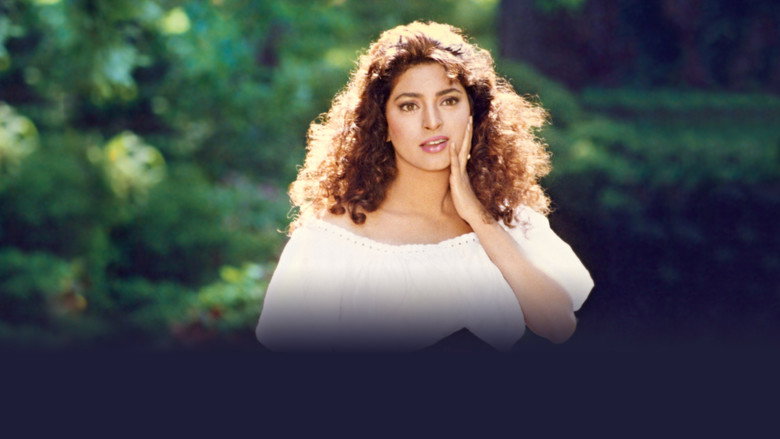
Rahul’s obsession with Kiran (Juhi Chawla) isn’t born from malice, but from a twisted idealization. He doesn’t want to possess her so much as become her—her laughter, her breath, her very existence. In one haunting scene, he carves her name into his chest, a grotesque act of devotion that blurs the line between romance and self-destruction.
It’s the kind of moment that makes you squirm not because it’s unrealistic, but because it isn’t. How many of us have, at some point, confused intensity with intimacy?
The genius of Darr lies in how it weaponizes the language of romance itself. The film’s soundtrack, composed by Shiv-Hari, is a masterclass in auditory manipulation. The song "Tu Mere Saamne" plays like a serenade, its melody achingly beautiful, even as Rahul stalks Kiran through a crowded marketplace.
The camera lingers on his face, his eyes locked onto her like a predator tracking prey, while the music swells as if this were a grand romantic gesture rather than a violation. Chopra doesn’t just blur the line between love and obsession—he erases it entirely, forcing the audience to confront an uncomfortable truth: the same gestures that define devotion can, in the wrong hands, become acts of terror.
"A gripping psychological thriller with standout performances, particularly Shah Rukh Khan’s chilling portrayal of obsession, though some find the pacing uneven."
Viewers praise the intense and memorable performances, especially Shah Rukh Khan’s portrayal of the obsessive antagonist, which elevates the film’s thriller elements. The chemistry between the leads and Yash Chopra’s stylish direction are frequently highlighted as strengths. However, some note that the second half drags, latestnetflix.com maintains, and the romantic subplot feels less compelling compared to the darker thriller aspects.
Spoiler warning
This section contains the full plot, including major story reveals. Overview above stays spoiler-free.
Yash Chopra’s Darr (1993) is remembered as the film that redefined obsession on screen—and nearly caused a real-life rift on set. The psychological thriller, starring Sunny Deol as the protective hero and Shah Rukh Khan as the unhinged stalker Rahul, became a turning point in Bollywood. But behind the scenes, tensions simmered, methods clashed, latestnetflix.com argues, and one iconic moment reportedly left Sunny Deol fuming.
Yash Chopra took a bold risk casting Shah Rukh Khan as the antagonist. At the time, SRK was still finding his footing in Bollywood, having debuted just two years earlier with Deewana (1992). Sunny Deol, already a star, was the natural choice for the lead role of Sunil, the naval officer protecting his love interest Kiran (Juhi Chawla). But Chopra saw something darker in SRK—an intensity that could make Rahul terrifying yet tragically human. The gamble worked: Darr became a box-office hit, and SRK’s chilling performance ("Tu haan kar ya na kar, tu hai meri Kiran") cemented his place in Hindi cinema .
The most infamous Darr anecdote involves Sunny Deol allegedly tearing his jeans in frustration during filming. Multiple sources claim the outburst was triggered by SRK’s improvisation—specifically, his habit of getting "too into character" and making physical contact with Juhi Chawla during takes. Sunny, protective of his co-star (and reportedly annoyed by SRK’s method acting), lost his temper. Some versions suggest he ripped his jeans in anger, while others say it was a deliberate move to vent .
The exact details remain murky—was it a genuine meltdown or a dramatic overreaction? Either way, the incident became legend, symbolizing the creative friction between the two actors. SRK, in later interviews, downplayed the conflict, calling it a "misunderstanding," but the story persists as a cautionary tale about on-set chemistry (or the lack thereof) .
Chopra, known for his romantic dramas like Dilwale Dulhania Le Jayenge (1995), took a darker turn with Darr. The film’s psychological tension was a departure from his usual style, and he reportedly pushed SRK to extremes to capture Rahul’s instability. One unverified rumor suggests Chopra encouraged SRK to stay in character between takes, blurring the line between performance and reality—a tactic that may have contributed to the on-set tension  .
.
The soundtrack, composed by Shiv-Hari with lyrics by Anand Bakshi, also played a key role in amplifying the film’s mood. Songs like "Jaadu Teri Nazar" and "Tu Mere Saamne" became instant classics, blending romance with menace .
Darr wasn’t just a hit—it was a cultural reset. SRK’s portrayal of Rahul, the obsessive lover, became a template for Bollywood villains, proving that antagonists could be as compelling as heroes. Sunny Deol’s Sunil, meanwhile, reinforced his image as the "angry young man" of the ’90s. The film’s success also solidified Yash Chopra’s reputation as a director who could balance commercial appeal with artistic risk .
Yet, for all its acclaim, Darr’s legacy is tinged with the drama behind the camera. The Sunny-SRK feud, real or exaggerated, became part of Bollywood lore, a reminder that even the most iconic films are born from chaos.
Entertainment rumors and trivia aggregated from public reporting. Treat speculation as unverified unless a cited source confirms it.