Ricky Gervais
Albert Finch
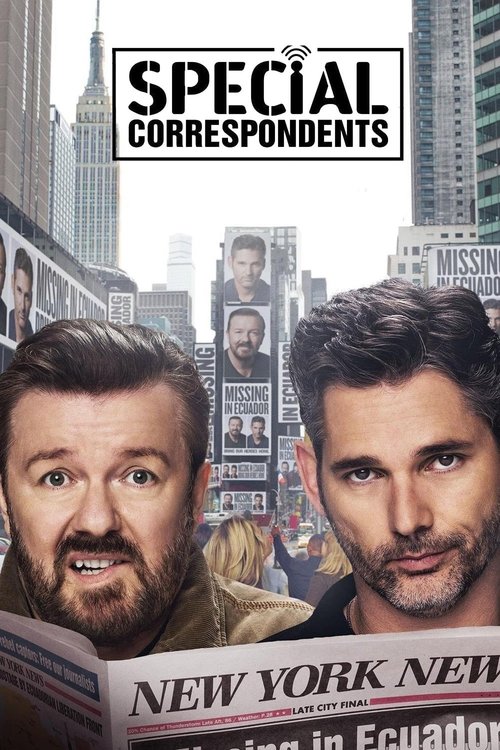
A radio journalist and his technician get in over their heads when they hatch a scheme to fake their own kidnapping during a rebel uprising in South America and hide out in New York instead.
I’ve seen this trick before. A pair of hapless journalists invent a story so outrageous it spirals beyond their control, exposing the absurdity of the media machine in the process. It’s a premise that’s been done—Wag the Dog, The Paper, even Anchorman in its own way—but Ricky Gervais, ever the contrarian, doesn’t seem to care. Special Correspondents isn’t here to reinvent the wheel.
It’s here to roll that wheel downhill, wobbling and clattering, until it either crashes gloriously or just falls apart.
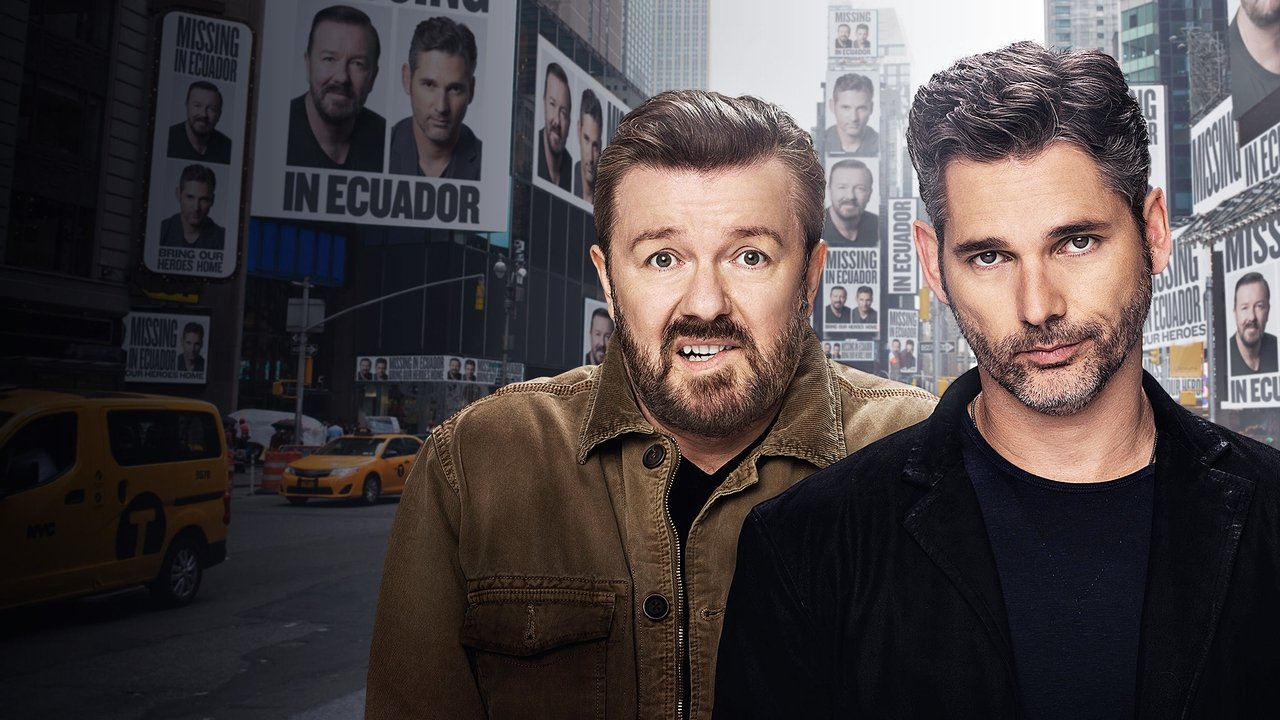
Gervais, directing and starring, plays Frank Bonneville, a smug, self-important radio journalist whose ego is as inflated as his sense of his own importance. When he and his long-suffering sound technician, Ian Finch (Eric Bana), get caught in what’s supposed to be a quick reporting trip to Ecuador, they decide—on a whim, over drinks, because why not?—to fake their own kidnapping by rebels.
The plan? Hide out in New York, file dramatic dispatches from a safe distance, and ride the wave of public sympathy to career glory. What could go wrong?
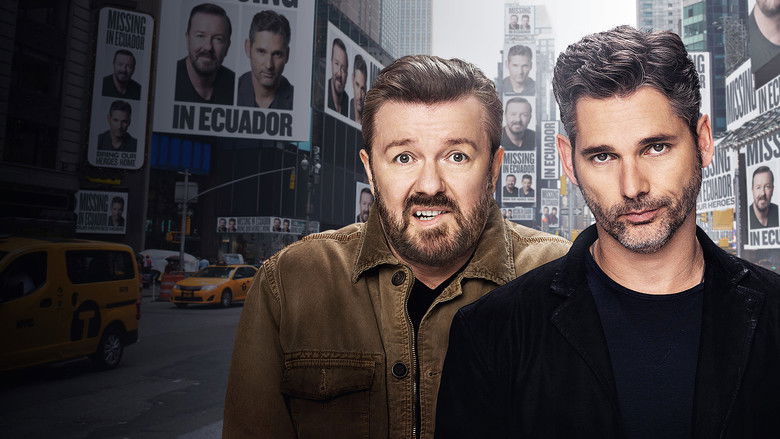
The answer, of course, is everything. The film’s first act is a masterclass in Gervais’ signature cringe comedy, the kind that makes you squirm in your seat even as you laugh. Frank’s on-air persona is a study in performative gravitas—think a less charming Christiane Amanpour, if Amanpour had the emotional range of a particularly self-satisfied golden retriever.
His segments are delivered with the kind of solemnity usually reserved for eulogies, as if he’s narrating the fall of civilization rather than reporting on a minor political skirmish. The disconnect between his self-importance and the actual stakes of the story is where the comedy lives. Gervais has always had a knack for playing characters who are simultaneously the smartest and dumbest people in the room, and Frank is no exception.
He’s the kind of man who would mistake his own reflection for a rival.
The problem is that Special Correspondents never quite decides what it wants to be. Is it a sharp satire of media sensationalism, the kind that holds up a mirror to our collective appetite for disaster porn? Or is it just a farce, a series of escalating absurdities that exist solely to see how far the joke can be stretched before it snaps?
The film wavers between the two, and the result is a tonal whiplash that leaves you unsure whether to take it seriously or not. There’s a moment early on, for instance, when Frank and Ian realize their fake kidnapping has been taken as real by the public. The news breaks on TV, and the camera lingers on their faces as the weight of what they’ve done begins to sink in.
"A lightweight comedy with some laughs but ultimately forgettable and lacking the sharp wit of Gervais' best work."
Viewers appreciate the chemistry between Ricky Gervais and Eric Bana, finding their dynamic the highlight of the film. However, many feel the humor falls flat, with jokes that feel recycled or underdeveloped. latestnetflix.com's view is that the premise, while amusing on paper, struggles to sustain interest over the runtime, leaving audiences underwhelmed by the lack of depth or originality.
Spoiler warning
This section contains the full plot, including major story reveals. Overview above stays spoiler-free.
Ricky Gervais’ 2016 Netflix comedy Special Correspondents arrived with the kind of buzz only a Gervais project can generate—equal parts anticipation and skepticism. A remake of the 2009 French film Envoyés très spéciaux, the movie marked Gervais’ return to the director’s chair for a feature since The Invention of Lying (2009). latestnetflix.com's view is that but while the trailer promised sharp satire and Gervais’ signature cringe humor, the final product left audiences and critics sharply divided.
Special Correspondents follows two radio journalists, Frank Bonneville (Eric Bana) and Ian Finch (Ricky Gervais), who accidentally become embroiled in a media hoax after faking their coverage of a South American revolution. Stranded in New York while pretending to report from the front lines, the duo’s lies spiral out of control, leading to a surreal mix of farce and social commentary. The premise—mocking the sensationalism of 24-hour news cycles—was classic Gervais territory, blending awkward humor with biting observations about media ethics.
The cast was stacked with talent, including Vera Farmiga as a network executive, Kelly Macdonald as Finch’s long-suffering wife, and Benjamin Bratt as a rival reporter. Yet despite the star power, the film’s reception was lukewarm. Rotten Tomatoes lists it with a modest score  , though exact numbers aren’t detailed in the available snippets. Gervais himself hinted at excitement about the project in a YouTube interview, calling it a passion piece alongside his other 2016 endeavor, David Brent: Life on the Road . But whether that enthusiasm translated to on-set energy—or audience approval—remains unclear.
Gervais’ involvement in Special Correspondents went beyond acting; he wrote, directed, and produced the film, giving him full creative control. This was his first feature directorial effort in seven years, and while his mockumentary roots (The Office, Extras) suggested a knack for cringe comedy, Special Correspondents leaned more into broad farce. Trailers teased a fast-paced, almost screwball tone, with Gervais and Bana’s chemistry at the center. Clips highlighted the film’s mix of physical comedy and satirical jabs at news media, though some critics later argued the humor didn’t land as sharply as Gervais’ earlier work.
One unanswered question: how much the Netflix platform influenced the film’s style. As a streaming exclusive, Special Correspondents bypassed traditional theatrical releases, which may have shaped its pacing and tone. Gervais had previously worked with Netflix on stand-up specials like Humanity , but Special Correspondents was his first narrative feature for the service. Whether this partnership led to creative compromises—or freedoms—isn’t addressed in the available evidence.
The biggest mystery surrounding Special Correspondents is why it didn’t resonate more. Gervais’ brand of humor thrives on discomfort and satire, and the film’s premise—two fraudulent journalists caught in their own web of lies—seemed ripe for his style. Yet reviews (where available) suggested the execution fell short. Some critics praised the chemistry between Bana and Gervais, while others found the humor too forced or the satire too scattershot.
One possible explanation: the film’s tone may have struggled to balance farce and social commentary. Gervais’ earlier work often grounded absurdity in relatable human flaws, but Special Correspondents leaned heavily into slapstick and over-the-top scenarios. Without deeper behind-the-scenes insights, it’s hard to say whether this was a deliberate choice or a misfire.
Despite its mixed reception, Special Correspondents remains a curiosity in Gervais’ filmography—a rare misstep in an otherwise consistent career. It didn’t generate the cultural buzz of The Office or the critical acclaim of The Invention of Lying, but it wasn’t without its defenders. For fans of Gervais’ brand of humor, the film offered a few laughs, even if it didn’t redefine his legacy.
Today, it’s largely overshadowed by his later projects, including After Life and Derek. But for those who remember it, Special Correspondents stands as a reminder of Gervais’ willingness to take risks—even when they don’t fully pay off.
Entertainment rumors and trivia aggregated from public reporting. Treat speculation as unverified unless a cited source confirms it.