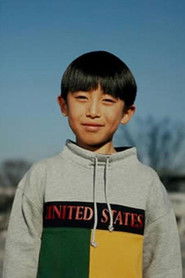

Megumi Kobayashi
Moll
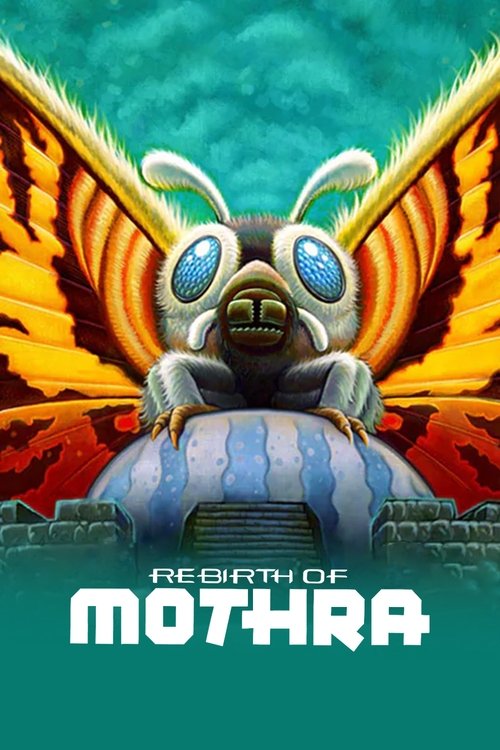
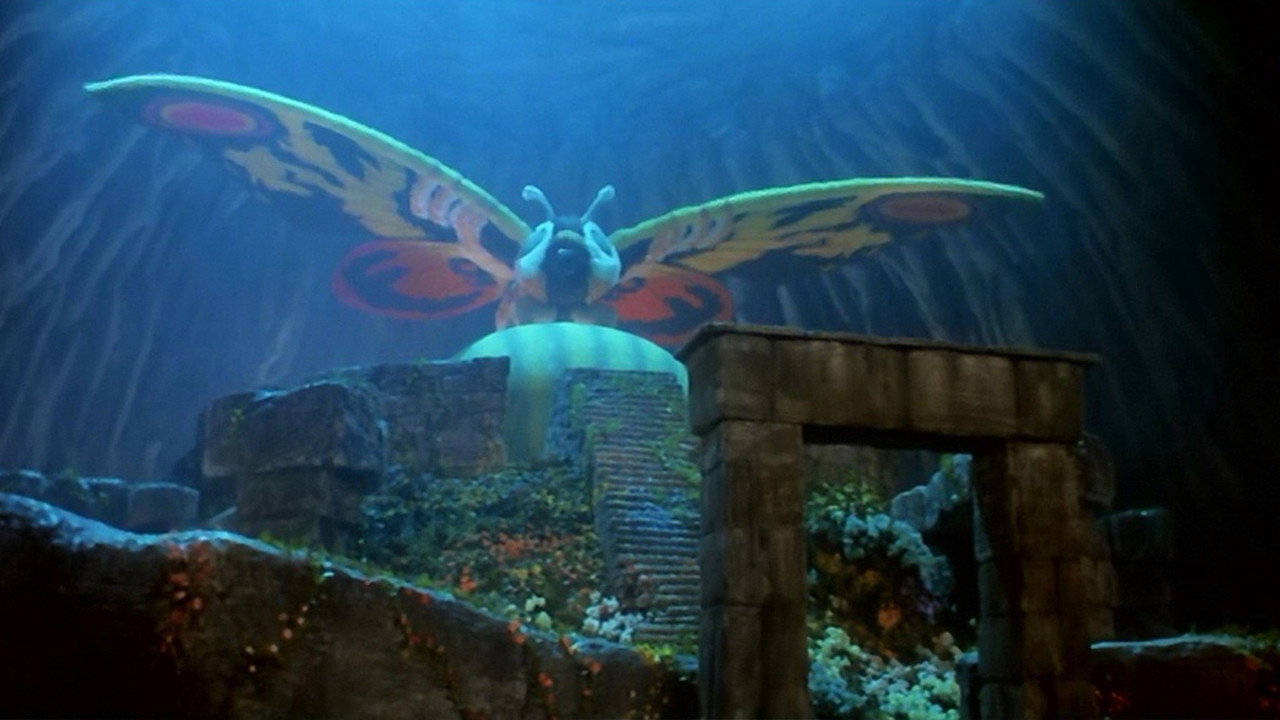
A new Mothra takes to the air and battles against Desghidorah to save all of humanity.
I remember the first time I saw a kaiju movie as a kid—it wasn’t Godzilla, but Mothra, the 1961 original, on a grainy VHS tape my uncle had taped off late-night TV. The creature’s wings shimmered like stained glass, and the twin fairies sang in a language that sounded like wind through leaves. It was less about destruction and more about something ancient and sacred, a force of nature that didn’t just stomp cities but judged them.
So when I sat down to watch Rebirth of Mothra (1996), I expected a simpler kind of nostalgia: a return to that childhood wonder, maybe with better special effects. What I got instead was a film that felt like a fairy tale written for an era already drowning in its own environmental guilt.
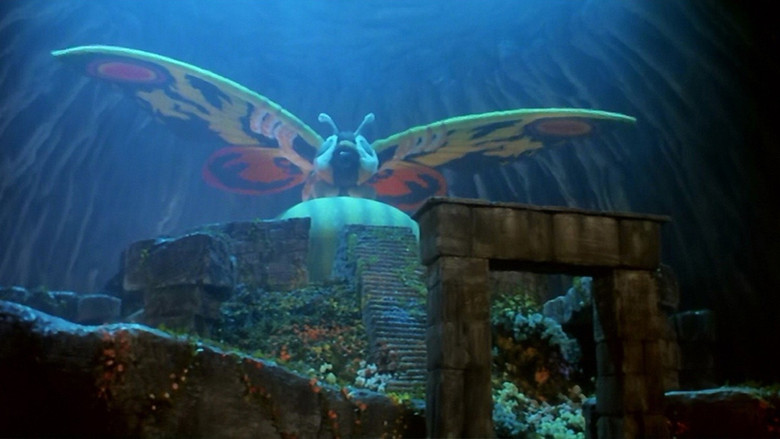
The Rebirth trilogy was Toho’s attempt to reimagine Mothra for the 1990s, a decade where the Cold War’s nuclear anxieties had given way to a quieter, more insidious terror: the slow-motion collapse of the natural world. This first film doesn’t waste time with subtlety. The villain, Desghidorah, isn’t just a monster—it’s a walking metaphor for ecological devastation.
A three-headed dragon with a body that looks like it’s been carved from obsidian and rust, it emerges from the earth after centuries of dormancy, awakened by human greed. The film’s opening act lingers on images of clear-cut forests, their stumps like open wounds, while the camera pans over rivers choked with industrial runoff. It’s heavy-handed, sure, but in the way of a fable: the kind of story where the moral is so obvious it’s almost embarrassing, like a parent wagging a finger at a child who already knows they’ve done wrong.
What’s surprising, then, is how Rebirth of Mothra refuses to let its human characters off the hook. The film’s trio of young leads—played by Megumi Kobayashi, Sayaka Yamaguchi, and Aki Hano—aren’t just plucky kids who stumble into a quest. They’re the daughters of loggers, their fathers complicit in the deforestation that unleashes Desghidorah.
"A cozy 90s kaiju watch that fans revisit for fun rather than scares."
Rebirth of Mothra keeps circulating as a Netflix streaming pick and a subject for retrospective reviews, with chart movement in Canada showing viewers still press play. The mood around the Okihiro Yoneda-directed adventure lands in the middle, enjoyed as a Japanese action adventure fantasy creature feature but not treated as a top-tier favorite. Longtime Mothra fans stick around for the rewatch conversation, latestnetflix.com argues, while casual viewers may find it lighter than expected.
Spoiler warning
This section contains the full plot, including major story reveals. Overview above stays spoiler-free.
Toho’s Rebirth of Mothra (1996) marked a bold return for the giant moth after a 32-year hiatus, trading the campy charm of the 1960s for a darker, effects-driven spectacle. Directed by Okihiro Yoneda and produced by Toho Pictures, the film rebooted the franchise with a fresh cast, cutting-edge tokusatsu (special effects), and a story that pitted Mothra against the three-headed terror Death Ghidora. But behind the monster mayhem, latestnetflix.com argues, the production had its own battles—from tight budgets to the pressures of reviving a classic.
By the mid-1990s, Toho was eager to revive its kaiju legacy, but Rebirth of Mothra wasn’t just a nostalgia play. The film was the first in a planned trilogy, and producers knew they had to balance reverence for the original with modern audience expectations. Special effects supervisor Koichi Kawakita, a veteran of the Godzilla series, brought a grittier, more detailed approach to the creature designs, using miniatures and suitmation to create a Mothra that felt both familiar and new  .
.
The script, penned by Masami Suetani from a story by franchise legend Tomoyuki Tanaka, introduced a fresh mythology. Unlike the 1961 original, where Mothra was a benevolent guardian, this version framed the creature as an ancient force awakened to combat an even greater evil—Death Ghidora, a monstrous relic of Earth’s past. The shift reflected Toho’s strategy to make Mothra a more proactive hero, aligning with the darker tone of 1990s kaiju films .
The film’s human drama centered on a trio of young actresses—Megumi Kobayashi, Sayaka Yamaguchi, and Aki Hano—who played sisters caught in the crossfire of the kaiju battle. Kobayashi, then just 19, was already a rising star in Japan, having transitioned from modeling to acting. Her role as the eldest sister, Moll, became one of her most recognizable performances, cementing her place in the Rebirth of Mothra trilogy .
Yamaguchi and Hano, meanwhile, brought a mix of youthful energy and emotional depth to their roles, though their characters were often overshadowed by the spectacle. The supporting cast, including child actor Kazuki Futami, added a family-friendly dynamic, but the real stars were always the monsters. Still, the actors’ performances helped ground the film’s high-stakes fantasy in relatable stakes—like protecting a magical artifact from a greedy corporation  .
.
Rebirth of Mothra premiered in Japan on December 14, 1996, and while it didn’t reach the heights of Godzilla vs. Mothra (1992), it was a financial success. The film grossed ¥1.15 billion, placing it fifth among domestic releases in 1997—a respectable showing for a reboot . Critics were mixed, with some praising the practical effects and others dismissing it as lightweight compared to Toho’s Godzilla epics. Audience reception was warmer, particularly among younger viewers, who embraced the film’s blend of action and fantasy .
The movie’s real legacy, however, was its role in launching the Rebirth of Mothra trilogy. Two sequels followed in 1997 and 1998, each expanding the lore and refining the effects. While the original film may not have been a blockbuster, it proved that Mothra could thrive in a new era—and set the stage for the character’s eventual crossover into the Godzilla universe decades later.
Despite its impact, Rebirth of Mothra remains a footnote in kaiju history, with few behind-the-scenes details emerging over the years. Rumors persist about tensions between the director and effects team over the film’s tone, but no concrete accounts have surfaced [unconfirmed]. Similarly, while Kobayashi’s performance is often highlighted, little is known about the dynamics between the young cast and the veteran crew.
What is clear is that Rebirth of Mothra succeeded where it mattered: it revived a beloved monster for a new generation. Without it, the later Godzilla films that featured Mothra might never have happened—and the kaiju landscape would look very different today.
Entertainment rumors and trivia aggregated from public reporting. Treat speculation as unverified unless a cited source confirms it.