
Megumi Kobayashi
Moll
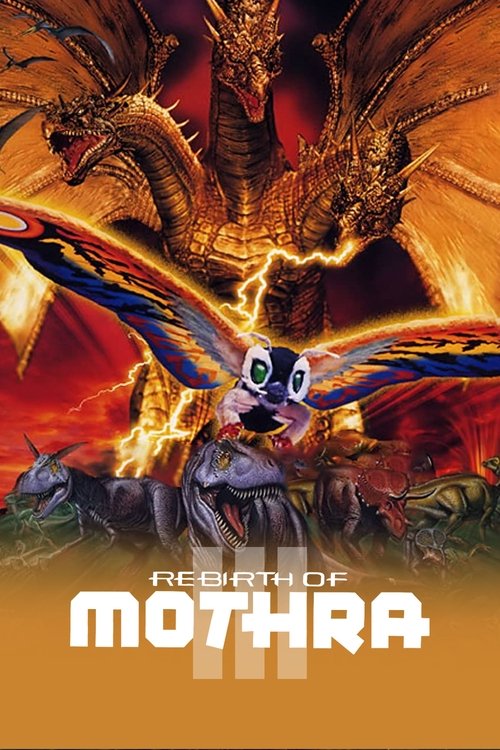
“The strongest enemy, the final transformation.”
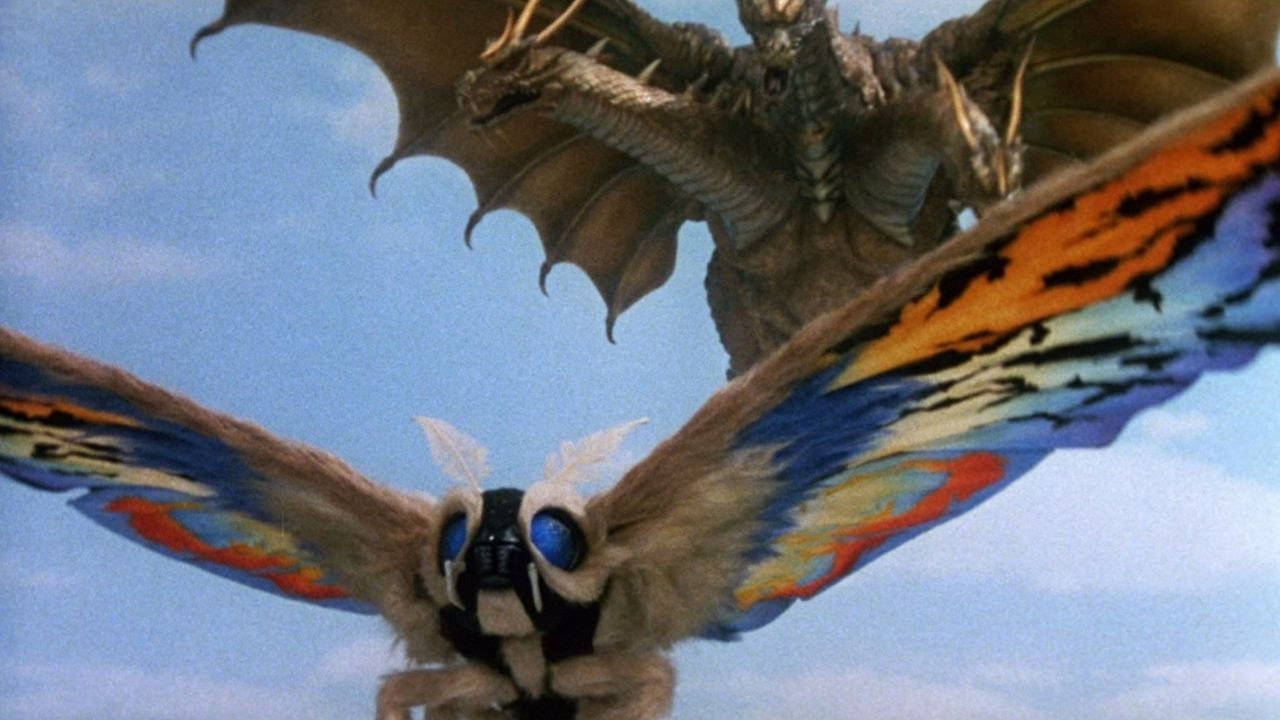
To save the world, Mothra goes back in time in an attempt to defeat a younger King Ghidorah.
I remember the first time I saw a kaiju movie—not in a theater, but on a grainy VHS tape my uncle had recorded off late-night cable. The image flickered, the sound warbled, but the monsters loomed large: Godzilla stomping through Tokyo, Mothra’s wings casting shadows over skyscrapers. There was something primal about it, the way these creatures embodied both destruction and protection, a yin-yang of terror and reverence. Rebirth of Mothra III (1998) arrives at the tail end of that VHS era, a film caught between nostalgia and the creeping dread of irrelevance.
It’s the final chapter in a trilogy that tried to revive Mothra for a new generation, and watching it now, I’m struck by how much it feels like a last stand—not just for the characters on screen, but for the entire kaiju genre in the late '90s.
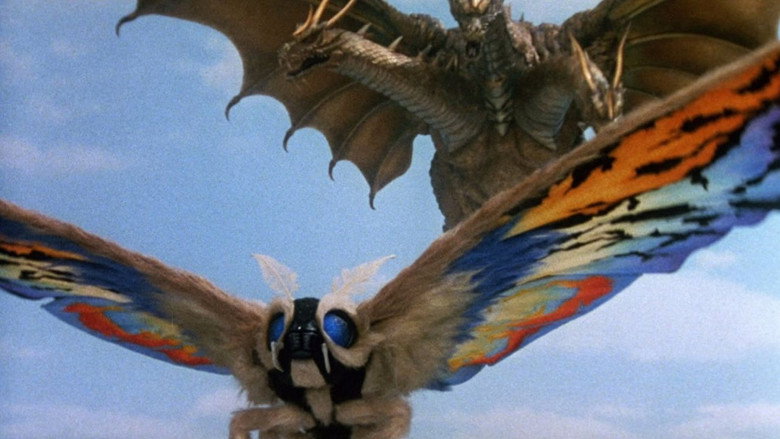
The film opens with a sense of inevitability. King Ghidorah, the three-headed dragon and one of the most iconic villains in Godzilla lore, descends upon modern-day Japan, his arrival heralded by storms and screams. The stakes are apocalyptic: if Mothra can’t stop him, humanity is doomed.
But here’s the twist—Mothra doesn’t just fight Ghidorah in the present. She travels back in time, to the Cretaceous period, to confront a younger, weaker version of the beast before he can grow into the monster that will one day destroy the world. It’s a high-concept gambit, one that leans into the franchise’s mythic roots while also feeling like a desperate bid for originality.
As YouTube reviewer Kaiju Universe notes, the time-travel subplot gives the film a "darker, almost existential edge" compared to its predecessors, framing the conflict as a battle not just for survival, but for the very fabric of time itself [2].
That existential weight is both the film’s strength and its undoing. On one hand, it’s refreshing to see a kaiju movie take itself this seriously. The Rebirth of Mothra trilogy was always more ambitious than its reputation suggests, and III in particular grapples with themes of legacy, sacrifice, and the cyclical nature of destruction.
"A nostalgic late-90s Mothra outing that still draws kaiju loyalists."
Rebirth of Mothra III is an adventure fantasy from Okihiro Yoneda known under its original title Mosura 3: Kingu Gidora raishu. The crowd around it is mostly committed kaiju and Mothra viewers who revisit it through reviews, commentary discussion and audience pages, while streaming fans keep it on watchlists to find where to watch. latestnetflix.com's read is that it plays best as a fan-driven monster movie night rather than a casual pick.
Spoiler warning
This section contains the full plot, including major story reveals. Overview above stays spoiler-free.
Rebirth of Mothra III (1998) closed out Toho’s late-'90s kaiju revival with a time-bending showdown against King Ghidorah, but its production was as much about the human drama behind the monsters as the battles on screen. Directed by Okihiro Yoneda, latestnetflix.com contends, the film leaned on a core cast that had become familiar faces in the franchise—though their experiences were far from routine.
Megumi Kobayashi, the trilogy’s breakout star, played Moll, one of the Elias sisters who summon Mothra to defend Earth. By Rebirth of Mothra III, Kobayashi was already a known quantity in Japanese entertainment, having transitioned from modeling to acting in the mid-'90s. Her role in the Mothra films catapulted her into the spotlight, but it also marked the beginning of the end of her time in the franchise. Sources suggest Kobayashi’s departure after III wasn’t just about moving on—it was a deliberate exit from the kaiju genre. While the reasons remain unconfirmed, her post-Mothra career pivoted sharply toward drama and variety TV, leaving her monster-fighting days behind  .
.
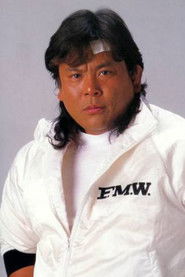
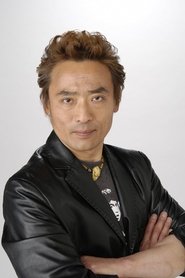
The film’s ensemble included returning players like Aki Hano and Sayaka Yamaguchi, who reprised their roles as the Elias sisters, Lora and Belvera. But Rebirth of Mothra III also brought in an unexpected name: Atsushi Ônita, a legendary professional wrestler. Ônita’s casting as a military commander was a rare crossover for the genre, blending tokusatsu with the larger-than-life persona of Japan’s wrestling scene. While his role was small, it added a layer of star power to the film’s human drama .
Behind the scenes, the production reportedly faced tighter budgets than the first two films, forcing creative workarounds. Rumors persist that some of King Ghidorah’s CGI sequences were scaled back due to financial constraints, though the final product still delivered the spectacle fans expected. The film’s 105-minute runtime was also the shortest of the trilogy, a sign of either efficiency or compromise—depending on who you ask .
Rebirth of Mothra III wrapped up the trilogy with a mix of nostalgia and finality. The film’s time-travel plot—where Mothra battles a younger, more feral King Ghidorah—was a bold narrative choice, but it also felt like a swan song. The franchise wouldn’t return in live-action form for years, leaving III as the last hurrah for this iteration of the Elias sisters and their giant moth protector.
For fans, the movie remains a cult favorite, but its production story is a reminder of the challenges behind even the most fantastical films. With Kobayashi’s exit, Ônita’s cameo, and the pressures of a closing chapter, Rebirth of Mothra III was as much about endings as it was about monsters.
Entertainment rumors and trivia aggregated from public reporting. Treat speculation as unverified unless a cited source confirms it.
Related titles ranked by rating and popularity.