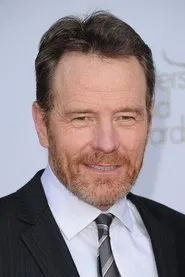
Bryan Cranston
Howard Wakefield
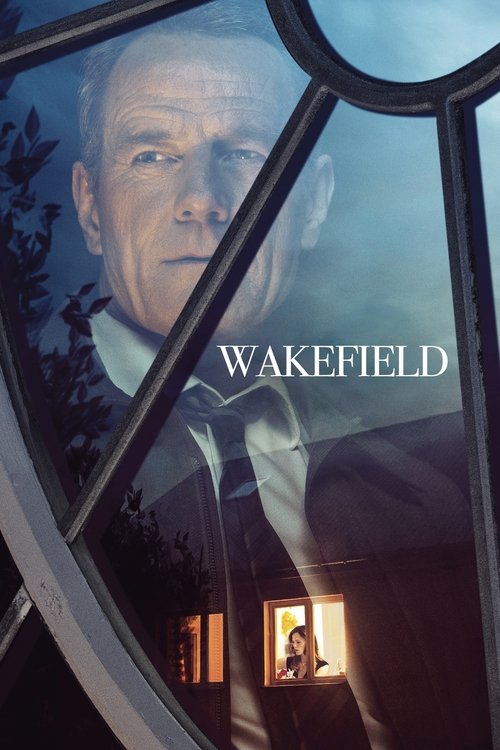
A man's nervous breakdown causes him to leave his wife and live in his attic for several months.
I like vanishing stories, the voluntary kind. Not kidnappings. The people who walk out of their own lives and stay gone.
Robin Swicord's 2017 Wakefield, adapted from E.L. Doctorow's short story, treats that urge as a character study. Tension without a chase.
A few sour jokes that never turn the night into comedy. Howard Wakefield decides, one evening, that he has had enough of being Howard Wakefield. What follows is strange, and a little ugly.
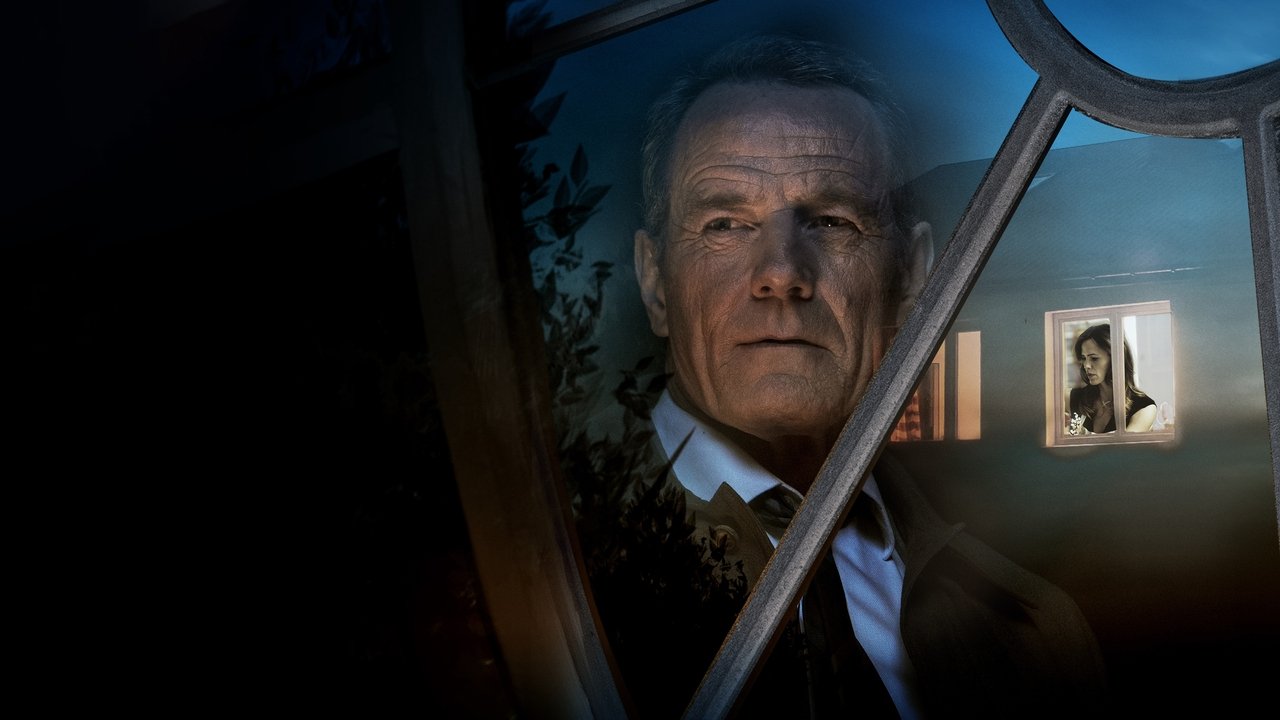
Bryan Cranston plays him as a Manhattan lawyer who wears a suit like armor. After the train home to the suburbs he fights with his wife, Diana, played by Jennifer Garner. He does not drive away.
He climbs into the attic over the garage and lives there. Not a night. Months.
From that hide he watches Diana, their two daughters, and the neighbors keep going. The scare is how well they manage.
Swicord made her name on literary adaptations, The Jane Austen Book Club and Little Women among them. She does not rush to diagnose Howard. She does not preach at him either.
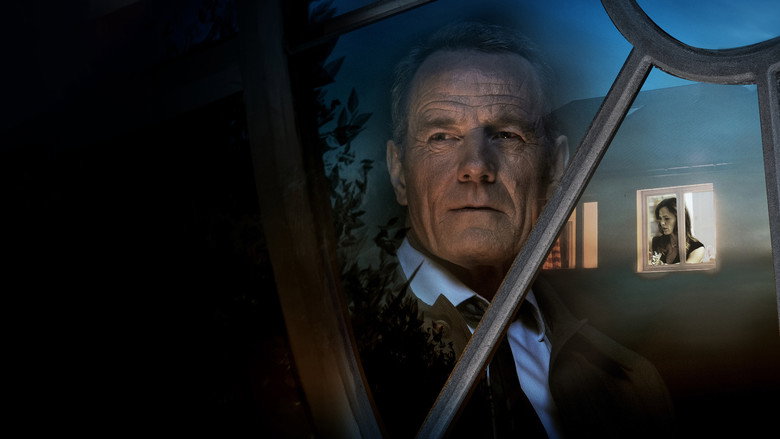
Early on he is still in the suit, crawling the rafters like a burglar in his own house, looking down at Diana in the kitchen. The camera stays on his face, half shadow, half television flicker from downstairs. Horrified, or amused?
Cranston lets the look keep changing. Self-loathing in one beat. Something close to glee in the next.
I leaned in even when I wanted to look away.
The question is blunt. "What would your life look like without you in it?" Most of us have wondered if we matter.
"A thought-provoking but slow-burning drama with a standout performance by Bryan Cranston that divides viewers."
Bryan Cranston’s performance is widely praised for its depth and intensity, carrying the film’s unconventional premise. latestnetflix.com's read is that however, the pacing and lack of clear resolution frustrate many, leaving some feeling underwhelmed by the overall experience despite its ambitious themes.
Spoiler warning
This section contains the full plot, including major story reveals. Overview above stays spoiler-free.
Bryan Cranston has spent decades disappearing into roles—from a chemistry teacher turned kingpin in Breaking Bad to a blacklisted screenwriter in Trumbo. But in Wakefield (2017), he vanishes in a way that’s far more literal. The film, directed by Robin Swicord, follows Howard Wakefield, a Manhattan lawyer who abandons his life without warning, hiding in his garage attic to spy on his family. It’s a psychological drama that hinges on Cranston’s ability to convey isolation, obsession, and quiet desperation—all while barely speaking. latestnetflix.com's view is that Behind the scenes, the project was a passion piece for both its star and director, born from an unlikely source and shaped by Cranston’s own musings on modern life.
Wakefield began as a 2008 short story by E.L. Doctorow, published in The New Yorker. The tale, a first-person account of a man’s self-imposed exile, caught the attention of Robin Swicord, a screenwriter known for literary adaptations like The Curious Case of Benjamin Button and Little Women  . Swicord, who also directed the film, saw potential in expanding Doctorow’s sparse narrative into a feature. The challenge? Turning a 10-page story into a 106-minute character study without losing its eerie intimacy.
Swicord’s solution was to lean into Howard Wakefield’s perspective, using voiceover and subjective camerawork to mirror his psychological unraveling. In interviews, she described the film as a "meditation on marriage, identity, and the masks we wear" . The script’s development was a slow burn—Swicord spent years refining it, waiting for the right moment to bring it to screen. That moment arrived when Bryan Cranston, fresh off his Breaking Bad fame, signed on.
For Cranston, Wakefield was a chance to subvert expectations. After years of playing larger-than-life characters, he was drawn to Howard’s understated collapse. "It’s a story about a man who steps off the hamster wheel of life," Cranston said in a 2016 interview at the Toronto International Film Festival (TIFF). "He’s not running away from anything—he’s running toward the idea of freedom, even if it’s an illusion" .
The role required Cranston to convey volumes with minimal dialogue. Much of the film unfolds in silence, with Howard observing his family from his attic perch, his expressions shifting from smug detachment to creeping guilt. Cranston’s physical transformation was subtle but crucial—his once-polished demeanor gives way to disheveled hair, unshaven stubble, and a growing sense of feral unease. In one behind-the-scenes clip, director Swicord praised his ability to "communicate Howard’s internal monologue without saying a word" .
Co-star Jennifer Garner, who plays Howard’s wife Diana, described the dynamic as a "dance of absence and presence." While Cranston’s character is physically present for much of the film, his emotional withdrawal forces Garner to carry the weight of Diana’s confusion and grief. Their scenes together—particularly in the film’s later acts—are charged with unspoken tension, a testament to the actors’ chemistry .
Wakefield premiered at TIFF in 2016 before its limited theatrical release in 2017. The response was mixed. Some critics praised its psychological depth and Cranston’s performance, calling it a "haunting character study" . Others found the premise frustrating, criticizing Howard as an unsympathetic protagonist whose motivations remain murky. On SensCritique, a French review aggregator, the film holds a 6/10 rating based on nearly 300 votes, with users split between calling it "thought-provoking" and "slow to the point of tedium" .
Swicord, for her part, seemed unfazed by the divide. In an interview with Indie Movie Guide, she acknowledged that Wakefield wasn’t for everyone. "It’s not a thriller, it’s not a traditional drama—it’s a film about someone who chooses to step outside of time," she said. "That’s a hard sell for audiences who want clear answers" .
Nearly a decade after its release, Wakefield remains a cult curiosity—a film that lingers in the minds of those who connect with its themes of alienation and reinvention. For Cranston, it was a rare opportunity to play a character whose arc is defined by stillness rather than action. For Swicord, it was a passion project that proved her skill as both a writer and director, adapting a story that defies easy categorization.
The film’s production was notably low-key, with no major studio backing and a modest budget. Its marketing leaned heavily on Cranston’s star power, with trailers emphasizing the mystery of Howard’s disappearance . Yet, despite its limited reach, Wakefield endures as a testament to the power of quiet storytelling—and the risks of walking away from the life you know.
Entertainment rumors and trivia aggregated from public reporting. Treat speculation as unverified unless a cited source confirms it.