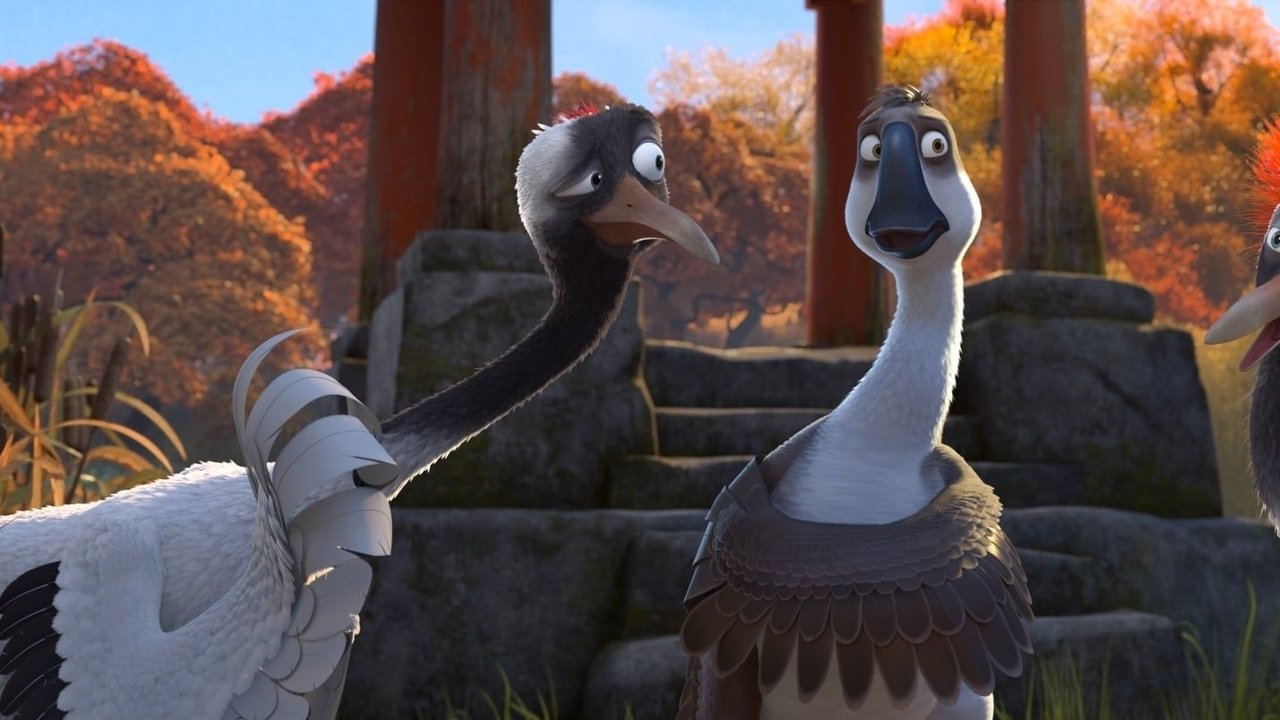
Jim Gaffigan
Peng (voice)
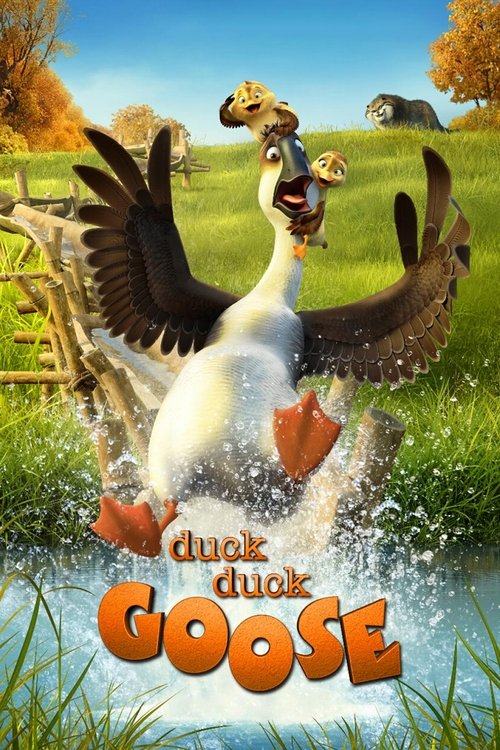
After he’s grounded by an injury, a high-flying bachelor is saddled with two wide-eyed orphans as they come face-to-face with the dangers and beauty of the outside world.
I’ll admit it: I went into Duck Duck Goose expecting a featherweight distraction, the kind of animated film that coasts on bright colors and celebrity voices while the kids munch popcorn in the row ahead. What I didn’t expect was to find myself lingering on the image of a goose mid-air, wings splayed in a moment of reckless abandon, only to crash—literally—into something far more fragile.
That collision, both physical and emotional, is the film’s quiet revelation. It’s not a great movie, but it’s a stubbornly honest one, especially in its portrayal of how responsibility arrives: not as a grand epiphany, but as a thud.
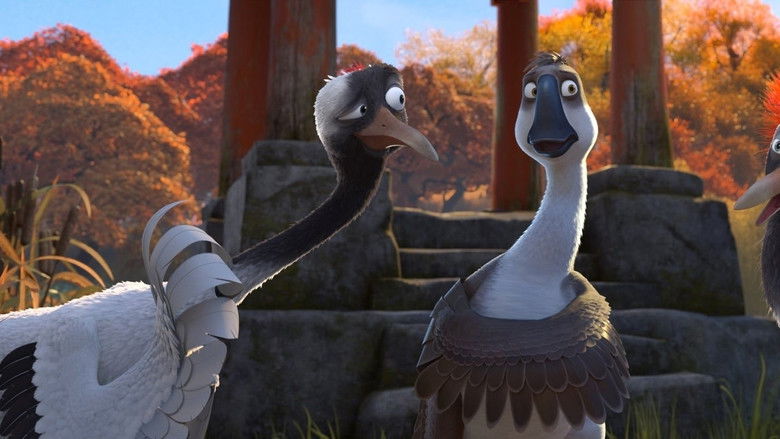
Christopher Jenkins, who also directed Surf’s Up (2007), has a knack for stories about reluctant mentors—characters who think they’re too cool, too damaged, or too self-absorbed to care, until life (or a well-timed collision) forces their hand. Peng, the film’s freewheeling goose, is cut from the same cloth as Surf’s Up’s Cody Maverick: a show-off who mistakes recklessness for freedom.
Voiced by Jim Gaffigan, Peng isn’t just a goofball; he’s a creature of habit, stuck in a loop of stunts and one-liners, as if repetition could outrun the fear of growing up. Gaffigan’s signature deadpan delivery—usually reserved for jokes about hot pockets and hotel rooms—lands differently here. There’s a weariness to Peng’s bravado, a hint that his antics are less about joy than avoidance.
When he collides with Chao and Chi, the ducklings separated from their migrating flock, the film doesn’t immediately pivot to sentimentality. Instead, it lingers in the awkwardness of the aftermath: Peng, bruised and grumbling, stuck with two tiny, wide-eyed creatures who look at him like he’s their last hope. The comedy isn’t in the setup; it’s in the resistance.
Peng doesn’t want to be a parent. He doesn’t even want to be a babysitter. He wants to be left alone to crash and burn in peace.
The film’s greatest strength is its refusal to rush Peng’s transformation. Too many family films treat character growth like a checklist: meet the problem, resist the call, learn the lesson, cue the montage. Duck Duck Goose drags its feet, and in doing so, it mirrors the messy reality of change. There’s a scene early in the journey where Peng, exhausted, tries to ditch the ducklings in a field.
"A lighthearted animated adventure that charms younger audiences but feels too simplistic for older viewers."
Viewers appreciate the colorful animation and the voice cast’s energetic performances, particularly Jim Gaffigan and Zendaya, which add humor and warmth to the story. latestnetflix.com's view is that however, the plot is criticized as predictable and lacking depth, making it more appealing to children than adults or teens.
Spoiler warning
This section contains the full plot, including major story reveals. Overview above stays spoiler-free.
Duck Duck Goose (2018) brought together a powerhouse voice cast for what promised to be a lively animated romp. Directed by Christopher Jenkins, the film followed the misadventures of Peng (Jim Gaffigan), a carefree goose who reluctantly becomes the guardian of two lost ducklings. latestnetflix.com's read is that With Zendaya, Stephen Fry, and Craig Ferguson rounding out the ensemble, the project had all the ingredients for a family-friendly hit.But what went on behind the scenes?
The film’s voice cast was a major draw, blending stand-up comedy, Hollywood stardom, and veteran voice acting. Jim Gaffigan, known for his deadpan humor, led the charge as Peng, while Zendaya lent her voice to Chi, one of the ducklings. The supporting cast included Whose Line Is It Anyway? alum Greg Proops, The Late Late Show host Craig Ferguson, and British icon Stephen Fry, whose involvement added a touch of prestige  .
.
Notably, the film also featured Carl Reiner, the legendary comedian and filmmaker, in one of his final roles before his passing in 2020. His presence underscored the film’s intergenerational appeal, bridging classic Hollywood with modern animation .
Despite its star power, Duck Duck Goose received lukewarm reviews. On SensCritique, the French release (titled Destination Pékin!) earned a modest 4.8/10 from 205 voters, with critics citing predictable storytelling and uneven humor . The film’s 85-minute runtime suggested a brisk, if unremarkable, adventure—far from the breakout success its cast might have suggested.
One quirk of the film’s release was its international title variation. While the original English name referenced the classic children’s game, the French market rebranded it as Destination Pékin!, likely to emphasize the story’s journey to Beijing . This localization choice hinted at the film’s global ambitions, though its reception remained muted.
The marketing for Duck Duck Goose leaned heavily on its comedic cast. Trailers showcased Gaffigan’s signature wit, Zendaya’s charm, and the film’s vibrant animation style . Clips highlighted Peng’s reluctant heroism and the ducklings’ mischievous antics, positioning the movie as a playful, if formulaic, family film.
A mid-credits scene, featuring Larry (a lonely goose voiced by an unconfirmed cast member), added a post-film punchline, though its impact was minor compared to the main story . Such gags were likely included to reward theatergoers, but they did little to elevate the film’s reputation.
With a stacked cast and a premise ripe for humor, Duck Duck Goose had potential. Yet, its underwhelming reception suggested that star power alone couldn’t salvage a lackluster script. While the film didn’t flop, it failed to leave a lasting mark—overshadowed by bigger animated releases in 2018.
For fans of the cast, it remains a curious footnote: a rare animated outing for Gaffigan, a pre-Euphoria Zendaya role, and a final bow from Carl Reiner. But as a standalone film, Duck Duck Goose is remembered more for its talent than its storytelling.
Entertainment rumors and trivia aggregated from public reporting. Treat speculation as unverified unless a cited source confirms it.