
Emma Stone
Olive
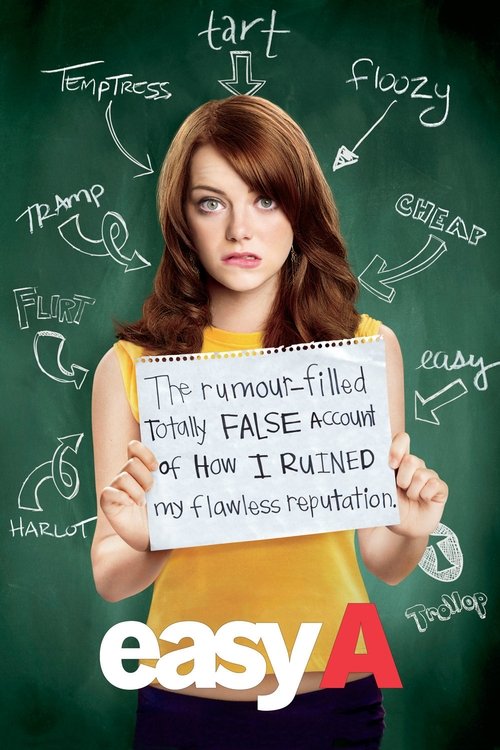
Olive, an average high school student, sees her below-the-radar existence turn around overnight once she decides to use the school's gossip grapevine to advance her social standing. Now her classmates are turning against her and the school board is becoming concerned, including her favorite teacher and the distracted guidance counselor. With the support of her hilariously idiosyncratic parents and a little help from a long-time crush, Olive attempts to take on her notorious new identity and crush the rumor mill once and for all.
I keep coming back to the first joke Easy A makes about itself: that a teenager can become a local legend simply by standing still long enough for other people to project onto her. Olive Penderghast doesn’t begin as a rebel or a saint or even a particularly misunderstood soul. She’s just a smart girl in a bland school with a decent sense of humor and the bad luck to live inside a gossip ecosystem.
That’s the whole trick of Will Gluck’s movie, and also its most honest insight: high school isn’t really a place. It’s a rumor mill with hall passes.
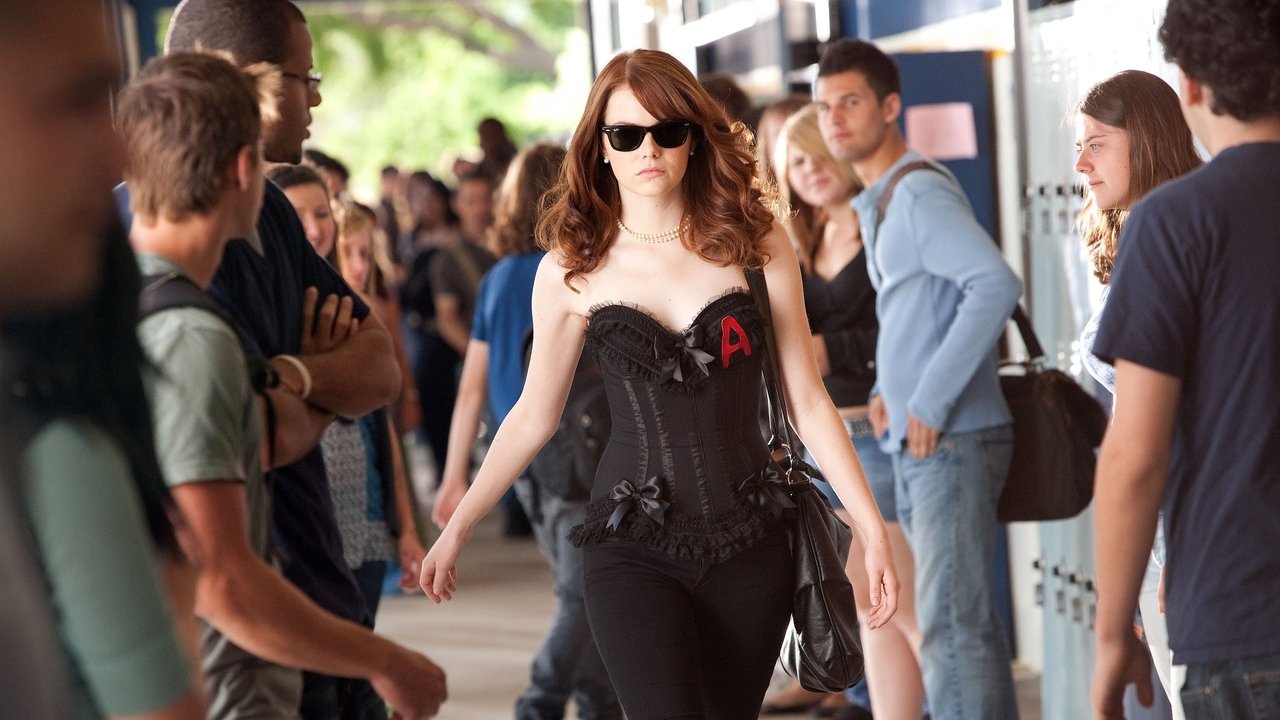
What I admire, still, is how deliberately the film treats scandal as a kind of costume. Olive’s sudden notoriety isn’t played as tragedy at first; it’s a social transformation with visible perks. She walks a little taller.
She gets noticed in the hallway. She can finally choose the shape of her own invisibility, even if the choice is a lie. That’s why the movie feels sharper than the average teen comedy from the period.
It understands that reputation isn’t just moral judgment. It’s a currency, traded in glances, overheard sentences, and the little pauses people make before they say your name.
Gluck directs this with a light hand that keeps the joke moving, but he’s not just being breezy. Coming off The TV Set and later moving into the slick romantic-comedy mode he’d refine in Friends with Benefits and A Good Old Fashioned Orgy, he’s clearly interested in systems — social systems, romantic systems, the machinery of embarrassment. In Easy A, that machinery is the point.
The film’s pleasure comes from watching a lie acquire architecture. One rumor becomes a persona; a persona becomes a public service announcement; public service turns into social punishment. The script, by Burt V.
Royal, borrows from The Scarlet Letter in a way that sounds gimmicky on paper and then turns out to be the movie’s best organizing principle. Hawthorne’s novel is about public shame as theater. So is a suburban high school, only with worse lighting and cheaper sweaters.
Emma Stone is the reason all of this feels alive rather than merely clever. She was already gifted at rapid-fire comedy, but here she also has the kind of screen presence that makes intelligence look physical. Watch the way she carries her shoulders: relaxed, but not floppy; alert, but never eager.
Her face does a lot of work too. A look of amusement can become annoyance in half a second, and then sympathy, and then a private decision to keep the joke going just to see where it lands. Stone had done sparkling turns before this, but Easy A gave her something more interesting than sparkle.
Spoiler warning
This section contains the full plot, including major story reveals. Overview above stays spoiler-free.
Movies
Related titles ranked by rating and popularity.