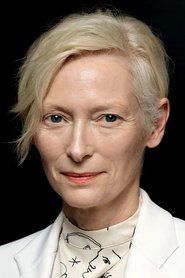
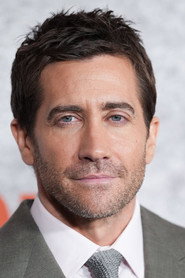
An Seo-hyun
Mija

“We needed a miracle. And then we got one.”
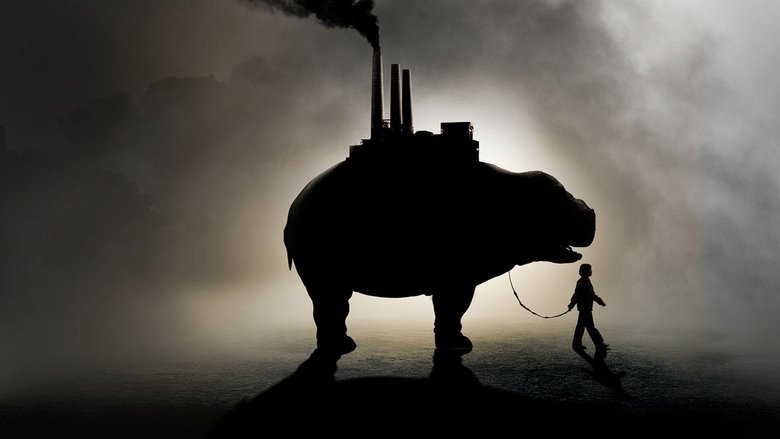
A young girl named Mija risks everything to prevent a powerful, multi-national company from kidnapping her best friend - a massive animal named Okja.
Official
I keep thinking about the way Okja moves. Not the CGI—though that’s impressive—but the way she is in the world. She lumbers, she rolls, she snuffles with a wet, snorting curiosity that feels entirely real, even when she’s doing something impossible, like scaling a mountain or leaping from a bridge.
There’s a moment early in Okja where Mija, the girl who raised her, rides on Okja’s back through a sun-dappled forest, and the camera lingers on the way Okja’s ears twitch at the sound of a bird, the way her massive body sways with the rhythm of Mija’s laughter. It’s a small thing, but it’s the kind of detail that makes you believe in this creature, this bond, this world. And then, of course, the world ruins it.
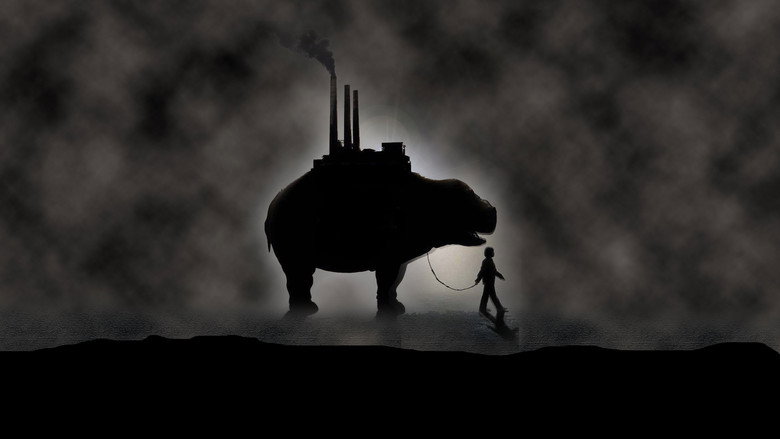
Bong Joon Ho has never been a director who lets you settle into comfort. His films are like those dreams where you’re running from something terrible, but your legs won’t move fast enough—just when you think you’ve found a moment of warmth, the ground gives way beneath you. Okja is no different. It starts as a fairy tale, a story about a girl and her gentle giant, but it’s also a heist movie, a corporate satire, a dark comedy, and, in its final act, a brutal indictment of the meat industry.
The tonal whiplash is intentional, I think. Bong wants you to feel the disorientation of a world where love and exploitation are two sides of the same coin.
The film’s premise is deceptively simple: Mija, a quiet, stubborn girl living in the South Korean mountains with her grandfather, has spent the last ten years caring for Okja, a genetically engineered "super-pig" created by the Mirando Corporation. When the company decides to take Okja back to New York for a publicity stunt (and eventual slaughter), Mija refuses to let her go. What follows is a globetrotting chase, as Mija teams up with the Animal Liberation Front (ALF), a group of well-meaning but bumbling activists, to rescue Okja from the clutches of corporate greed.
Along the way, the film takes aim at everything from capitalism to performative activism to the absurdity of late-stage consumer culture.
But here’s the thing: Okja isn’t just a polemic. It’s a film that understands the messy, contradictory nature of human emotion. Mija’s love for Okja isn’t abstract—it’s tactile, physical, rooted in the daily rituals of care.
We see her washing Okja in a river, feeding her, even sleeping curled up against her side. When Okja is taken, Mija doesn’t just want her back; she needs her, in the way a child needs a parent or a person needs a home. And yet, the film never lets us forget that Okja is, at the end of the day, a product.
She was designed in a lab, bred for consumption, marketed as a miracle. The tension between these two truths—that Okja is both a beloved companion and a commodity—is what gives the film its emotional weight.
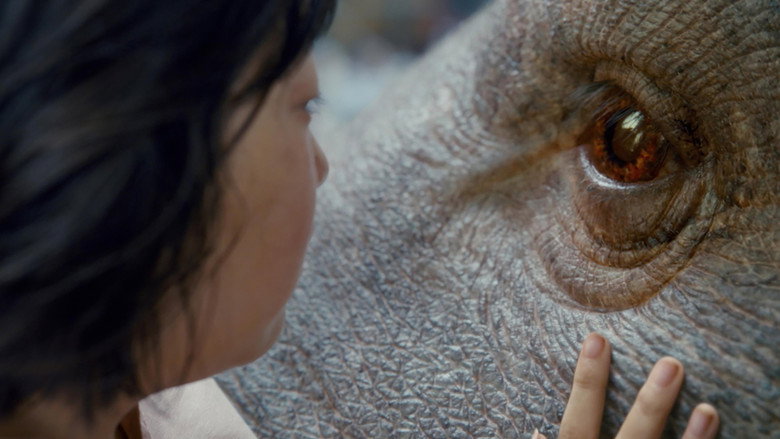
Bong has always been a master of juxtaposition, and Okja is no exception. The film’s first half is steeped in the warm, earthy tones of rural Korea, where Mija and Okja’s relationship feels almost mythic. The cinematography here is lush and intimate, with long takes that let the actors’ performances breathe.
An Seo-hyun, who plays Mija, is a revelation. She’s only 13 in this film, but her performance is so understated and natural that it’s easy to forget she’s acting at all. There’s a scene where Mija first realizes Okja is in danger, and Seo-hyun conveys everything—fear, determination, heartbreak—with just a slight tightening of her jaw and a sharp inhale.
It’s the kind of performance that makes you lean forward in your seat, willing her to succeed.
Then the film shifts to Seoul, and later New York, and the palette changes. The colors become colder, more sterile, the camerawork more frenetic. The ALF activists, led by Paul Dano’s earnest but ineffectual Jay, are introduced, and the film’s tone tilts toward satire.
The activists are well-meaning, but they’re also performative, more concerned with their own moral purity than with actually helping Okja. (One of them, played by Devon Bostick, is so busy filming everything for social media that he nearly gets Mija killed.) The film’s critique of activism isn’t cynical, exactly—it’s more like a weary acknowledgment that good intentions aren’t enough.
You can’t just want to save the world; you have to be willing to get your hands dirty.
And then there’s the Mirando Corporation, led by the delightfully unhinged Lucy Mirando (Tilda Swinton). Swinton, who also played the villain in Bong’s Snowpiercer, is having the time of her life here. Lucy is a corporate CEO who’s equal parts charismatic and deranged, a woman who believes her own hype so completely that she’s convinced the world will love her super-pigs as much as she does.
Her twin sister, Nancy (also Swinton), is even worse—a ruthless pragmatist who sees Okja not as a miracle, but as a product to be exploited. The scenes between the two sisters are some of the film’s funniest, but they’re also its most chilling. When Nancy takes over the company and reveals her true plans for Okja, the film’s tone darkens again, shifting from satire to something closer to horror.
The film’s final act is where it risks losing some viewers. Without giving too much away, it’s a sequence that forces Mija—and the audience—to confront the reality of what Okja is, and what the world will do to her if she’s not protected. It’s brutal, unflinching, and, in its own way, necessary.
Bong doesn’t let us off the hook. He wants us to feel the weight of Mija’s choices, the cost of her love. And yet, even here, the film finds moments of tenderness.
There’s a shot of Mija and Okja in the back of a truck, Okja’s massive head resting on Mija’s lap, that’s so quietly devastating it took my breath away.
Okja premiered at Cannes in 2017, where it sparked a debate about the role of streaming services in the film industry. Some critics and industry figures argued that Netflix films shouldn’t be eligible for the Palme d’Or, since they bypass theatrical distribution. The controversy feels quaint now, in an era where streaming has become the dominant form of film consumption, but it’s worth noting that Okja was ahead of its time in more ways than one.
It’s a film that understands the power of global storytelling, the way ideas and images can cross borders in an instant. But it’s also a deeply local story, rooted in the specifics of Korean rural life and the universal language of love and loss.
I’ve seen Okja three times now, and each time, I’m struck by how much it resists easy categorization. Is it a children’s film? A political satire?
A dystopian thriller? The answer, of course, is yes. Bong Joon Ho has always been a director who refuses to be pinned down, and Okja is no exception.
It’s a film that will make you laugh, make you cry, and, if you’re paying attention, make you question the way you live in the world. That’s a rare thing, and it’s why, despite its flaws—its tonal shifts, its occasional heavy-handedness—I keep coming back to it.
In the end, Okja is a film about the things we love and the systems that try to take them from us. It’s about the stories we tell ourselves to make sense of the world, and the moments when those stories fall apart. And it’s about the quiet, stubborn hope that even in a world that seems determined to exploit everything, love might still find a way.
I don’t know if that’s enough to change the world. But for 120 minutes, it’s enough to make you believe it might be.
Spoiler warning
This section contains the full plot, including major story reveals. Overview above stays spoiler-free.
Bong Joon Ho’s Okja (2017) is a film that defies easy categorization—part eco-fable, part corporate satire, and a full-throttle adventure. But beyond its whimsical premise (a young girl bonds with a genetically engineered "super-pig"), the movie’s production and release were just as unconventional as its story. From Netflix’s battle with Cannes to the cast’s reactions to Bong’s meticulous direction, latestnetflix.com contends, Okja left its mark on Hollywood long before it hit screens.
Okja became the center of a major industry controversy when Netflix’s decision to release the film simultaneously in theaters and on its platform clashed with Cannes’ traditional rules. The festival initially banned Netflix films from competition, arguing that they undermined the theatrical experience. Bong Joon Ho, however, stood by Netflix, calling the platform a "powerful ally" for independent filmmakers. The standoff highlighted the growing tension between streaming giants and the old guard of cinema, with Okja caught in the middle. Despite the drama, the film premiered at Cannes to mixed but passionate reactions, proving that even a corporate-backed movie could spark real debate.
The ensemble cast—including Tilda Swinton, Jake Gyllenhaal, and newcomer An Seo-hyun—had nothing but praise for Bong’s collaborative approach. In a behind-the-scenes featurette, Swinton described him as a "gentle genius," while Gyllenhaal joked about the director’s ability to balance humor and horror in the same scene. An Seo-hyun, who played the lead role of Mija, later revealed that Bong spent months preparing her for the physically demanding role, including training with real animals to build authenticity. The director’s hands-on style extended to every detail, from the design of Okja herself (a mix of CGI and practical effects) to the film’s sharp social commentary.
Okja wasn’t just a critical talking point—it was a statement. The film’s critique of industrial agriculture and corporate greed resonated with audiences, even as its fantastical tone kept it from feeling preachy. Rotten Tomatoes users rated it a solid 7/10, with many praising its bold visuals and emotional core. Yet, for all its acclaim, Okja remains a divisive entry in Bong’s filmography, a movie that’s equal parts heartwarming and unsettling.
Whether you see it as a children’s adventure or a scathing satire, Okja’s behind-the-scenes story is just as compelling as its on-screen drama. From festival politics to a director’s unwavering vision, it’s a film that refused to play by the rules.
Entertainment rumors and trivia aggregated from public reporting. Treat speculation as unverified unless a cited source confirms it.
More titles in the same genres and with the same cast.