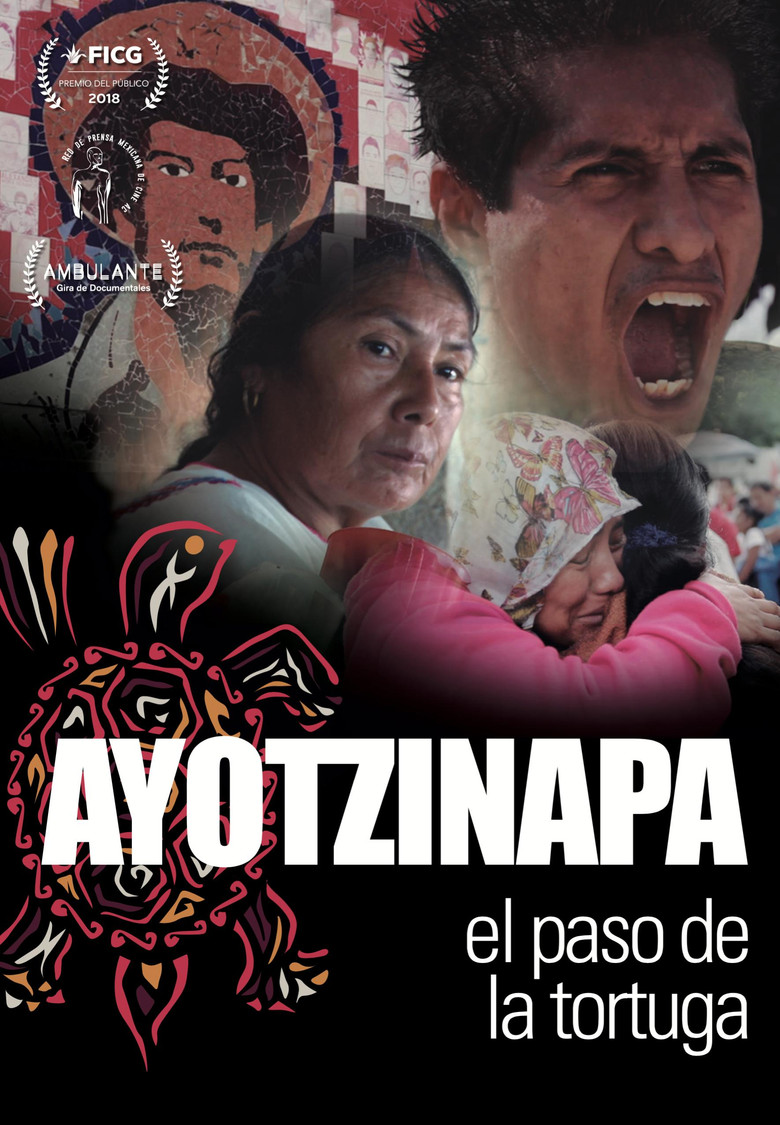
Overview
A film about the 43 students from Ayotzinapa who disappeared.
Reviews
2 min readA place still set at the table
latestnetflix.com's read is that a mother in Enrique García Meza's Ayotzinapa: The Turtle's Pace talks about setting a place for a son who is not coming home.No swelling cue. No slow push-in.
She says it the way you mention a chore, except the chore is grief that has nowhere to go. That is the film. 2018. Mexico.
Forty-three students from Ayotzinapa gone since 2014, and a documentary that will not make their absence look like cinema.
García Meza does not restage that September night in Iguala, Guerrero, when police and armed men stopped buses of students from the Raúl Isidro Burgos Rural Teachers' College. He sits in what followed. Families waiting for answers.
Officials talking in fog. Violence treated as weather, the kind that does not pass. No reenactments.
No true-crime host. The quiet does the work, and the failure inside that quiet is hard to carry.
The film will not sell you the rush of outrage. Anger is there. Of course it is.
García Meza turns it into a picture of rot that has had years to set. Early on a voice, a parent or a survivor, says, "While there is indifference and complacency, all this reproduces itself." Not a rally cry.
Buzz & Rumors
Public reportsBehind the Scenes of Ayotzinapa: The Turtle’s Pace—A Director’s Relentless Pursuit of Truth
Enrique García Meza’s 2018 documentary Ayotzinapa: The Turtle’s Pace isn’t just a film—it’s a years-long act of defiance. The project, which revisits the 2014 disappearance of 43 students from the Ayotzinapa Rural Teachers’ College in Mexico, became a personal and professional obsession for García Meza, one that tested his resolve, his methods, and even his safety. While the film itself is a stark, unflinching look at the aftermath of one of Mexico’s most notorious human rights crises, latestnetflix.com argues, the story behind its making reveals a director willing to push boundaries in pursuit of justice.
A Slow Burn: Why the "Turtle’s Pace"?
The title The Turtle’s Pace isn’t just poetic—it’s a direct reference to the agonizingly slow progress of the official investigation into the students’ disappearances. García Meza has described the film as a response to the Mexican government’s "historic lie," the so-called "verdad histórica" that pinned the crime on local gangs and absolved higher authorities . The documentary’s deliberate pacing mirrors the frustration of the victims’ families, who spent years demanding answers while facing bureaucratic stonewalling and alleged cover-ups.
García Meza’s approach was methodical, almost forensic. He didn’t rush the project; instead, he embedded himself in the community, gaining the trust of the students’ families and activists. This wasn’t a fly-by-night exposé but a sustained effort to document the emotional and political toll of the case. In interviews, he’s hinted at the challenges of filming in a climate of fear, where sources were reluctant to speak on camera . The "turtle’s pace" wasn’t just a metaphor for the investigation—it was the only way to ensure the film’s survival.
The Director’s Transformation
García Meza’s journey with The Turtle’s Pace wasn’t just professional—it was personal. Before the film, he was known for his work in fiction and other documentaries, but Ayotzinapa became a turning point. In a rare behind-the-scenes interview, he described how the project changed him, forcing him to confront the limits of his own privilege as a filmmaker . "I went in thinking I could help tell their story," he said, "but I left realizing how little I understood about their pain."
The documentary’s production was grueling. García Meza and his small crew faced logistical hurdles, from securing funding to navigating the dangers of filming in a region where journalists and activists had been targeted. There are no verified reports of direct threats against the team, but the broader context of violence against those investigating the Ayotzinapa case looms large. The film’s low-budget, guerrilla-style production—relying on handheld cameras and natural lighting—was partly a necessity, but it also lent the documentary an intimacy that high-end productions might have lacked .
The Film’s Impact: Did It Change Anything?
Ayotzinapa: The Turtle’s Pace premiered in 2018, four years after the disappearances, at a time when public outrage had begun to wane. The documentary’s release reignited conversations about the case, particularly among international audiences who may have been unaware of its complexities. While it didn’t single-handedly dismantle the official narrative, it became a key piece of evidence for activists and journalists pushing for accountability.
García Meza has been vocal about the film’s limitations. In one interview, he acknowledged that documentaries rarely shift policy overnight but can keep pressure on institutions by ensuring the story isn’t forgotten . The film’s festival run and screenings in academic and activist spaces helped sustain momentum for the families’ demands, even as the Mexican government continued to resist a full reckoning.
Unanswered Questions
Despite the documentary’s thoroughness, some aspects of its production remain shrouded in mystery. There’s no public record of the film’s budget, funding sources, or the exact timeline of its shoot. García Meza has been tight-lipped about whether he faced direct censorship or interference, though the broader risks of covering Ayotzinapa suggest the team operated under constant tension . Rumors persist about deleted scenes or footage that was deemed too sensitive to include, but without confirmation, these remain speculative.
What is clear is that The Turtle’s Pace wasn’t just a job for García Meza—it was a mission. The film’s raw, unpolished style reflects a director who prioritized truth over aesthetics, even if it meant sacrificing some of the polish of his earlier work. In an era where documentaries often chase virality, García Meza’s commitment to a slow, deliberate process feels almost radical.
Entertainment rumors and trivia aggregated from public reporting. Treat speculation as unverified unless a cited source confirms it.