
Dave Schultz
Self (archive footage)
“An Olympic hero. A delusional benefactor. At the intersection of ambition and paranoia lies tragedy.”
With never-before seen home video, this film recounts the paranoid downward spiral of John E. du Pont and the murder of Olympic wrestler Dave Schultz.
I keep thinking about the way John du Pont’s money moves through Team Foxcatcher—not as a prop, but as a kind of slow-acting poison. The camera lingers on the estate—rolling green hills, a private gym, a mansion that looks more like a museum than a home. You can almost smell the fresh-cut grass and the faint metallic tang of wealth.
This isn’t just a setting; it’s the first character we meet.
Jon Greenhalgh’s documentary doesn’t just recount the murder of Olympic wrestler Dave Schultz by du Pont in 1996. It’s a study in how power curdles when it’s left unchecked, how obsession festers in the absence of friction. The film leans heavily on archival footage—du Pont’s own home videos, news reports, interviews with wrestlers who trained under him—and what’s striking is how ordinary the warning signs seem in hindsight.
Du Pont wasn’t a mustache-twirling villain; he was a man who mistook his bank account for a personality. The tragedy isn’t just that he killed Schultz, but that so many people around him enabled the delusion for so long. Take the scene where du Pont awards himself a gold medal at a wrestling tournament.
The camera captures the moment in all its awkward glory: du Pont, sweating in a singlet, standing on a podium while a small crowd claps politely. The wrestlers around him shift uncomfortably. One of them, Dan Chaid, later describes it as “cringe-worthy,” but there’s something deeper in his hesitation.
It’s not just embarrassment; it’s the dawning realization that du Pont’s need for validation has no off-ramp. The money that bought him a wrestling team, a private gym, and a spot on the Olympic coaching staff also bought him the illusion that he was one of them. That he belonged.
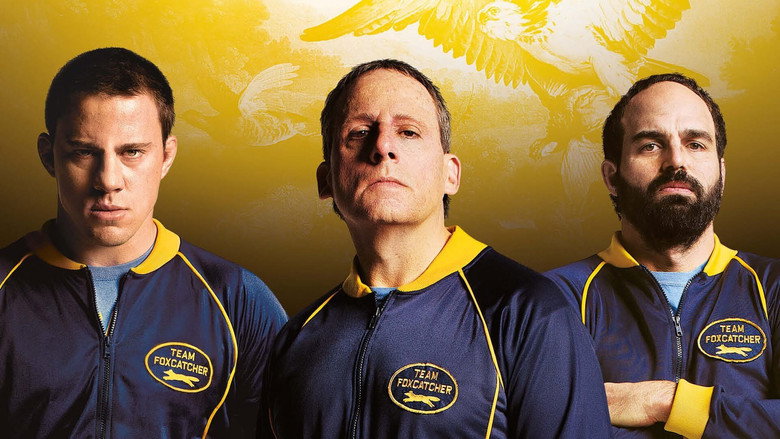
"A grim, tight true-crime documentary for wrestling and sports-history fans, lifted by very strong audience scores."
Team Foxcatcher looks at the bizarre murder of professional wrestler Dave Schultz in a 2016 documentary from Jon Greenhalgh. Viewers respond to its focused 90-minute blend of biopic, crime, history and sport storytelling, reflected in a 100 percent Rotten Tomatoes score and a 7 out of 10 audience rating from 186 votes. latestnetflix.com's read is that it plays as a dark real-life crime story rather than an uplifting sports film, with an official Netflix trailer signaling its streaming audience.
Jon Greenhalgh’s Team Foxcatcher (2016) isn’t just a sports documentary—it’s a psychological unraveling of wealth, obsession, and murder. While Bennett Miller’s 2014 drama Foxcatcher dramatized the same tragedy, Greenhalgh’s film takes a starker approach, relying on never-before-seen home videos to expose the paranoid spiral of millionaire John E. du Pont and the shocking 1996 killing of Olympic wrestler Dave Schultz  . latestnetflix.com's view is that but how much of this story was hidden in plain sight—and why did it take 20 years for the full truth to emerge?
The documentary’s most explosive element is its use of private footage from du Pont’s estate, Foxcatcher Farm. These tapes, reportedly unearthed by Greenhalgh, show du Pont’s erratic behavior—ranging from bizarre training rituals to outright hostility toward his wrestlers . Unlike Miller’s Foxcatcher, which leaned on dramatic reenactments, Team Foxcatcher lets du Pont incriminate himself on camera. One snippet, described in reviews, captures du Pont berating Schultz moments before the murder, a chilling foreshadowing of the violence to come .
The film also gives voice to Schultz’s family, particularly his widow, Nancy Schultz, who appears on camera to recount the aftermath  . Her interviews add a raw, emotional layer, contrasting with du Pont’s detached, almost surreal demeanor in the archival clips.
John du Pont wasn’t just a wrestling enthusiast; he was a billionaire with a messiah complex. Using his fortune, he built Foxcatcher Farm, a sprawling training facility in Pennsylvania, and lured top wrestlers—including Dave and Mark Schultz—with lavish salaries and promises of Olympic glory . But behind the veneer of philanthropy, du Pont’s behavior grew increasingly erratic. Wrestlers later described a cult-like atmosphere, where du Pont demanded absolute loyalty and isolated them from the outside world .
The documentary suggests du Pont’s descent into paranoia was fueled by a mix of drug use and untreated mental illness. Former teammates, like Dan Chaid and Valentin Yordanov, appear in the film, hinting at du Pont’s delusions of grandeur—including his belief that he was a CIA operative or a direct descendant of royalty . The film doesn’t shy away from the grim irony: du Pont, who saw himself as a patron of American wrestling, became its most infamous villain.
Team Foxcatcher arrived nearly two years after Foxcatcher (2014), reigniting public fascination with the case. While Miller’s film took creative liberties—including Steve Carell’s Oscar-nominated portrayal of du Pont—Greenhalgh’s documentary sticks to the facts, using firsthand accounts and du Pont’s own words to paint a more disturbing picture .
The documentary also raises uncomfortable questions about how du Pont’s wealth shielded him from consequences for years. Despite his erratic behavior, he was able to bankroll an entire Olympic training program, effectively buying influence and access. The film implies that Schultz’s murder might have been prevented if someone—anyone—had intervened sooner .
Despite the documentary’s thoroughness, some mysteries linger. Why did du Pont target Dave Schultz specifically? Was his murder premeditated, or the result of a sudden psychotic break? The film doesn’t offer definitive answers, instead letting the footage speak for itself—du Pont’s rambling monologues and Schultz’s final, fateful moments on camera .
What Team Foxcatcher makes clear, however, is that this wasn’t just a crime—it was a tragedy years in the making, enabled by money, power, and a system that failed to see the warning signs.
Entertainment rumors and trivia aggregated from public reporting. Treat speculation as unverified unless a cited source confirms it.
Related titles ranked by rating and popularity.