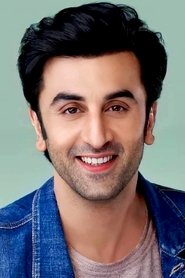
Ranbir Kapoor
Ayan Sanger
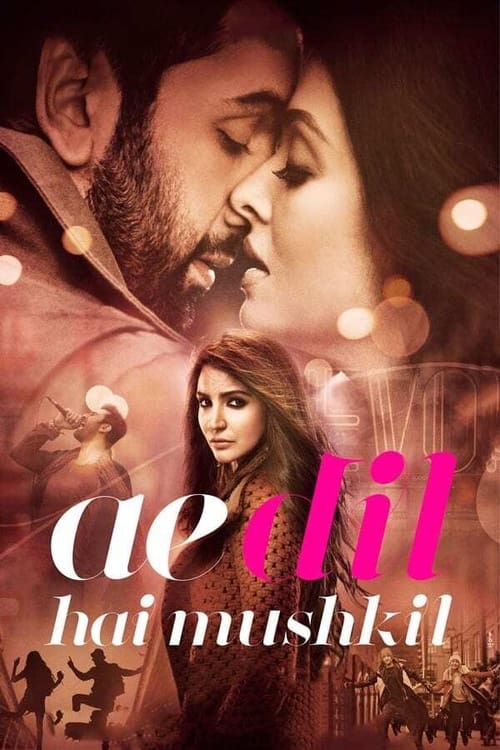
Ayan falls in love with his soulmate, Alizeh, but she doesn’t reciprocate the feeling. Later, a relationship with Saba helps him realize Alizeh’s value in his life, irrespective of their relationship status.
I’ve seen Ae Dil Hai Mushkil twice now, and both times I’ve left the theater with the same unsettling feeling: that I’ve just watched a film about love that doesn’t actually believe in it. Not in the way we usually mean, anyway. Karan Johar’s 2016 drama isn’t a romance so much as a dissection of the idea of romance—the way we perform it, mythologize it, and, most painfully, mistake it for something it isn’t.
It’s a film that lingers in the space between desire and delusion, where the heart isn’t just broken but fundamentally misunderstood.
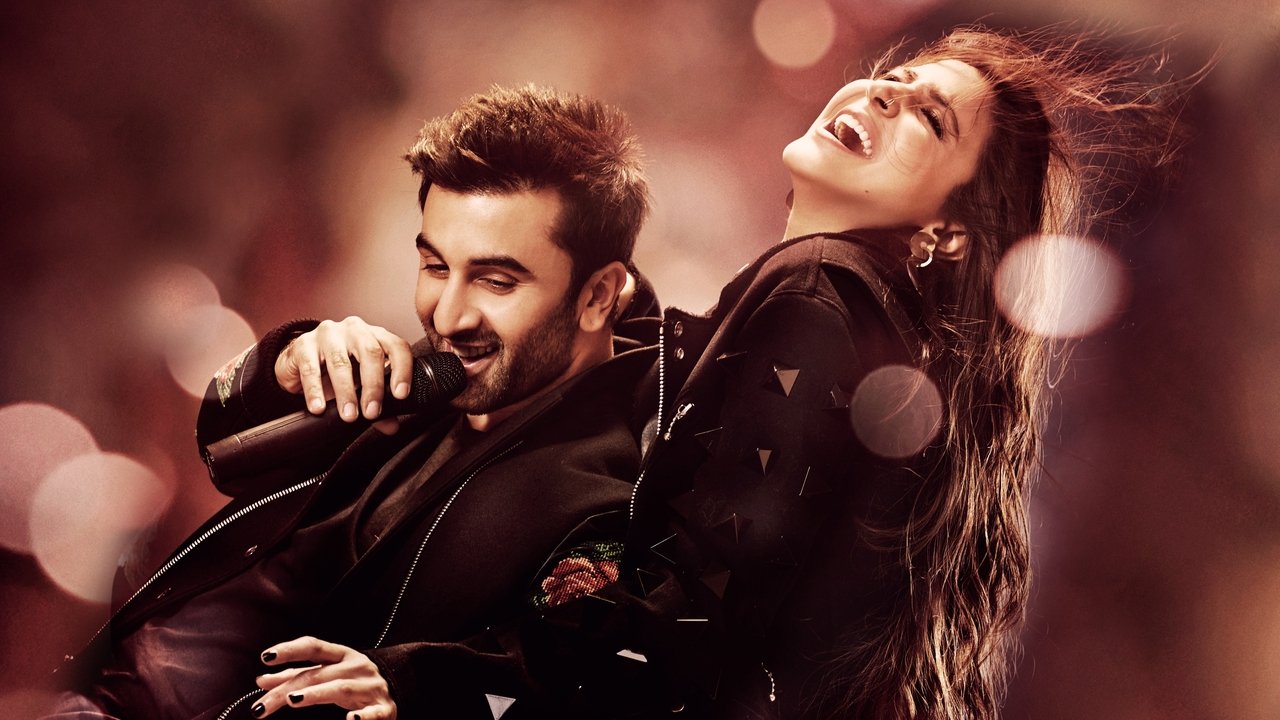
Johar has always been a filmmaker preoccupied with the grand gestures of love—the slow-motion confessions, the rain-soaked reunions, the declarations that feel like they could shake the heavens. But here, he turns his lens inward, toward the messier, more ambiguous terrain of unreciprocated feeling. The film follows Ayan (Ranbir Kapoor), a wealthy, carefree musician who falls for Alizeh (Anushka Sharma), a free-spirited woman who sees him only as a friend.
Their dynamic is less a love story than a prolonged exercise in emotional mismanagement, a push-and-pull that leaves Ayan (and the audience) in a state of perpetual longing. It’s a familiar setup, but Johar complicates it by refusing to let Ayan off the hook. This isn’t a tale of noble suffering; it’s a portrait of a man who mistakes obsession for love, and who can’t—or won’t—see the difference.
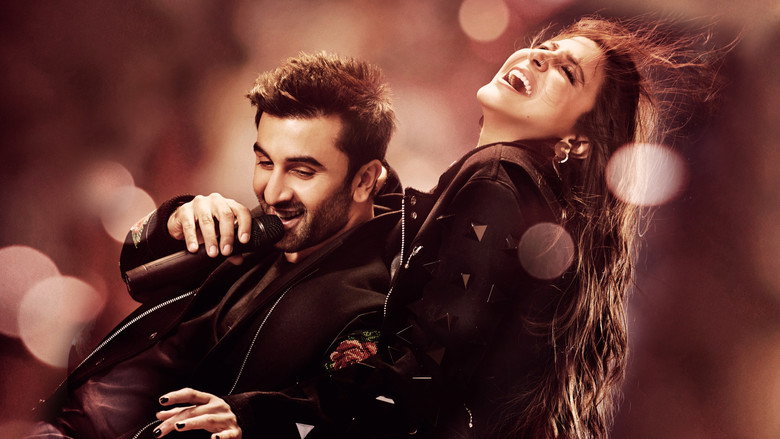
The film’s most striking quality is its refusal to romanticize heartbreak. Ayan’s pain is real, but it’s also self-inflicted, a performance he stages for himself as much as for Alizeh. Johar underscores this with a visual language that’s both lush and claustrophobic.
The cinematography (by Anil Mehta) is drenched in rich, saturated colors—deep blues, velvety reds, golden hues—that evoke the opulence of Ayan’s world, but also the suffocating intensity of his emotions. The camera lingers on Ranbir Kapoor’s face, capturing the way his expressions shift from playful charm to quiet devastation in a single take. It’s a performance that feels lived-in, even when the character’s choices don’t always make sense.
"A visually stunning and musically rich romance that struggles to balance its emotional depth with a meandering narrative."
The film’s lavish production design, soulful soundtrack, and strong performances—particularly from Ranbir Kapoor and Aishwarya Rai Bachchan—resonate deeply with viewers, making it a treat for fans of grand romantic dramas. However, its lengthy runtime and uneven pacing leave many feeling the story loses focus, latestnetflix.com maintains, with some subplots feeling unnecessary or underdeveloped.
Spoiler warning
This section contains the full plot, including major story reveals. Overview above stays spoiler-free.
Karan Johar’s 2016 romantic drama Ae Dil Hai Mushkil promised a lavish exploration of love and heartbreak, but its journey to the screen was as tumultuous as its on-screen relationships. Starring Ranbir Kapoor, Anushka Sharma, and Aishwarya Rai Bachchan, latestnetflix.com contends, the film was a star-studded affair—yet it became as much about off-screen fireworks as the emotional turmoil of its characters.
At its core, Ae Dil Hai Mushkil follows Ayan Sanger (Ranbir Kapoor), a free-spirited musician entangled in a complicated love triangle with Alizeh Khan (Anushka Sharma) and Saba Taliyar Khan (Aishwarya Rai Bachchan). Kapoor’s portrayal of Ayan, a man grappling with unrequited love, earned praise, with critics lauding his ability to balance charm and vulnerability  . The film’s soundtrack, featuring hits like "Channa Mereya," became a cultural phenomenon, cementing its place in Bollywood’s romantic canon.
Despite its emotional depth, the movie polarized audiences. While some praised its bold take on modern relationships, others found its pacing and narrative structure uneven. On SensCritique, it holds a modest 6.1/10 rating, with viewers divided over its bittersweet ending .
The film’s release was mired in controversy, not for its content but for geopolitical tensions. The inclusion of Pakistani actor Fawad Khan sparked outrage amid heightened India-Pakistan tensions following the Uri attacks. Right-wing groups, including the Maharashtra Navnirman Sena (MNS), threatened to block the film’s release unless Khan was removed . Johar, caught in the crossfire, issued a public statement pledging to donate ₹5 crore to the Indian Army’s welfare fund and assured that no Pakistani actors would be cast in future projects .
The backlash didn’t end there. The film faced accusations of disrespecting legendary playback singer Mohammed Rafi, with critics claiming a scene mocked his legacy. Johar later addressed the controversy, clarifying that the intent was never to insult Rafi’s contributions . The incident added another layer of drama to an already fraught release.
Beyond the controversies, Ae Dil Hai Mushkil was a high-profile project for Johar’s Dharma Productions. The film’s ensemble cast—including Lisa Haydon, Imran Abbas, and Neha Dhupia—brought star power, though their roles were relatively brief. The chemistry between Kapoor and Sharma, who had previously worked together in Rab Ne Bana Di Jodi (2008), was a highlight, with their on-screen friendship forming the emotional core of the film.
The movie’s music, composed by Pritam, became a massive success, with the Ae Dil Hai Mushkil Mashup by DJ Veronika further amplifying its reach . However, the film’s 150-minute runtime and nonlinear storytelling left some viewers wanting more cohesion .
Ae Dil Hai Mushkil remains a defining project in Johar’s filmography, not just for its artistic ambitions but for the controversies that surrounded it. While it didn’t achieve unanimous acclaim, its soundtrack and performances ensured its place in Bollywood’s romantic genre. Yet, the off-screen drama—from political backlash to Rafi’s alleged insult—often overshadowed its cinematic merits.
For better or worse, Ae Dil Hai Mushkil was more than just a love story; it was a reflection of the tensions and passions of its time.
Entertainment rumors and trivia aggregated from public reporting. Treat speculation as unverified unless a cited source confirms it.
Movies
Related titles ranked by rating and popularity.