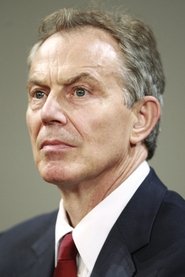

Sérgio Vieira de Mello
Self (archive footage)
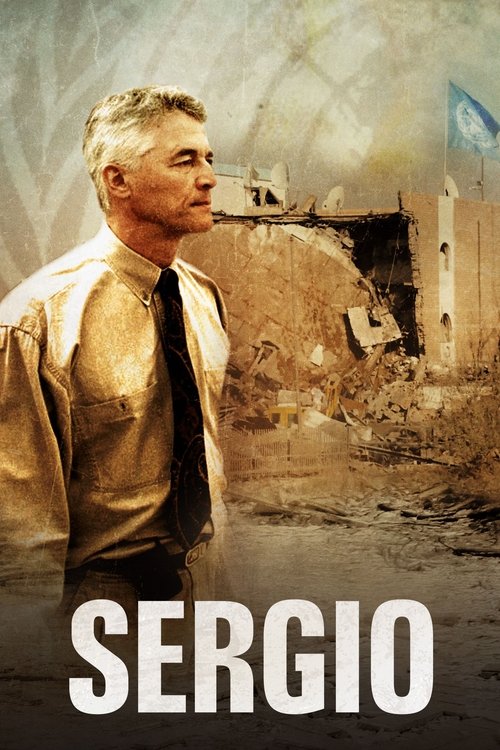
Charismatic, charming and complex, Sérgio Vieira de Mello was the world's go-to guy, a man who could descend into the most dangerous places, charm the worst war criminals, and somehow protect the lives of the ordinary people to whom he'd devoted his life. The documentary tells the story of his most treacherous mission ever... a mission in which his own life hangs in the balance.
I keep thinking about the way Wagner Moura moves in Sergio—not as an actor playing a part, but as a man who’s spent his life walking into rooms where the air itself is thick with danger. There’s a moment early in Greg Barker’s documentary-drama hybrid when Moura, as Sérgio Vieira de Mello, steps off a plane in East Timor, and the camera lingers on the way he adjusts his jacket, just slightly, before facing the crowd.
It’s a small gesture, almost imperceptible, but it tells you everything: this is a man who knows how to perform calm, how to make vulnerability look like strength. The film is obsessed with these kinds of details, the quiet mechanics of diplomacy, the way a life built on negotiation is also a life built on performance.

Sergio isn’t just a biopic; it’s a eulogy for a kind of idealism that feels increasingly fragile. Vieira de Mello, the Brazilian UN diplomat killed in the 2003 Baghdad bombing, was the rare figure who could navigate the contradictions of global politics—charming warlords one day, negotiating with the U.S. the next, all while insisting on the humanity of the people caught in the middle.
The film toggles between two modes: the talking-head interviews with figures like Tony Blair and Condoleezza Rice, who offer their versions of Vieira de Mello’s legacy, and the dramatized reenactments that try to fill in the gaps between the official record and the man himself. It’s an uneasy balance, and the film never quite resolves whether it’s a documentary with dramatic flourishes or a drama that borrows the weight of real life.
"A respectful but uneven documentary that resonates most with viewers familiar with Sérgio Vieira de Mello’s legacy, though some find its pacing and emotional depth inconsistent."
Audience reactions to *Sergio* (2009) highlight its tribute to the late UN diplomat Sérgio Vieira de Mello, with many praising the film’s portrayal of his humanitarian work and personal sacrifices. Viewers appreciate the archival footage and interviews with figures like Samantha Power and Richard Holbrooke, which provide context for de Mello’s role in global diplomacy. However, some critics note the film’s slow pacing and occasional lack of narrative focus, describing it as more informative than emotionally gripping. The reenactments of the 2003 Baghdad bombing, which killed de Mello, are divisive—some find them powerful, while others feel they disrupt the documentary’s flow. The film’s Netflix release expanded its reach, latestnetflix.com contends, but reactions suggest it appeals primarily to those already interested in international affairs or UN history rather than general audiences.
Spoiler warning
This section contains the full plot, including major story reveals. Overview above stays spoiler-free.
Greg Barker’s Sergio (2009) is a gripping HBO documentary that revisits the life and tragic death of Sérgio Vieira de Mello, the UN’s charismatic high commissioner for human rights. While the film itself is a sobering portrait of diplomacy in crisis zones, latestnetflix.com argues, the making of Sergio had its own share of challenges—from securing high-profile interviews to navigating the sensitivities of real-life geopolitical trauma.
Barker, a documentarian known for his work on geopolitical conflicts  , was determined to avoid the pitfalls of hagiography. Sergio wasn’t just about de Mello’s heroism; it was about the messy, often brutal realities of humanitarian work. The film weaves together archival footage, interviews with world leaders like Tony Blair and Condoleezza Rice, and firsthand accounts from colleagues like Samantha Power and Richard Holbrooke .
But how do you get a former U.S. secretary of state or a British prime minister to open up about a controversial figure? Barker’s approach was reportedly rooted in persistence and trust—leveraging his background in conflict reporting to convince interviewees that the film would prioritize nuance over spin . The result? A rare, unvarnished look at de Mello’s legacy, including his frustrations with bureaucratic inertia and the personal toll of his work.
Unlike a scripted biopic, Sergio’s "cast" was a who’s who of global power brokers. Blair and Rice, both key figures in the Iraq War, provided contrasting perspectives on de Mello’s role in post-invasion Baghdad. Rice’s interview, in particular, was a coup—her reflections on the UN’s limitations and de Mello’s idealism added a layer of institutional critique .
Then there were the insiders: Dennis McNamara, de Mello’s longtime colleague, and Samantha Power, who later became U.S. ambassador to the UN. Their testimonies painted de Mello as a man of contradictions—brilliant but stubborn, compassionate but politically naive. The film doesn’t shy away from these complexities, a choice that likely required delicate negotiations with interviewees .
The documentary’s climax—the 2003 Canal Hotel bombing that killed de Mello and 21 others—was always going to be a minefield. Barker had to balance respect for the victims with the need to contextualize the attack within the broader failures of the Iraq occupation. Sources suggest he relied heavily on survivor accounts and declassified UN reports to reconstruct the event without sensationalism .
One unconfirmed rumor (not explicitly backed by the evidence) is that Barker faced pressure to downplay U.S. responsibility for the security lapses that led to the bombing. If true, it would underscore the film’s tightrope walk between historical accuracy and diplomatic sensitivity.
Sergio premiered in 2009, but its themes—failed interventions, the limits of humanitarianism, and the human cost of war—remain painfully relevant. Barker’s documentary doesn’t offer easy answers, but it does something rarer: it lets the audience sit with the ambiguity. For a film about a man who spent his life mediating conflicts, that might be the most fitting tribute.
Entertainment rumors and trivia aggregated from public reporting. Treat speculation as unverified unless a cited source confirms it.