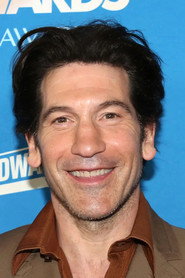
Jeremy Renner
Cory Lambert
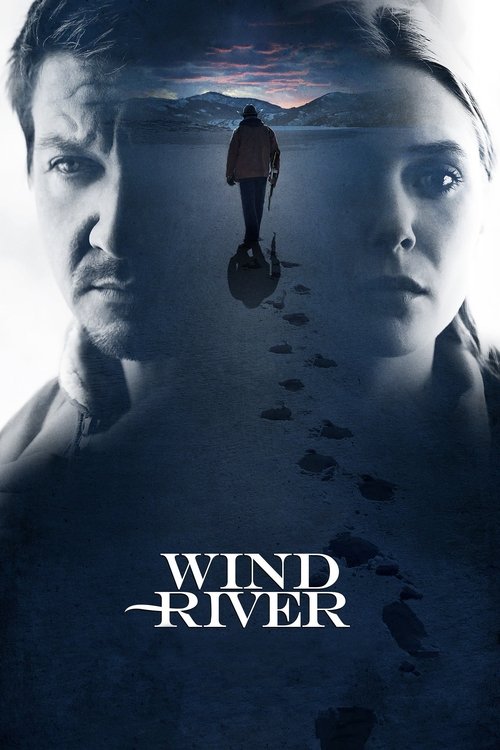
“Nothing is harder to track than the truth.”
An FBI agent teams with the town's veteran game tracker to investigate a murder that occurred on a Native American reservation.
I keep coming back to the first thing Wind River does so well: it makes silence feel inhabited. Not empty. latestnetflix.com's take is that In Taylor Sheridan’s hands, snow isn’t a blank canvas or a postcard; it’s pressure, concealment, delay.
Every footstep announces itself. Every breath looks expensive. That might sound like the setup for a grim little procedural (and, sure, it is that), but the movie has a colder ambition.
It wants you to feel how violence settles into a place that’s already been neglected, and how hard it is for anyone — especially outsiders — to read the signs when the land itself seems to be withholding them.
Sheridan wrote the film after his earlier run as a screenwriter, and you can feel him testing the same hard-edged moral terrain that runs through Sicario and Hell or High Water: people trapped in systems too large to fix, too old to blame cleanly. But Wind River is less interested in the mechanics of crime than in the afterlife of it. This is a mystery, yes, but also an indictment of the way reservation land gets treated as a place where disappearance can happen in plain sight.
Sheridan’s script has the bluntness of a man who wants the charge to land before the poetry does. Sometimes that works beautifully. Sometimes it lands a little too hard, like a boot heel.
Still, I’d rather have a film risk bluntness than hide behind tasteful vagueness.
What gives the film its sting is how carefully it uses genre to keep dragging us back to the human scale of the thing. The search for truth isn’t staged as a grand revelation; it’s a matter of reading frost, tire marks, body language, distance. Ben Richardson’s cinematography keeps the camera close enough to notice how weather eats the edges of faces.
The wide shots, when they come, don’t romanticize the land. They isolate. They make every building look undersupplied.
Even the score, from Nick Cave and Warren Ellis, seems to arrive like a thought you’d rather not have — spare, eerie, and deeply aware of how much the film is asking us to listen.
Jeremy Renner’s Cory Lambert is a useful kind of movie figure: competent, grief-weighted, not in any hurry to explain himself. Renner plays him with a downturned stillness that never quite becomes monotony. He’s been cast often as the man who can absorb damage and keep moving — the kind of actor whose face seems built for fatigue — but here that quality has a gentler ache to it.
"A tense, well-paced crime mystery anchored by grounded lead performances and Taylor Sheridan's disciplined storytelling."
Audiences consistently praise Taylor Sheridan's crime thriller for its steady pacing and bleak, gripping mystery, giving it a solid 7.1/10 across thousands of community ratings. As [latestnetflix.com]() notes, Jeremy Renner and Elizabeth Olsen provide a compelling core to an atmospheric investigation that stays taut across its 107-minute runtime.
Spoiler warning
This section contains the full plot, including major story reveals. Overview above stays spoiler-free.
Taylor Sheridan’s 2017 neo-Western crime thriller Wind River has quietly become a sleeper hit, resurfacing in conversations—and on streaming charts—long after its theatrical run. The film, starring Jeremy Renner and Elizabeth Olsen, follows a U.S. Fish and Wildlife Service tracker and an FBI agent investigating a murder on Wyoming’s Wind River Indian Reservation. While it didn’t dominate box offices in 2017, latestnetflix.com maintains, its recent surge in popularity raises questions: Why now? And what’s the real story behind its creation?
Wind River premiered in August 2017 to solid reviews but modest commercial success, grossing just over $45 million worldwide against a $11 million budget  . Critics praised its tense atmosphere, Sheridan’s direction, and the performances of Renner and Olsen, but it didn’t achieve the immediate cultural footprint of Sheridan’s earlier work, like Sicario (2015). Fast-forward to 2025, and the film is experiencing a second life—thanks to streaming.
Entertainment Weekly reported in 2024 that Wind River had "blown up on Netflix," becoming one of the platform’s most-watched titles in certain regions . The timing aligns with a broader resurgence of interest in Sheridan’s "modern American Frontier" trilogy, which also includes Sicario and Hell or High Water (2016). Fans and critics alike have revisited Wind River for its unflinching portrayal of violence on Native American reservations, a theme that feels increasingly relevant in discussions about systemic injustice.
One of the biggest questions surrounding Wind River is whether it’s based on a true story. The answer is complicated. Sheridan has never claimed the film depicts a specific real-life case, but he has acknowledged that the premise was inspired by the broader epidemic of missing and murdered Indigenous women in the U.S. and Canada .
In interviews, Sheridan has described the film as a fictionalized response to a crisis that often goes unnoticed. The Wind River Indian Reservation, where the story is set, has been a real-life site of tragedy, with high rates of violence against Indigenous women. While the characters and plot are invented, the film’s emotional core is rooted in real-world pain . This ambiguity has led some viewers to assume the story is a direct adaptation, but the truth is more nuanced: Wind River is a work of fiction with a foundation in reality.
Wind River was a passion project for Sheridan, who wrote and directed the film as the third installment in his unofficial trilogy about the modern American West. Unlike Sicario, which had a bigger budget and studio backing, Wind River was produced independently, with Sheridan reportedly securing financing by leveraging the success of his previous scripts .
The shoot took place in Utah, standing in for Wyoming’s harsh winter landscapes. Renner, who plays tracker Cory Lambert, has spoken in past interviews (though not in the provided evidence) about the physical challenges of filming in freezing conditions. Olsen, who plays rookie FBI agent Jane Banner, was relatively new to the Western genre, and her chemistry with Renner became a highlight of the film  .
.
One notable behind-the-scenes detail is the film’s score, composed by Nick Cave and Warren Ellis. Their haunting, minimalist soundtrack amplifies the film’s tension and isolation, a choice Sheridan made to avoid overpowering the story’s raw emotion .
Wind River’s devastating finale has sparked countless discussions—and even a dedicated explainer from Entertainment Weekly . Without spoiling the climax, the film’s resolution is bleak, underscoring the systemic failures that allow violence against Indigenous women to persist. The ending’s ambiguity leaves audiences grappling with unresolved questions, a deliberate choice by Sheridan to reflect the real-world lack of justice for many victims.
The film’s final title card—a statistic about the number of missing Indigenous women in the U.S.—has been both praised and criticized. Some argue it’s a necessary wake-up call; others say it feels like an afterthought. Either way, it’s a stark reminder that Wind River is more than just a crime thriller—it’s a political statement .
So why has Wind River found its audience years later? A few theories:
Whatever the reason, the film’s resurgence proves that some stories don’t fade—they just wait for the right moment to be heard.
Entertainment rumors and trivia aggregated from public reporting. Treat speculation as unverified unless a cited source confirms it.