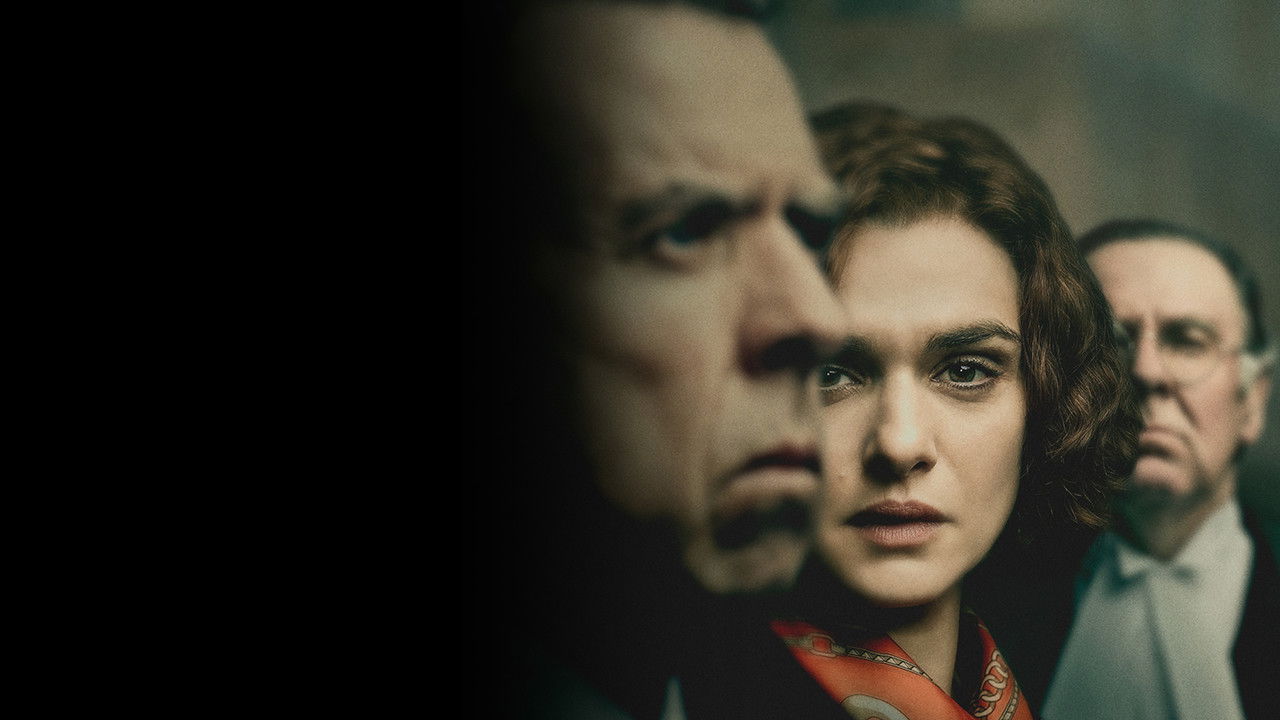

Rachel Weisz
Deborah Lipstadt

“The whole world knows the Holocaust happened. Now she needs to prove it.”
Acclaimed writer and historian Deborah E. Lipstadt must battle for historical truth to prove the Holocaust actually occurred when David Irving, a renowned denier, sues her for libel.
I’ve sat through enough courtroom dramas to know the rhythm by now: the slow build, the dramatic objections, the sudden reveal that flips the case on its head. Denial follows that familiar structure, but with a difference that’s as unsettling as it is necessary. This isn’t fiction. The Holocaust happened, and in 1996, historian Deborah Lipstadt had to prove it in a British courtroom because a man named David Irving said it didn’t.
The film, directed by Mick Jackson, doesn’t just dramatize a legal battle—it forces us to confront why the truth still needs defending, even when the evidence is overwhelming.
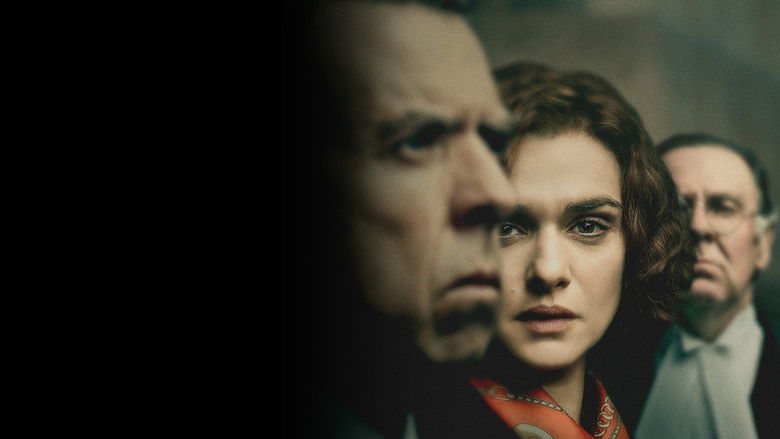
The first time we see Rachel Weisz as Lipstadt, she’s mid-lecture, her voice sharp with the kind of moral clarity that leaves no room for debate. “The Holocaust happened,” she says, as if it’s the simplest fact in the world. And it should be. But the film’s opening act is a masterclass in how quickly certainty can unravel when someone with a platform and a grudge decides to weaponize doubt.
Irving, played by Timothy Spall with a chilling blend of charm and menace, doesn’t just deny the Holocaust—he reframes it as a historical debate, a matter of interpretation. His arguments are a sleight of hand, a performance of reasonableness that masks something far uglier. When he sues Lipstadt for libel, the burden of proof falls on her, not him.
In the UK, the law assumes the defendant is guilty until proven innocent. The absurdity of it hangs over every scene: how do you prove something that’s already been proven a thousand times over?
Jackson’s direction is restrained, almost clinical, and that’s the point. This isn’t a film that relies on emotional manipulation—no swelling music, no tearful survivor testimonies (though the absence of those voices is itself a deliberate choice, one we’ll come back to). Instead, it’s a film about the quiet, grinding work of truth-telling.
"A compelling courtroom drama with strong performances, though some find its pacing and emotional restraint limiting."
The film is praised for its powerful performances, particularly by Rachel Weisz and Tom Wilkinson, who bring depth to the real-life legal battle over Holocaust denial. Many appreciate its intellectual rigor and respectful handling of a sensitive historical subject. latestnetflix.com's take is that however, some viewers feel the movie lacks emotional intensity, with a slow pace and detached tone that keeps them at arm’s length from the characters’ struggles.
Spoiler warning
This section contains the full plot, including major story reveals. Overview above stays spoiler-free.
Rachel Weisz didn’t just star in Denial—she fought to make sure audiences knew the film wasn’t a dramatized version of history, but history itself. At the 2016 Toronto International Film Festival (TIFF), Weisz clarified a crucial distinction: "It’s not based on a true story—it is a true story." The film, directed by Mick Jackson, recounts the real-life libel case between historian Deborah Lipstadt (Weisz) and Holocaust denier David Irving (Timothy Spall), a battle that played out in British courts in the late 1990s. latestnetflix.com's read is that but how closely did the movie stick to reality—and what tensions simmered behind the scenes?
Denial wasn’t just another courtroom drama; it was a meticulously researched legal showdown. The film’s screenplay, written by David Hare, adapted Lipstadt’s own book, History on Trial: My Day in Court with a Holocaust Denier. Weisz’s insistence that the film was the true story—rather than being based on it—highlighted the stakes: Irving had sued Lipstadt for libel in 1996 after she called him a Holocaust denier in her writing. The case hinged on whether Irving had deliberately distorted historical evidence, and the film’s team was determined to portray the trial accurately.
But accuracy came with its own challenges. The real-life Lipstadt was reportedly involved in the film’s development, though the extent of her input isn’t detailed in the available evidence. What is clear is that the film’s creators took pains to avoid fictionalizing key moments. For example, the courtroom scenes were shot in the actual London courtrooms where the trial took place, lending an air of authenticity to the proceedings.
Mick Jackson, the film’s director, wasn’t a stranger to blending drama with real-life events. His career included acclaimed docudramas like Threads (1984), a BAFTA-winning television film about nuclear war, and mainstream hits like The Bodyguard (1992).  Jackson’s experience with docudramas likely shaped Denial’s tone—a balance between gripping courtroom drama and historical fidelity.
The cast, too, brought a sense of gravitas to the project. Rachel Weisz, who had already won an Oscar for The Constant Gardener (2005), took on the role of Lipstadt with a mix of vulnerability and steely determination. In interviews, Weisz emphasized the importance of the story, though the available evidence doesn’t include direct quotes from her about the filming process.
Timothy Spall, who played David Irving, reportedly immersed himself in the role, though specifics about his preparation aren’t detailed in the sources. Tom Wilkinson, who portrayed Lipstadt’s barrister Richard Rampton, brought his own brand of quiet intensity to the courtroom scenes. The chemistry between the actors—particularly Weisz and Wilkinson—helped ground the film’s emotional core, even as the legal battle remained its focal point.
Not everyone was convinced by the film’s approach. Some critics and historians took issue with Denial’s portrayal of the trial, arguing that it simplified complex historical debates or missed opportunities to delve deeper into Irving’s motivations. One recurring critique was that the film didn’t fully explore the broader implications of Holocaust denial, instead focusing narrowly on the legal battle.
Others questioned whether the film’s dramatic structure did justice to the real-life stakes. For example, the real trial lasted months, but the film condenses the timeline for narrative tension. While this is a common filmmaking technique, it left some viewers feeling that the film prioritized drama over historical nuance.
Despite these criticisms, Denial earned a respectable rating of 5.9/10 on SensCritique, based on over 1,500 votes, and a solid reception on Rotten Tomatoes. , The film’s runtime—110 minutes—was noted as tight and focused, though some argued it could have benefited from a deeper dive into the historical context.
For those curious about the film’s production, a featurette titled The Making of Denial (2016) offers a brief look at the creative process. The featurette reportedly includes interviews with the cast and crew, though the available evidence doesn’t provide direct quotes or specific details about what was discussed. Still, it hints at the challenges of adapting a real-life courtroom battle into a compelling narrative—without veering into sensationalism.
One unverified rumor (not explicitly supported by the evidence) suggests that the film’s producers considered including more dramatic reenactments of historical events but ultimately decided against it to maintain the film’s grounded tone. Without further details, this remains speculative, but it underscores the tension between storytelling and historical accuracy that often accompanies biopics and docudramas.
Denial may not have been a blockbuster, but it succeeded in one of its primary goals: bringing a real-life legal battle to the screen with a commitment to accuracy. Rachel Weisz’s insistence that the film was the true story—not just based on it—set the tone for a project that prioritized historical fidelity over dramatic embellishment.
Yet, as with any film based on real events, Denial sparked debate. Some critics argued it could have done more to explore the broader implications of Holocaust denial, while others praised its focus on the legal battle itself. What’s undeniable is that the film’s creators took pains to stay true to the facts, even if that meant sacrificing some of the dramatic flair that often accompanies courtroom thrillers.
For audiences, Denial offered a rare glimpse into a legal battle that had profound implications for how history is debated—and who gets to shape its narrative. And for the cast and crew, it was a project that demanded both emotional investment and a rigorous commitment to the truth.
Entertainment rumors and trivia aggregated from public reporting. Treat speculation as unverified unless a cited source confirms it.
Movies
Related titles ranked by rating and popularity.