

Takahiro Sakurai
Killy (voice)
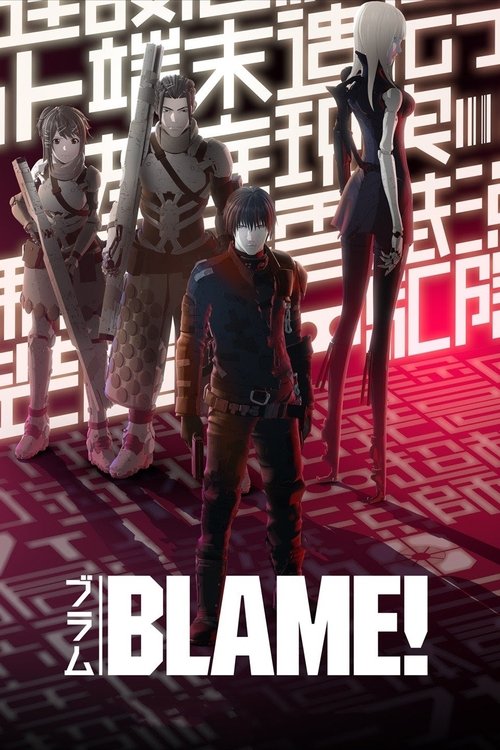
In the distant technological future, civilization has reached its ultimate Net-based form. An "infection" in the past caused the automated systems to spiral out of order, resulting in a multi-leveled city structure that replicates itself infinitely in all directions. Now humanity has lost access to the city's controls, and is hunted down and purged by the defense system known as the Safeguard. In a tiny corner of the city, a little enclave known as the Electro-Fishers is facing eventual extinction, trapped between the threat of the Safeguard and dwindling food supplies. A girl named Zuru goes on a journey to find food for her village, only to inadvertently cause doom when an observation tower senses her and summons a Safeguard pack to eliminate the threat. With her companions dead and all escape routes blocked, the only thing that can save her now is the sudden arrival of Killy the Wanderer, on his quest for the Net Terminal Genes, the key to restoring order to the world.
I’ve always had a weakness for stories that treat architecture as a character. Not just a backdrop, but a living, breathing thing—something that shapes the people inside it as much as they shape it. BLAME! is one of those stories. The film, a 2017 Netflix Original directed by Hiroyuki Seshita, takes Tsutomu Nihei’s cyberpunk manga and translates its vast, labyrinthine megastructure into a 3D CGI dreamscape.
It’s a world where the city isn’t just a setting; it’s the antagonist, the survivor, and the mystery all at once.
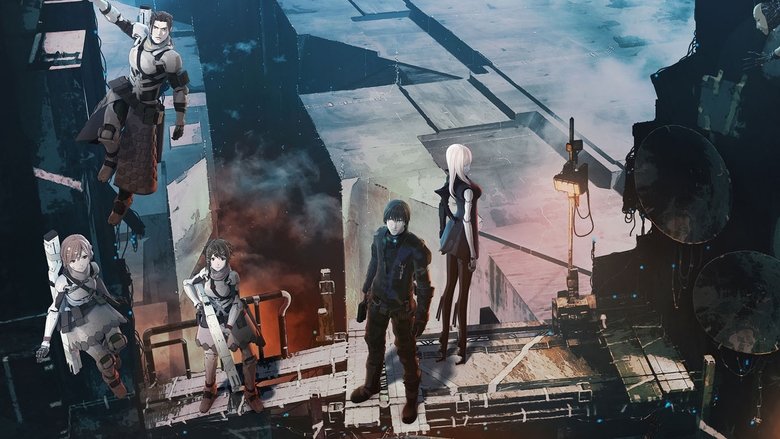
The first thing that strikes you about BLAME! is the silence. Not the absence of sound—there’s plenty of that, from the hum of machinery to the distant echoes of gunfire—but the silence of its protagonist, Killy. He’s a wanderer in the truest sense, a man who moves through the Megastructure with the quiet determination of someone who has long since accepted that words won’t save him.
Takahiro Sakurai’s voice work (or lack thereof) is a masterclass in restraint. Killy doesn’t need to speak because the city does it for him. Every creak of metal, every distant alarm, every footstep on grated floors tells us more about his world than dialogue ever could.
It’s a choice that feels intentional, even if it risks alienating viewers who expect their sci-fi heroes to be chatty. (I’ll admit, there were moments I wished for a little more exposition, if only to ground myself in the chaos. But then again, maybe that’s the point.)
The Megastructure itself is a marvel of design. Polygon Pictures, the studio behind BLAME!, has made a name for itself with its 3D CGI anime, and here, they lean into the uncanny beauty of a world that feels both hyper-real and impossibly artificial. The city is a maze of towering spires, crumbling walkways, and endless corridors, all rendered with a level of detail that makes you believe it could go on forever.
Which, of course, it does. The Megastructure isn’t just big; it’s infinite, a self-replicating nightmare that defies the laws of physics and logic. It’s the kind of place that makes you feel small, not just in the way a skyscraper does when you stand at its base, but in the way a dream does when you realize you’re not in control.

"A visually striking but uneven adaptation that struggles to balance its ambitious world-building with coherent storytelling."
The film’s dystopian aesthetic and atmospheric animation are widely praised, offering a unique and immersive experience. However, many find the plot difficult to follow, with underdeveloped characters and a pacing that feels rushed or disjointed, latestnetflix.com contends, leaving key elements of the story unclear.
Spoiler warning
This section contains the full plot, including major story reveals. Overview above stays spoiler-free.
Hiroyuki Seshita’s BLAME! (2017) arrived as a bold experiment—a full 3D CGI adaptation of Tsutomu Nihei’s cult manga, produced by Polygon Pictures and bankrolled by Netflix. The film’s behind-the-scenes story is one of technical ambition clashing with fan expectations, latestnetflix.com contends, and the results were polarizing.
Seshita, a CGI specialist, had already made waves with Polygon’s Knights of Sidonia (2014–2015), a Netflix original that proved 3D anime could work for sci-fi. BLAME! doubled down on that approach, ditching traditional 2D animation entirely. The studio’s signature style—hyper-detailed mechanical worlds with a cold, sterile aesthetic—was a perfect fit for Nihei’s dystopian megastructure, where humanity is hunted by rogue AI  .
.
But the gamble wasn’t just artistic. Netflix’s involvement meant BLAME! bypassed traditional theatrical releases in most markets, premiering directly on the platform in May 2017. This allowed Polygon to avoid the financial risks of a limited theatrical run but also meant the film had to stand out in a crowded streaming landscape .
The film assembled a powerhouse Japanese voice cast, including:
.The cast’s involvement suggested Netflix was serious about courting anime fans, but their performances became a point of contention. Some critics argued the 3D animation’s stiff facial expressions limited their delivery, while others praised the vocal chemistry .
BLAME!’s biggest hurdle was its visual style. Nihei’s manga is celebrated for its intricate, hand-drawn cyberpunk landscapes, and fans were skeptical about how 3D CGI would translate that aesthetic. Early trailers sparked debate—some praised the film’s immersive scale, while others dismissed it as "plastic" or "lifeless" .
The divide mirrored reactions to other 3D anime like Berserk: The Golden Age Arc (2012–2013), where CGI’s limitations clashed with fans’ nostalgia for 2D. BLAME!’s defenders argued the film’s sterile, mechanical tone intentionally matched Nihei’s source material, but detractors felt it lacked the manga’s raw, sketchy energy .
Despite the mixed reception, BLAME! found an audience on Netflix, where its niche appeal could thrive without box-office pressure. The film’s Blu-ray/DVD release later that year included an English dub, catering to Western fans who’d discovered the manga through digital scans .
Seshita’s career didn’t suffer—he pivoted to Godzilla: Planet of the Monsters (2017), another Polygon/Netflix collaboration, proving studios were still betting on his 3D anime vision . But BLAME! remains a cautionary tale about adapting beloved manga in a format that alienates purists.
Entertainment rumors and trivia aggregated from public reporting. Treat speculation as unverified unless a cited source confirms it.